

Yes, a classroom teacher can become an instructional designer, and teaching experience transfers strongly once you build the design-specific skills that IBSTPI competencies describe. The fastest productive next step is mapping your transferable skills and starting a portfolio project. Employers want proof of outcomes, so The 7-Minute Career Quiz is a quick way to confirm fit before you commit time to training.
TL;DR:
- Hiring managers favor portfolio evidence over certificates, so each case study should explain the learner need, audience, objectives, deliverable, rationale, and evidence of results.
- Learn ADDIE, Kirkpatrick’s levels, and Action Mapping before focusing on software; then master one authoring tool and basic learning management system skills.
- No credential is required, but higher education and government employers may expect a master’s degree and teaching experience; choose training built around projects and feedback.
- Build a microlearning module and convert a classroom unit into lessons learners complete independently, documenting learner needs, design choices, and evaluation plans for both projects.
- Speak with instructional designers before committing to training; their accounts of hiring needs can reveal role requirements and help you target application language.
Table of Contents
- What instructional designers do and where they work
- Which teaching skills transfer and which mindsets to change
- Core skills, learning theory, and tools to prioritize first
- How to build an instructional-design portfolio and tailor your resume
- Training paths and credential options: pick the route that fits your time and budget
- Step-by-step 3-6 month plan to land an entry-level ID role
- Why you can trust this guide and how NueCareer supports teacher transitions
- Our honest take on the teacher-to-designer path
- Get a personalized next step with The 7-Minute Career Quiz
- FAQ
- Sources
What instructional designers do and where they work
Instructional designers build learning experiences the way teachers build lessons, just at a different scale and often without a live room to read. The IBSTPI competencies frame the job around five areas: needs analysis, design, development, evaluation, and project management. A designer figures out what a learner needs to know, builds a plan to teach it, produces the materials, checks whether people actually learned it, and keeps the whole effort on schedule and on budget.
The settings vary more than most teachers expect. Corporate learning and development teams build training for new hires, compliance programs, or sales enablement. Higher education instructional design offices help professors convert courses for online delivery. Government agencies and non-profits build training for staff, volunteers, or the public. Curriculum teams at education companies design materials that other teachers will eventually use in their own classrooms.
What changes most is the audience and the delivery model. A teacher designs for the students in front of them and adjusts in real time based on body language, questions, and quiz results. An instructional designer often builds modules for asynchronous use, with no chance to reteach a confusing slide on the spot. That shift pushes the work toward more upfront testing, clearer written instructions, and heavier reliance on data collected after the fact rather than in the moment.
The U.S. Bureau of Labor Statistics describes a closely related occupation, instructional coordinators, as professionals who develop instructional material, train teachers, analyze test data, and recommend instructional techniques, often requiring a master's degree and related teaching experience. That overlap is part of why teaching backgrounds carry real weight in instructional design hiring, even outside K-12 settings.
Which teaching skills transfer and which mindsets to change
You already do a surprising amount of instructional design work without the title. Sequencing a unit so each lesson builds on the last is curriculum design. Writing a rubric is assessment design. Differentiating a lesson for students with different reading levels is learner analysis. Writing a clear learning objective on the board is the same skill a designer uses to open a training module.
What has to shift is the frame around those skills. Classroom teaching rewards strong live facilitation and the ability to adapt a lesson mid-period. Instructional design rewards the ability to anticipate confusion before anyone sees the material, because there is no bell schedule to catch a misstep. ASU's guidance on this transition notes that teachers bring strong instincts for sequencing and spotting sticking points, but most need to add formal learning theory, instructional technology skills, and hands-on project experience before they are fully ready for ID roles.
A few concrete examples of the mental translation:
- A lesson plan becomes a design document that states the learning objective, the audience, and how you will measure success.
- A unit test becomes an evaluation plan tied to a specific outcome, not just a grade.
- A differentiated worksheet becomes learner analysis documentation showing how you accounted for different skill levels.
- A parent-teacher conference summary becomes a stakeholder communication sample showing you can translate goals into plain language for non-experts.
Employers also expect more structured collaboration. Teachers work largely independently inside their own classroom, while designers work constantly with subject matter experts, managers, and other designers who all have opinions about the final product. Research analyzing job postings for ID roles found that collaboration and stakeholder communication appear as frequently as technical design skills in what employers actually ask for.
Core skills, learning theory, and tools to prioritize first
Before you touch any particular software, learn the frameworks that let you explain your design decisions in an interview. Practitioner guidance from the University of Washington Bothell makes a useful point here: knowing a model like ADDIE separates a designer who can justify their choices from one who only knows how to click through an authoring tool.
Three frameworks are worth knowing well:
- ADDIE (Analysis, Design, Development, Implementation, Evaluation) gives you a shared vocabulary for describing your design process step by step, which is exactly what interviewers ask about.
- Kirkpatrick's levels give you a way to talk about evaluation beyond "did people like it," covering reaction, learning, behavior change, and business results.
- Action Mapping reframes training around the actual on-the-job behaviors you want to change, which pushes you away from the classroom habit of covering content for its own sake.
Once you have language for the theory, add one authoring tool rather than trying to learn five at once. Focus on the categories, not a specific brand: an authoring tool for building interactive modules, basic familiarity with how a learning management system assigns and tracks courses, and simple multimedia skills like screen recording and light video editing. You can learn a tool deeply and still speak credibly about others in an interview.
Soft and project skills matter just as much as software. Needs analysis, the ability to figure out what a gap in performance actually requires, shows up in nearly every job posting. So does stakeholder collaboration, since you will spend real time translating what a manager wants into something learners can use. Evaluation metrics round out the list: know how you would measure whether your module worked, not just whether people finished it.
For your first projects, start small and finishable. Design one microlearning module on a topic you already know cold. Convert one unit from your classroom into a self-paced lesson someone could complete without you in the room. Document your process for both: what the learner needed, what you built, and how you would check whether it worked. Those two projects, done well, give you more interview material than a long list of courses.
Pro Tip: Build your first project around something you have already taught dozens of times. The subject matter expertise is already in your head, so all your energy goes into learning the design process, not relearning content.
How to build an instructional-design portfolio and tailor your resume
A portfolio is the single most persuasive thing you can hand a hiring manager, more persuasive than a certificate name on a resume. Every piece should include a problem statement explaining what gap you were solving, a short learner analysis describing who the material was for, clear learning objectives, the actual deliverable, and a short rationale explaining why you made the choices you made and what evidence suggests it worked.

Classroom artifacts translate into portfolio pieces more easily than most teachers expect. A unit you built from scratch can become a case study: here was the learning gap, here was my design, here is a sample lesson, here is how test scores or engagement changed. A professional development session you ran for colleagues can become a training module case study, since adult learners are closer to a corporate audience than a room of teenagers. Our guide to identifying transferable skills for a career change walks through more ways to reframe existing work as proof of a new skill set, and our piece on building proof with projects when you lack direct experience covers how to package that proof for people who have never seen your classroom.
Your resume and LinkedIn need the same translation. A few concrete moves:
- Rewrite bullet points around outcomes ("redesigned a unit that raised quiz scores by one letter grade on average" reads stronger than "taught ninth-grade biology").
- Add instructional design keywords your resume is currently missing: needs analysis, learning objectives, ADDIE, learner-centered design, evaluation.
- List the specific authoring tool, LMS, and multimedia skills you have built, even if your experience with them is recent.
- Link your portfolio directly in your resume header and LinkedIn "Featured" section so it is one click away.
- Add a two-line career-change summary at the top of your resume stating plainly that you are moving from classroom teaching into instructional design and why your background fits.
Our career change resume guide covers formatting and keyword placement in more depth if you want a line-by-line rewrite checklist.
Training paths and credential options: pick the route that fits your time and budget
There is no single required credential for instructional design, which means the right training path depends on how much time and money you can commit, not on finding the "correct" program. Four formats cover most of what is available.
- Self-paced project work costs the least and takes the longest to feel confident in, since you are building structure for yourself as you go.
- Short certificates (often a few weeks to a few months) offer the fastest credential and work well if you already have strong instincts and just need vocabulary and a portfolio nudge.
- Immersive bootcamps cost more and move fast, built for people who can commit significant weekly hours over a short window.
- Master's programs take the longest and cost the most, but they carry weight for roles in higher education or government, where the Bureau of Labor Statistics notes a master's degree and related teaching experience are often expected for coordinator-level roles.
Whichever format you choose, prioritize three features over the name on the certificate. Look for a program that ends with a real portfolio project rather than a quiz. Favor project-based assessment over multiple-choice tests, since the skill you are selling is building things, not recalling definitions. And check whether the program offers mentoring or career support, since feedback on your actual design work matters more than another lecture on learning theory.
A simple time-and-cost rubric helps set expectations: self-paced work is low cost but high time investment since you are self-directing. Short certificates are low to medium cost with a moderate time commitment. Bootcamps run medium to high cost with a high weekly time commitment over a short calendar window. Master's programs are high cost and require a substantial time commitment. None of these is wrong. The right choice depends on whether you need a credential fast, need deep theory for a specific sector, or can afford to build skills gradually while still teaching.
Step-by-step 3-6 month plan to land an entry-level ID role
A teacher with a clear plan can work toward entry-level ID applications while working around a full teaching schedule. Here is a workable sequence.
- Start by learning: Learn ADDIE, Kirkpatrick's levels, and Action Mapping well enough to explain each clearly. Pick an authoring tool and complete its basic tutorial.
- Weeks 3 to 6: Build your first portfolio project, a microlearning module on a topic you already teach, documenting the problem, your design choices, and how you would evaluate it.
- Weeks 7 to 9: Convert a full classroom unit into a self-paced lesson as your second portfolio piece, then write the rationale for both pieces.
- Weeks 10 to 11: Rewrite your resume and LinkedIn with outcome-focused bullets, ID keywords, and a link to your portfolio.
- Conduct informational interviews: Talk with people working in instructional design, corporate L&D, or higher education support roles, asking what they wish they had known earlier in their own transition.
- Apply steadily: Pursue junior L&D roles, contract instructional design positions, and higher-education instructional support jobs, treating every rejection as a reason to refine a portfolio piece rather than build a new one.
Informational interviews deserve real attention in this plan. They are often the fastest way to learn which companies are actually hiring and how they describe the role internally, which helps you mirror that language in your applications. Our informational interview guide for career changers covers how to request these conversations and what to ask.
When you start applying, cast a wide net across titles. Junior instructional designer, learning experience designer, training coordinator, and e-learning developer often describe similar work with different labels. Contract and part-time roles are worth taking seriously too, since they often convert to full-time work and ask for less formal ID experience upfront than permanent corporate roles do.
Before any interview, prepare to walk through one portfolio piece in detail: what problem it solved, why you chose that structure, what model guided your decisions, and how you would measure whether it worked. Interviewers consistently probe for the "why" behind design choices, not just the finished product, so rehearse that explanation out loud before the actual conversation.
Pro Tip: Keep one portfolio piece polished to the point where you could screen-share it cold in an interview and talk through every decision without notes. That single piece, well explained, often matters more than a long list of completed courses.
Why you can trust this guide and how NueCareer supports teacher transitions
This guide draws on IBSTPI's competency standards, Bureau of Labor Statistics occupational data, and published guidance from Arizona State University on the teacher-to-designer path, so the advice reflects how employers and standards bodies actually define the role.
We built our platform for people navigating exactly this kind of change. The 7-Minute Career Quiz maps your existing strengths against career paths you may not have considered, including instructional design, and surfaces specific project ideas suited to your background. From there, we give you a personalized roadmap, 24/7 coaching chat for the questions that come up mid-search, and application tools built for the career-change resume and portfolio work this transition requires.
Our honest take on the teacher-to-designer path
The advice we see most often tells teachers to collect certificates before applying. We think that gets the order backward. A certificate proves you sat through a course. A portfolio proves you can do the job, and hiring managers in instructional design consistently weigh the second over the first.
The more useful move is to treat your classroom as a design lab you already have access to. You do not need a new project idea. You need to document the unit you already built, the differentiation you already do, and the assessment you already wrote, in the language of needs analysis and learning objectives. That reframing can be done without committing to a long course of study.
If we had to name the one step most transitioning teachers skip, it is talking to people already doing the job before committing to a training budget. An informational interview can tell you more about whether this fits than another module of theory.
— Shane
Get a personalized next step with The 7-Minute Career Quiz
If you want a faster read on where your teaching background fits in instructional design, The 7-Minute Career Quiz gives you personalized career matches based on your actual strengths, not a generic checklist.
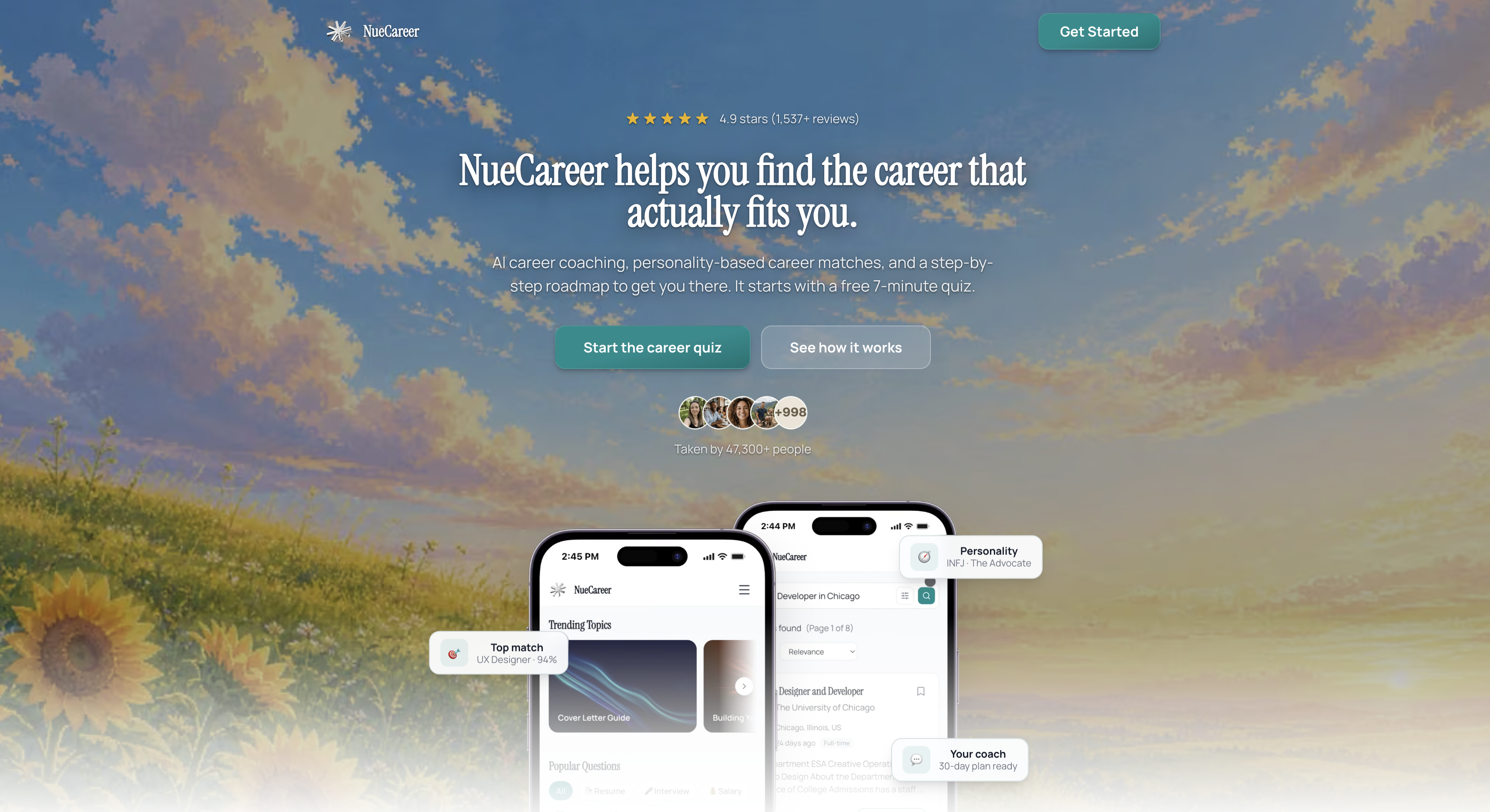
Once you finish, we match you to specific paths, including instructional design, and suggest portfolio project ideas built around your background. From there you get a personalized roadmap plus access to our resume, cover letter, and mock interview tools so you can move from quiz result to real application without guessing at the next step. The quiz offers a quick way to explore your options.
FAQ
Do you need a degree to be an instructional designer?
No single degree is required for every instructional design role, though some employers, particularly in higher education and government, prefer or require a master's degree alongside related teaching experience, as the Bureau of Labor Statistics notes for instructional coordinator roles. A strong portfolio and relevant certificate can substitute for a formal ID degree in many corporate and non-profit settings.
What did John Dewey say about teachers?
Dewey argued that teachers should act as guides who shape learning experiences around students' real interests and growth, rather than simply transmitting fixed content. That view lines up closely with instructional design's focus on learner-centered outcomes rather than content coverage for its own sake.
What are the 7 roles of teachers?
Definitions vary by source, but common frameworks describe teachers as instructors, facilitators, assessors, mentors, communicators, classroom managers, and lifelong learners. Each of these roles has a direct parallel in instructional design, from facilitation becoming learner engagement design to assessment becoming evaluation planning.
What are the 5 major types of curriculum design?
Common curriculum design models include subject-centered, learner-centered, problem-centered, broad fields, and core curriculum designs, though exact categorizations vary across sources. Instructional designers draw on similar thinking when deciding whether to organize training around content topics, learner needs, or real job tasks.
Sources
- Instructional Designer Competencies - IBSTPI
- Instructional Coordinators : Occupational Outlook Handbook: : U.S. Bureau of Labor Statistics
- From Teaching to Instructional Design | ASU Online
- Uwb