
Referral Job Search: Build a Ready Pitch in 7 Minutes

A research backed playbook for referral job search with ready to send templates, a materials checklist, and a 7 Minute Career Quiz to build your pitch fast.
Yes, referrals genuinely help, and asked the right way, they're one of the fastest routes to a hiring manager's inbox. The catch is that most requests fail because they're vague or poorly timed, not because referrals don't work. Your first move today: name one person you could reasonably ask, then draft a single, simple paragraph explaining what you're looking for. The templates and tracking tools below will help you take it from there.
TL;DR:
- Most referral requests fail due to vague timing or messaging rather than the technique itself, so personal, specific asks increase success rates.
- Referral conversions are highest when asking trusted contacts with influence and relevant knowledge, especially close colleagues or managers.
- Direct, named referrals from known individuals outperform broad social shares, which often generate fewer actual hires.
- Preparing tailored materials like a clear pitch, resume bullets, and next steps significantly increases the likelihood of a referrer acting quickly.
- Follow-up tracking and respectful, brief check-ins enhance the chances of turning a referral request into a solid lead or interview.
Table of Contents
- Why referrals work: the evidence behind the advice
- Where to find referral opportunities
- Who to ask and how to tailor your approach
- How to ask for a referral: templates that get replies
- Make it easy: what to hand your referrer
- Follow-up and tracking: treat referrals like a pipeline
- Common mistakes and referral etiquette
- How NueCareer helps you build referral-ready materials
- What the research actually tells us about referrals
- Put your referral materials together in minutes
- Sources
- FAQ
Why referrals work: the evidence behind the advice
Referrals aren't just a networking nicety, they change outcomes. A widely cited study using personnel data from nine large firms found that referred employees were less likely to quit than comparable non-referred hires, with reductions in quit probabilities falling into a range supported by empirical research, a pattern researchers attribute partly to selection: people tend to refer candidates they genuinely believe will succeed, and that judgment carries real information (Columbia Business School / QJE study).
That selection effect is strongest when the referral comes from a high-performing employee who actually knows the work, not from someone rubber-stamping a favor. It's worth setting realistic expectations about the funnel, too. Industry reviews of referral programs describe a typical referral funnel pattern that includes multiple stages with decreasing conversion rates, where only a fraction of initial invitations result in hires (employee referral program statistics).

That means most referral requests will not end in a job, and that's normal. What referrals reliably improve is your odds of getting seen and your odds of staying once hired, not a guaranteed offer.
Where to find referral opportunities
Referral opportunities exist closer than most job seekers assume, but they take some deliberate digging.
- Internal contacts: Check whether the company has an internal job board, then ask current employees directly if they know the hiring manager or team.
- Alumni networks: Search your college's alumni directory or LinkedIn's alumni tool filtered by target company, since shared background is an easy conversation opener.
- Volunteer and community ties: People you've worked alongside in volunteer roles or community groups often sit in industries you haven't tapped yet.
- Recruiters and associations: Industry associations and specialized recruiters frequently know which teams are hiring before roles go public.
- Meetups and informational interviews: A short informational interview with someone in your target field can surface referral opportunities naturally, without ever framing the conversation as an ask.
One distinction matters more than people realize: a named, personal message beats a broadcast post. Enterprise referral data shows social shares generate a large share of referral volume but a much smaller share of actual hires, while direct, named referrals convert at a far higher rate (referral program statistics). LinkedIn is useful for identifying the right person, but the request itself should land as a direct message or email, addressed to one person, not a public post hoping someone bites.
Who to ask and how to tailor your approach
Not every contact is equally useful, and treating them all the same is a common misstep. The right referrer has some combination of three things: influence with the hiring manager, direct knowledge of the role, and an existing relationship with you.
- Close colleagues or former teammates: Ask directly and hand them concrete materials right away, since they already trust your work and just need the specifics.
- Acquaintances or distant former coworkers: Remind them briefly of your shared history, then make the case for fit before asking, since they need a little more context to feel comfortable.
- Cold or third-degree contacts: Request a warm introduction through a mutual connection rather than asking for a referral outright, since a stranger vouching for you carries less weight and more risk for them.
Small personalization touches raise reply rates noticeably: mention a specific project you worked on together, reference a recent post they shared, or note why this particular role connects to a conversation you've already had. Generic requests read as mass outreach, and people can tell.
How to ask for a referral: templates that get replies
A strong referral request follows a consistent shape regardless of the channel: remind them how you know each other, state your fit in one line, make the ask explicit with an easy way to decline, and tell them exactly what you'll send next. That structure removes ambiguity and respects the other person's time.
- Current colleague: "Hey [Name], I saw [Company] has an opening for [Role] and I think my background in [skill/project] lines up well. Would you be comfortable referring me? Happy to send over a short pitch and my resume, no worries if timing's not right."
- Former manager: "Hi [Name], hope things are going well at [Company]. I'm applying for [Role] there and would value your perspective, and if you're open to it, a referral would mean a lot. I can send a paragraph you could forward as-is."
- LinkedIn acquaintance: "Hi [Name], we connected at [event/context] a while back. I noticed [Company] is hiring for [Role], which fits my experience in [area]. Would you be open to a quick chat or a referral if it feels right?"
- Cold contact via mutual connection: "Hi [Name], [Mutual Contact] suggested I reach out. I'm exploring [Role] at [Company] and would love five minutes to learn more about the team, no pressure beyond that."
Attach a full resume only for close contacts who ask for it. For acquaintances and cold contacts, offer a short bullet list or a job link first, so they're not committing to a large favor before saying yes.
Pro Tip: Send the ask on a weekday morning, since replies tend to slow down once people are deep into their afternoon workload.
Make it easy: what to hand your referrer
The single biggest reason willing referrers never follow through is friction, not reluctance. Give them everything they need in one message so referring you takes two minutes, not twenty.
- A copy-paste pitch: Three to four sentences summarizing who you are, what you're looking for, and why the role fits, written so they can forward it unedited.
- Three resume bullets: Short, role-relevant lines they can paste directly or paraphrase in their own words, built with tools like a resume summary generator.
- A mini checklist: The job link, the requisition ID if there is one, the application steps, and a suggested subject line for their introduction email.
Handing over materials this specific signals that you respect their time and increases the odds they act on your request within the same day.
Follow-up and tracking: treat referrals like a pipeline
Referral requests fall apart most often at follow-up, not at the ask itself. A simple spreadsheet with five columns works: contact name, date asked, materials sent, current status, and next step. That's enough structure to avoid losing track of who you've reached out to, especially once you're juggling multiple applications (job search organization tools).
- Wait 48 to 72 hours before a light follow-up if you haven't heard back.
- Send a one-week check-in that offers an easy exit: "No pressure if this isn't a good time."
- After an interview, update your referrer with a short thank-you and let them know how it went, whether or not you got the offer.
Pro Tip: If a referrer goes quiet, it's fine to ask if they know anyone else at the company who might have a few minutes, rather than repeating the same request.
Common mistakes and referral etiquette
Vague requests ("know of anything open?") put the entire burden of thinking on your referrer, and most will simply not respond. Avoid pressuring someone who's already said no, and never mass-message multiple coworkers at the same company hoping one bites, since word travels fast internally. Watch for referral programs that seem built for public shares rather than named introductions, and for slow recruiter response times, both are signs the referral is unlikely to move quickly. Always send a thank-you regardless of outcome, and offer to return the favor when you can.
How NueCareer helps you build referral-ready materials
Most of the friction in asking for a referral comes from not knowing exactly what to say about yourself. The 7-Minute Career Quiz helps you clarify which roles actually fit your strengths, so your referral pitch names a specific target instead of a vague "anything open." From there, NueCareer's resume and cover letter tools turn that clarity into the exact materials this playbook calls for: tailored bullets, a one-paragraph pitch, and a resume your referrer can forward without editing. The platform's 24/7 coaching chat is also there if you want to talk through how to phrase a specific ask before you send it.
What the research actually tells us about referrals

The conventional wisdom, that referrals are some kind of secret shortcut to a guaranteed job, oversells what the data supports. Referrals improve your odds of being seen and your odds of staying once hired, but the funnel numbers show most referral asks still don't end in an offer, and that's a normal outcome, not a failed strategy.
Where advice on this topic tends to fall short is in treating every referrer the same way and every ask as a one-time event. The bigger lever is preparation: a referrer who receives a specific pitch and ready-to-use bullets is far more likely to act than one handed a bare "let me know if you hear of anything." Priority one, before sending a single message, is getting clear on the two or three roles you're actually targeting. Vague targeting produces vague asks, and vague asks are the ones that go unanswered.
— Shane
Put your referral materials together in minutes
Writing a referral pitch is hard when you're still unsure what role you're even aiming for. That's the gap NueCareer's 7-Minute Career Quiz is built to close: it matches you to roles based on your actual strengths, then hands you a roadmap so your outreach sounds specific instead of scattered.
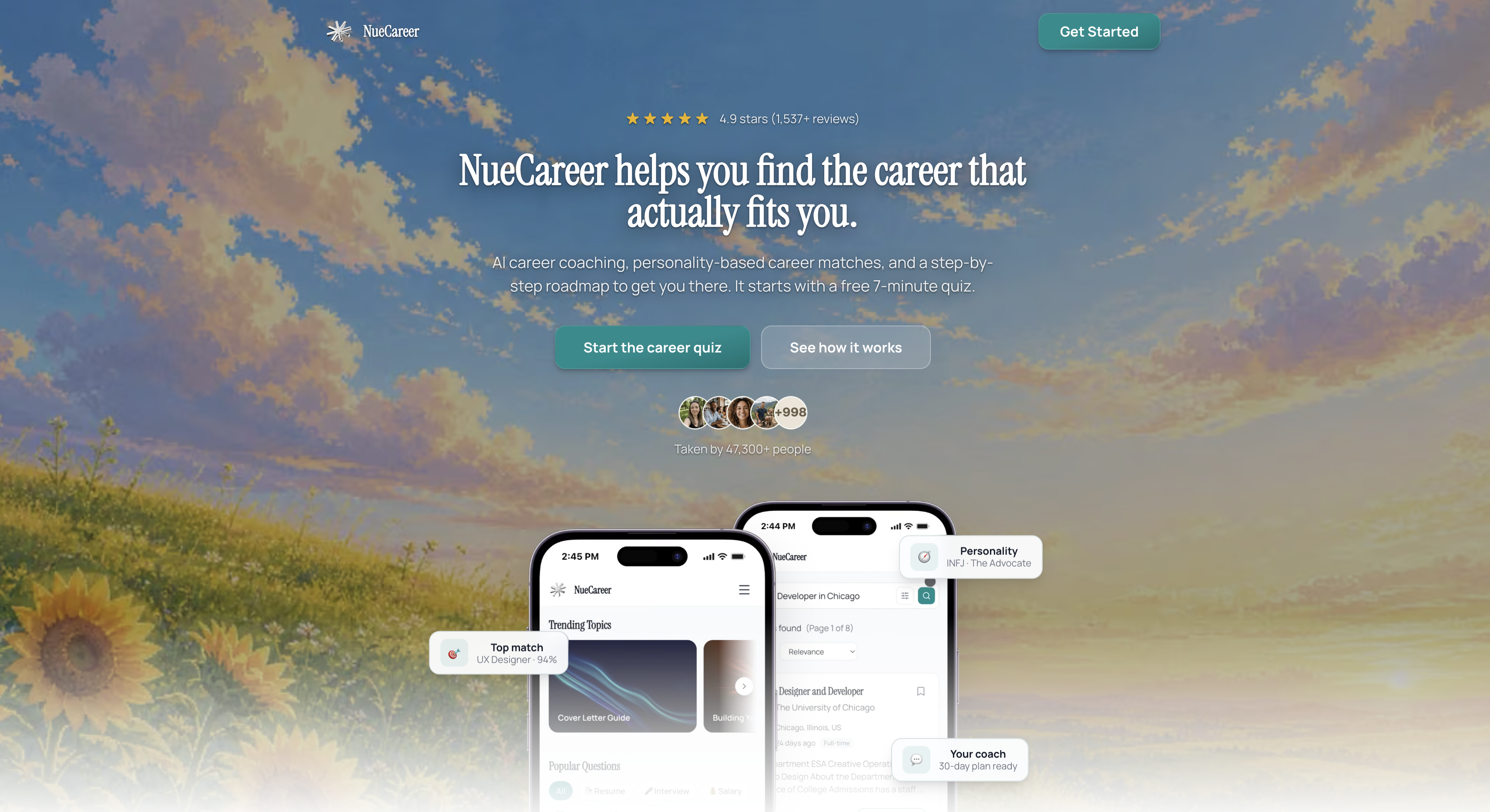
From there, the resume and cover letter tools turn your background into the tailored bullets and pitch paragraph this playbook recommends, so you're not starting from a blank page every time you reach out to someone.
- Take the quiz to identify two or three target roles worth pursuing.
- Use the resume tools to generate bullets your referrer can paste straight into an email.
- Check in with 24/7 coaching chat if you want a second opinion on your ask before you send it.
If you're ready to move past guesswork and put together materials a referrer can act on immediately, start with the quiz or browse the full toolset.
Sources
The core evidence in this article comes from a peer-reviewed employer study using personnel data from nine large firms, which found referred hires were 10% to 30% less likely to quit (Columbia Business School / QJE study). Government career guidance from the U.S. Department of Labor explains why networking and informational interviews open doors that public job postings don't. For current numbers on program adoption, bonus ranges, and funnel conversion, the employee referral program statistics review is a useful benchmark, and readers curious about hiring-cost context can check referral hiring cost benchmarks. For broader networking tactics, see this networking guide for growth.
- Hiring referrals: Why do firms use employee referral programs? (Columbia Business School / QJE study summary)
- Employee referral program statistics 2026 (aggregated review)
FAQ
Can I get a job through a referral?
Yes, referrals materially improve your odds of reaching a hiring manager and, once hired, of staying in the role longer than non-referred employees, according to a peer-reviewed employer study. They don't guarantee an offer, but they consistently outperform cold applications in getting noticed.
Where can I find referrals for jobs?
Start with people who already know your work: current or former colleagues, college alumni, volunteer contacts, and industry associations. Informational interviews and targeted networking strategies tend to surface referral opportunities that job boards never show.
Which app gives $100 per referral?
Referral bonus amounts vary by employer and program rather than by a single app, with recent industry reviews showing typical bonus ranges rather than one fixed figure (referral program statistics). Check the specific company's referral program page for its current bonus structure.
Is there a website that can help me get referred to jobs?
Some career platforms help you identify the right roles to target and prepare the materials, like tailored resume bullets and pitch paragraphs, that make it easy for a contact to refer you. NueCareer's 7-Minute Career Quiz and resume tools are built specifically to speed up that preparation step, though the actual referral still comes from a personal contact, not a website.