

TL;DR:
- Effective career change networking involves deliberate, structured outreach and building genuine relationships in the target industry.
- A 20-conversation plan over four weeks, combined with a clear bridge-identity story and consistent follow-up, maximizes results.
Career change networking strategies are deliberate, relationship-focused actions that connect you to your new industry and open doors to opportunities aligned with your goals. Genuine networking interactions promote positive affect, which correlates with career optimism, job satisfaction, and reduced emotional exhaustion during transitions. The difference between a stalled career change and a successful one often comes down to how intentionally you build new relationships. Nuecareer helps professionals at this exact crossroads by identifying their strengths and matching them to career paths worth pursuing. With the right framework, networking from scratch becomes a learnable, repeatable skill.
1. What are career change networking strategies and why do they work?
Career change networking strategies are structured, intentional outreach efforts designed to build relationships in a new industry rather than relying on chance encounters or existing contacts. Networking is a learnable skill that requires goal setting, preparation, and follow-up. Treating it as spontaneous or as a numbers game leads to failure. The professionals who succeed in career transitions treat networking as a system, not an event.

The core principle is simple. You are not asking for a job. You are gathering intelligence, building credibility, and creating relationships that generate referrals over time. This reframe reduces the anxiety most professionals feel when reaching out to strangers in an unfamiliar field.
2. Build a structured plan: 20 conversations in 4 weeks
A structured networking plan of 20 targeted conversations in 4 weeks typically generates 8–12 replies, 5–8 booked calls, and 2–3 concrete next steps like referrals or introductions. That conversion ratio is not accidental. It reflects the power of volume combined with specificity. Random outreach to 5 people produces nothing. Systematic outreach to 20 well-chosen contacts produces results.
Segment your 20 target contacts into three groups before you send a single message:
- Insiders. People currently working in your target role or company.
- Adjacent professionals. People who transitioned from a similar background into your target field.
- Validators. Trusted contacts who can vouch for your character and work ethic, even if they are not in the new industry.
This segmentation focuses your energy and tailors your message for each group. Insiders give you role reality. Adjacent professionals give you a credible transition roadmap. Validators open doors through trust.
Follow-up timing matters more than most professionals realize. Following up exactly 14 days after initial cold outreach increases reply rates. Following up earlier reads as pushy. Following up later reduces recall. The 14-day rule is simple and consistently overlooked.
Pro Tip: Set a calendar reminder the moment you send each outreach message. Fourteen days later, send a brief, warm follow-up referencing something specific from your original note.
3. How to craft your bridge-identity story
The credibility paradox is the central challenge of career change networking. You need experience to get access, but you need access to gain experience. A bridge-identity story solves this by connecting your past expertise to your new direction in a way that feels authentic and relevant.
The bridge-identity formula uses three parts:
- The problem you care about. Name a real challenge in your target field that your past work has given you insight into.
- Your transferable principles. Identify the skills, frameworks, or mindsets from your old career that apply directly to the new one.
- Your new direction. State clearly where you are heading and why it aligns with the problem you named.
A 30–45 second version of this story reduces networking anxiety and improves how new contacts receive you. You are not pretending to be an expert in the new field. You are showing why your background gives you a useful perspective on it.
For example, a former teacher moving into instructional design might say: "I spent eight years figuring out why students disengage from learning. That problem follows me everywhere. I am now focused on corporate learning design because the same engagement principles apply, and most companies are getting it wrong in the same ways schools did."
Pro Tip: Practice your bridge-identity story out loud at least five times before your first networking call. The goal is to sound natural, not rehearsed.
4. How to write cold outreach messages that get replies
Cold outreach fails when it is generic. Generic "pick your brain" requests reduce response rates. Successful outreach names a recent project or achievement to prove you have done your research. Specificity converts a cold message into a relevant professional interaction.
The most effective outreach messages share four qualities:
- They reference something specific. Mention a recent article the person wrote, a project they led, or a comment they made in a LinkedIn post.
- They state your context briefly. One sentence on your background and why you are reaching out.
- They make a bounded ask. Request a 15–20 minute call, not an open-ended conversation or general advice.
- They make it easy to say yes. Offer two specific time slots or a scheduling link.
Weight your outreach 60–70% toward new contacts in your target field rather than leaning on existing strong ties. Your old network is comfortable, but it has limited leverage for a career change. New contacts in the target field carry far more value.
LinkedIn is the most effective platform for this outreach. Optimize your profile headline to reflect where you are going, not just where you have been. Join LinkedIn groups, Slack communities, and Discord servers in your target field. Engage with posts through thoughtful comments before you send any direct messages. This warms up the relationship before the ask. For professionals moving into technical fields, resources like LinkedIn profile optimization can sharpen how you present yourself to new contacts.
5. How to run informational interviews that produce results
Informational interviews are the highest-leverage activity in a career transition. Most professionals waste them by treating them as casual conversations. Structured calls with a preset agenda of three focused questions lead to a higher rate of actionable outcomes like introductions and role insights.
Use this three-question agenda on every call:
- Role reality. "What does a typical week actually look like in this role, and what surprised you most when you started?"
- Hiring criteria. "When your team evaluates candidates from non-traditional backgrounds, what matters most to them?"
- Referrals. "Is there one other person in your network you think I should speak with, given what I have shared?"
The third question is the most important. Ask it only after you have built rapport and demonstrated genuine interest. Asking for a referral too early kills the relationship.
Follow up within 24 hours with a thank-you message that references a specific insight from the call. Then send a 90-day update sharing what you have done with their advice. This two-step follow-up converts a single conversation into an ongoing relationship. Most professionals skip the 90-day update entirely, which is exactly why doing it sets you apart.
6. Digital and in-person tactics for building connections from scratch
Building connections in a new industry from scratch requires a mix of digital presence and in-person engagement. Neither alone is sufficient. Together, they create multiple entry points for new contacts to find and remember you.
Start with your LinkedIn profile. Update your headline to reflect your target role, not your current title. Rewrite your summary using your bridge-identity story. This makes you discoverable to people in your target field who are searching for professionals with your background.
Using CRM tools integrated with digital business cards helps track contacts, follow-ups, and relationship details, ensuring consistent engagement. Systematic relationship maintenance generates the majority of networking value after initial meetings. A simple spreadsheet works if you do not have a CRM. The key is tracking every contact, every conversation, and every follow-up date.
For in-person networking events, choose quality over quantity. Attend one well-targeted event per month rather than five generic ones. Set a goal before each event: leave with two meaningful conversations, not a stack of business cards. Follow up with every meaningful contact within 48 hours.
Alumni networks and volunteer organizations are underused entry points. Your university alumni network likely includes professionals in your target field who are predisposed to help. Volunteering for industry associations puts you in working relationships with insiders before you ever ask for anything. For those moving into IT or technical fields, programs like networking in IT provide structured pathways to build relevant connections.
Key takeaways
The most effective career change networking strategy combines a structured outreach plan, a clear bridge-identity story, and disciplined follow-up to convert conversations into concrete opportunities.
| Point | Details |
|---|---|
| Use a structured plan | Target 20 contacts in 4 weeks to generate 5–8 calls and 2–3 referrals or next steps. |
| Build a bridge-identity story | Connect your past expertise to your new direction in a 30–45 second narrative. |
| Prioritize new contacts | Weight 60–70% of outreach toward people in your target field, not your existing network. |
| Run disciplined informational interviews | Use three focused questions and follow up at 24 hours and 90 days to build lasting relationships. |
| Maintain a consistent rhythm | Aim for two interviews and one public contribution per month to sustain momentum through the transition. |
What I have learned about networking through a career change
People avoid networking because they associate it with performance. They picture a room full of strangers, forced small talk, and the discomfort of asking for favors. That framing is the problem, not networking itself.
The professionals I have seen succeed in career transitions share one habit. They treat networking as a daily practice of genuine curiosity, not a campaign they run when they need something. Consistent, genuine networking interactions sustain career optimism and reduce stress during transitions. That is not motivational language. It is a measurable outcome.
The hardest part of a career change is the middle. The initial excitement fades, and the results have not arrived yet. This is where most people stop reaching out. The professionals who push through this period maintain a simple rhythm: two informational interviews and one public artifact, such as a LinkedIn post or a comment in a community forum, every month. That rhythm keeps you visible and keeps your confidence intact.
Networking is not a personality trait. It is a skill. You can learn it, practice it, and get better at it. The career change guide at Nuecareer walks through the full transition process, including how to build your network from the ground up. Start with one message this week. The system builds from there.
— Shane
Nuecareer tools to strengthen your networking efforts
Knowing your transferable skills is the foundation of every strong networking conversation. Before you send your first outreach message, take the free career skills assessment on Nuecareer to identify exactly what you bring to a new field. It takes minutes and gives you language you can use immediately in your bridge-identity story and outreach messages.
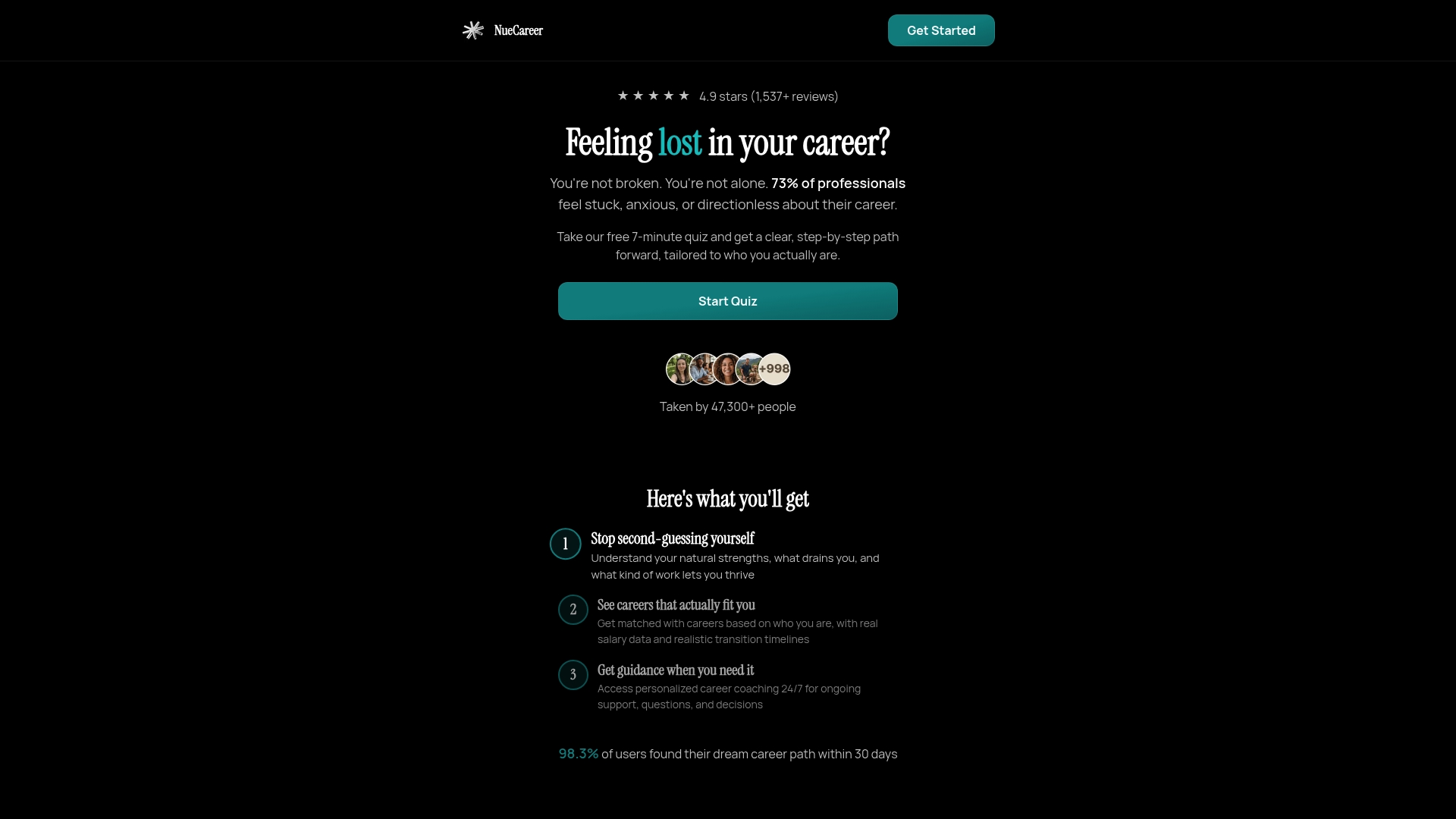
Nuecareer also offers a job application skills tool that pinpoints which of your skills matter most for your target roles. Pair that with the free cover letter generator to prepare materials that reinforce what you say in networking conversations. When your resume, cover letter, and outreach message all tell the same story, referrals convert to interviews at a much higher rate. Nuecareer gives you everything you need to show up prepared.
FAQ
What is the most effective career change networking strategy?
A structured plan of 20 targeted conversations in 4 weeks, combined with a clear bridge-identity story and disciplined follow-up, produces the highest conversion from outreach to referrals and interviews.
How do I network for a career change when I have no contacts in the new field?
Start with adjacent professionals who made a similar transition, then use LinkedIn groups, alumni networks, and volunteer organizations to build new relationships before making any direct asks.
How long should a cold outreach message be for a career change?
Keep it to 3–4 sentences. Reference something specific about the recipient, state your context briefly, and make a bounded ask for a 15–20 minute call.
When should I follow up after sending a networking message?
Follow up exactly 14 days after your initial message. Earlier reads as pushy, and later reduces the recipient's recall of your original outreach.
How do informational interviews help with a career transition?
Informational interviews with a preset agenda of three focused questions generate role insights, hiring criteria, and referrals that accelerate your transition far faster than job board applications alone.