
How to Prepare for a Job Interview in 2026: 7-Day Action Plan
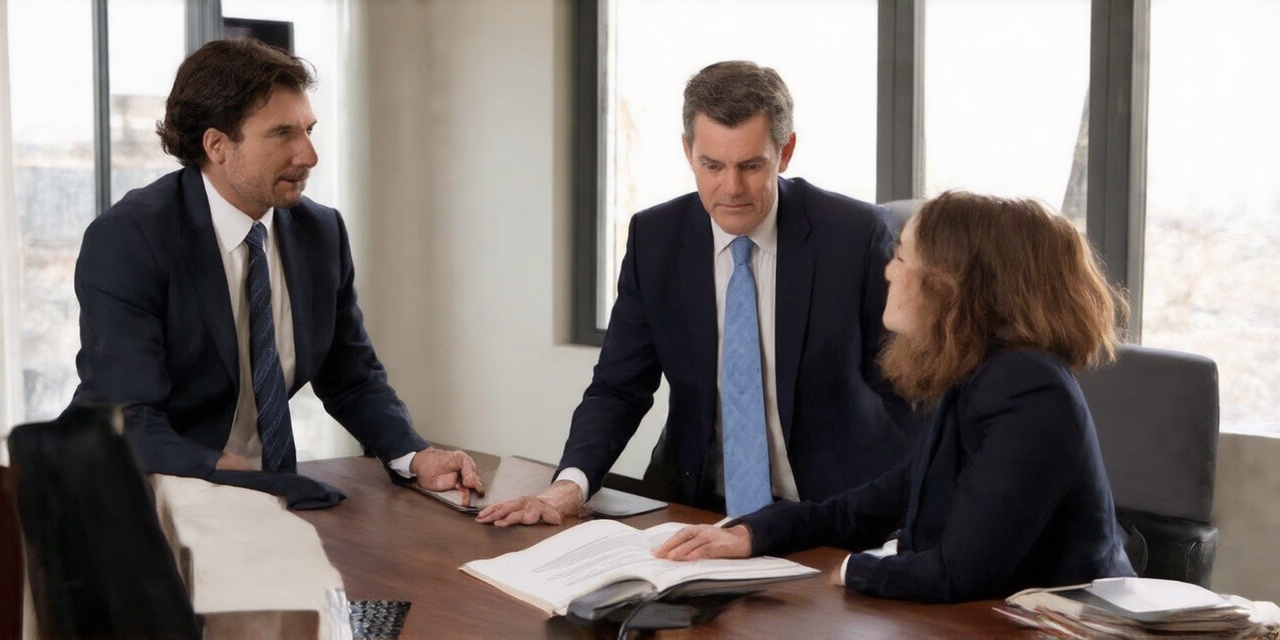
Master every step of interview prep with our 7-day plan. Research, stories, practice, and follow-up done right.
Most people spend less than two hours preparing for a job interview. Then they wonder why they didn't get the offer.
According to LinkedIn's 2026 Talent Research, nearly 80% of job seekers feel unprepared to compete in today's hiring market. At the same time, the number of applicants per open role has doubled since spring 2022. The gap between candidates who prepare deliberately and candidates who wing it has never mattered more.
The good news? Preparation is a learnable skill, not an innate talent. At NueCareer, we've broken down exactly what to do in the seven days before your interview so you walk in confident, credible, and ready to close.
"Candidates who thoroughly prepare for interviews are 3x more likely to receive job offers than those who don't." - OphyAI Research, 2026
This guide walks you through a complete, day-by-day preparation framework, from company research and story-building to what to do in the final 24 hours and the follow-up email that keeps you alive in the process.
For a broader view of everything that goes into a successful interview — from AI screening to salary negotiation and post-interview follow-up — read our complete job interview guide.
Why Most Candidates Walk Into Interviews Underprepared
Here's the uncomfortable truth: most candidates prepare for the wrong things.
They spend time rehearsing stock answers to predictable questions. They skim the company's About page. They pick out an outfit. Then they sit across from a hiring manager and respond to every question with vague, generic answers that sound exactly like everyone else in the pipeline.
Interviewers notice within minutes. As one hiring manager commented on Reddit with 127 upvotes: "It's not really about answering stock questions. It's about knowing your own work history and having stories to tell about successes and challenges."
The 2026 job market adds a layer of complexity that didn't exist a few years ago. Two-thirds of recruiters now plan to increase their use of AI for pre-screening interviews, according to LinkedIn. That means before you ever sit across from a human, your resume and responses may be evaluated against structured AI-driven criteria. Vague, generic answers get filtered out faster than ever before.
The solution isn't to prepare more of the same. It's to prepare differently.
Our 7-day framework gives you a step-by-step system built on how hiring actually works in 2026, not the outdated advice your cousin gave you before his interview ten years ago. Each stage builds on the one before it. By the time you walk into your interview, you'll have done the work that the other candidates didn't.
7 Days Out: Research the Company Like an Insider
Surface-level research, "they make software and they have good Glassdoor reviews", won't get you past a seasoned interviewer in 2026.
Your goal at the 7-day mark is to understand the company well enough to have a real conversation about its business, its challenges, and where it's headed. Interviewers consistently report that candidates who have done genuine research stand out immediately. You can tell within the first five minutes.
The company research checklist:
Mission and values. Read the About page carefully, not just glance at it. Identify two or three values that genuinely resonate with your own working style. Be prepared to say specifically why they resonate, not just repeat them back.
Recent news. Google "[company name] news" and filter results to the last three to six months. Did they raise a new funding round? Launch a major product? Acquire another company? Open a new market? Hire or lose key executives? Referencing something specific and recent signals active engagement rather than passive interest. It's one of the fastest ways to differentiate yourself in the first five minutes of any interview.
Culture and employee experience. Browse Glassdoor, LinkedIn Reviews, and Comparably, but read critically. Look for patterns that show up across multiple reviews, not individual complaints. If seven different reviewers in the last year mention "shifting priorities" or "unclear expectations from leadership," that's meaningful signal about the environment you're walking into.
Your interviewer's background. Look up everyone you're meeting with on LinkedIn before your interview. Note their career trajectory, how long they've been with the company, any content they've published, and any shared professional interests or connections. This is professional due diligence, not stalking. It gives you context for how to frame your experience in a way that resonates with who you're talking to, and it occasionally surfaces a natural conversation opener.
The competitive landscape. Know who the company's main competitors are and, at a high level, how this company differentiates itself. Candidates who demonstrate business awareness consistently make stronger impressions, especially in any role above entry level.
Their product or service from the inside. If at all possible, use what they make. Sign up for a free trial. Download the app. Visit the location. Order from them. First-hand experience gives you something genuine to say, and it leads to more compelling, specific observations than anything you'll read in a press release.
Pro move: Compile everything into a one-page company brief. Use bullet points, not paragraphs. Organize it by category: company overview, recent news, culture notes, your interviewer's background, competitive context. Review it the morning of your interview. Having it in one place eliminates last-minute scrambling.
Keep a running list of questions this research raises. You'll use those in your prepared questions list later in the week.
5 Days Out: Decode the Job Description and Build Your Story Bank
The job description is one of the most underused tools in interview preparation.
Most candidates read it once to confirm the role sounds right, then set it aside. We use it as the primary source for building an interview preparation strategy.
Decoding the job description:
Identify the top three requirements. These are almost always listed first or repeated multiple times throughout the posting. If "cross-functional collaboration" appears in the title, the opening summary, and the requirements section, expect it to be a major interview theme. Build a story for it.
Separate required from preferred. "Required" is the bar you need to clear. "Preferred," "a plus," or "nice to have" means candidates without it will still be considered. Many qualified people disqualify themselves from strong roles because they don't meet every "preferred" criteria. If you meet the required criteria, apply.
Translate corporate language into plain English. "Fast-paced environment" means priorities change quickly and deadlines compress without warning. "Wear many hats" signals a smaller team with broader individual responsibility. "Self-starter" means you'll receive less structured direction than in a larger organization. Understanding what the language actually means helps you tailor your answers to what they're really evaluating.
Map your experience to their stated needs. For every key requirement in the job description, identify at least one specific example from your work history that demonstrates you have that capability. Write these mappings down. This is the foundation of your story bank.
Building your story bank:
A story bank is a collection of five to eight real, specific examples from your career that you can adapt to answer almost any behavioral interview question. It's the highest-return preparation activity in all of interview prep.
Each story should follow the STAR method: Situation (brief context), Task (your specific responsibility), Action (exactly what YOU did, not the team, not your manager, you), Result (the measurable outcome). Aim for 90 seconds to two minutes per story when spoken out loud.
Build stories that cover these core themes, at minimum:
Collaboration and teamwork. A specific example of working effectively with others to deliver something neither party could have done alone. Focus on your contribution, not the group outcome.
Leadership or initiative. A time you took ownership of something, drove it forward, and produced a result, whether or not you had a formal leadership title. Early-career candidates often underestimate how much initiative in school projects, part-time work, or extracurricular roles counts here.
Conflict or difficult working relationship. A time you navigated a genuine disagreement professionally and constructively. Interviewers ask this to assess emotional intelligence. The person who admits "I've had a difficult working relationship and here's how I handled it" always looks more credible than the person who claims to never have conflict.
Failure and learning. A time something went wrong that was genuinely your responsibility, what you took from it, and how you applied that lesson. Don't choose a "fake weakness" like "I work too hard." Choose a real moment where you fell short, and then show what changed.
Results under pressure. A time you delivered on a tight deadline, with limited resources, or in an ambiguous situation. Quantify the outcome wherever possible.
Problem-solving. A time you identified a problem, diagnosed it, and drove a solution. Even better if it's a problem no one else had noticed.
Going beyond expectations. A time you delivered more than what was asked. This is where you show ambition and ownership without just claiming you're "motivated."
Write every story down. The process of writing forces clarity in a way that mental rehearsal doesn't. Vague recollections in your head become precise, compelling narratives on paper.
For guidance on how to use these stories to answer the questions that come up in nearly every interview, our guide to common interview questions and answers walks through the STAR approach for each major question type with worked examples.
One question that consistently trips candidates up is how to answer the strengths and weaknesses question without it sounding either arrogant or self-sabotaging. We cover the exact framework in our strengths and weaknesses interview guide.
3 Days Out: Practice Out Loud (the Right Way)
Reading your stories in your head is not practice. Speaking them out loud is.
Three days before your interview, begin active rehearsal. The goal is not to memorize scripts, it's to practice your stories and frameworks until they feel natural, not robotic. There's a meaningful difference between a candidate whose stories feel lived-in and one who sounds like they're reciting pre-approved content.
Record yourself.
This is the single most impactful and underused interview preparation technique available to you, and it costs nothing.
Use your phone, your laptop webcam, or any camera you have access to. Record yourself answering four or five of your core behavioral questions. Then watch the recording back with the volume off first, observe your body language, your posture, whether you're making eye contact with the camera. Then watch it again with the volume on.
You will almost certainly notice things you couldn't see from inside your own head: fidgeting, looking away at key moments, rambling, starting sentences that trail off. One Reddit commenter who reports an 80% interview-to-offer rate attributed this single habit as the reason for their success: "I re-record until I don't sound nervous. I practice saying it out loud and when short on time I listen to it on loop. For video interviews I practice recording with my webcam and repeat until I get a handle on my fidgeting."
Aim for natural, not perfect. You want to sound like you're recounting something that genuinely happened, because it did, not like you're reading from a teleprompter.
Format-specific practice:
In-person interviews. Practice your handshake, your seated posture, and your eye contact rhythm. Don't stare unblinkingly, but maintain consistent, engaged eye contact rather than looking at the floor when you're thinking.
Phone interviews. Use your notes freely, you don't need to memorize everything. But practice speaking clearly and at a measured pace. Without visual cues, pacing and clarity carry more weight. Stand up during the call if it helps you project more energy.
Video interviews. Practice looking directly into the camera, not at your own face in the corner of the screen. That's the equivalent of looking at your own reflection during an in-person interview instead of at the person talking to you. Check your lighting (face-forward, not backlit), background, audio quality, and internet connection the night before. Dress fully and professionally.
Practice strategic pausing.
This is counterintuitive but one of the most powerful interviewing skills you can develop.
When you don't immediately know how to answer a question, pause deliberately before speaking. Say "That's a great question, let me take a moment to think about that," and then pause for 20 to 30 seconds. Then answer.
Interviewers respect genuine reflection far more than a nervous stream of words. The candidates who fill every silence with speech often come across as reactive and unprepared. The candidates who pause and then give a thoughtful, specific answer come across as measured and credible.
Mock interviews.
If you have access to a mentor, career coach, or trusted friend who can simulate an interview, take advantage of it. Provide them with the job description and ask them to push back on vague answers, ask unexpected follow-up questions, and observe your body language.
If no one is available, interview yourself on camera. Ask a question out loud, pause, then answer it. It's uncomfortable at first. It's also extremely effective.
Not sure which career path to focus your interview preparation on? Our career assessment quiz helps you identify your strengths and natural working style so you can pursue opportunities that fit rather than just any open role.
1 Day Out: Logistics, Mindset, and Final Review
The day before your interview, the deep preparation work is complete. Your job now is to optimize conditions for your best performance, not to learn anything new.
Logistics checklist:
Confirm every detail. Reread your interview confirmation email. Verify the exact time zone (especially for remote interviews), format, location or video link, and the name of who you're meeting with. Do not assume any of this from memory.
Plan your commute with margin. If the interview is in-person, look up directions and check real-time traffic conditions at the time you'll be traveling, not current conditions. Plan to arrive ten to fifteen minutes early, enough time to settle, but not so early that you become a logistical inconvenience for the reception team.
Prepare what you're bringing. For in-person interviews: two printed copies of your resume, a list of your professional references (formatted, names and contact info), a notepad and pen, your list of prepared questions, and any portfolio or work samples relevant to the role. For video interviews: your notes document on a second screen or printed out beside you, your list of questions, and your login credentials for any video platform.
Test your technology the night before. Not the morning of. Check your camera, microphone, and internet connection. Join a test call. Close any applications you don't need. Turn off all non-essential notifications. Have a fully charged backup device in case of technical failure.
Mindset:
Get a full night of sleep. This matters more than any last-minute review. Sleep quality directly affects cognitive performance, emotional regulation, and the ability to recall information under pressure. Cramming at midnight is counterproductive.
Review your company brief and story bank lightly. Skim them to refresh your memory, you're not learning anything new. You've done the work. Trust it.
Prepare your interview-day mindset. You are not auditioning for their approval. You are evaluating mutual fit. They need to fill this role. You earned this interview. The conversation ahead is two-sided, not one-sided.
Interview Day: Before, During, and After
You've prepared for a week. Now it's time to execute.
Before you walk in (or log on):
If it's an in-person interview, arrive ten minutes early. Use any waiting time in reception to review your key stories mentally, not on your phone. Phones in reception create an impression of distraction.
Before a video interview, log in two to three minutes early. Have your notes visible. Be ready to engage immediately.
Take three slow, controlled breaths before you begin. This isn't performative wellness advice, controlled breathing measurably lowers cortisol and heart rate and helps bring your nervous system out of fight-or-flight mode before high-stakes situations.
During the interview:
Lead with genuine curiosity. The best interviewers run conversations, not interrogations. When an interviewer shares something interesting about the team, the role, or the company's direction, engage with it. Ask a follow-up question. Express real curiosity. This creates rapport that generic question-answering can never replicate.
Use your story bank fluidly. When a behavioral question comes up, pause, identify which story fits best, and walk through it with the STAR structure. Take your time. Don't rush to prove you have an answer. A 90-second story delivered with clarity beats a 45-second story that trails off without a result.
Take notes if appropriate. Bringing a notepad to an in-person interview signals professionalism. Jotting down the name of a project someone mentions, or a metric they share about team performance, shows you're paying attention, and gives you more material for your follow-up.
Ask your prepared questions. When the interviewer says "Do you have any questions for us?", the wrong answer is "I think you covered everything." That signals low engagement, no matter how you intend it. Choose three to five from your prepared list:
- "What does success look like in this role in the first 90 days?"
- "What's the biggest challenge the person in this role will face right now?"
- "How would you describe the team's working culture?"
- "What happened to the last person in this role?" (This one question often tells you more than the entire rest of the interview.)
- "Is there anything about my background that gives you pause? I'd love the chance to address it."
- "What are the next steps in the process?"
For a deeper list of questions that consistently make strong impressions, see our guide to questions to ask in an interview.
After the interview ends:
Write down the full names and titles of everyone you spoke with. You'll need them for follow-up.
Spend five minutes debriefing yourself. Note the questions you felt strongest on, the moments where you wish you'd said something different, and any insights about the role or team that you want to factor into your decision-making. This debrief practice is one of the most valuable and underused habits in serial interviewers, it compounds into measurable improvement across rounds.
How to Prepare for Different Interview Formats
Not all interviews are the same. The fundamentals of preparation apply universally, but each format has specific considerations worth building into your practice.
Phone interviews.
Phone screens are typically the first filter, a 20-to-30-minute call designed to confirm basic qualifications and assess communication before investing in a longer conversation. Because the interviewer can't see you, your voice carries the entire impression.
Use your notes freely. Have your resume, company brief, and story bank open in front of you. Speak more slowly than feels natural, phone audio often makes pace feel faster than it is. Stand up while you talk if it helps you project energy and confidence. Smile. It genuinely changes the quality of your tone in ways the interviewer can hear.
Prepare a strong 60-second summary of your background. Phone screens almost always open with "Tell me about yourself" or "Walk me through your background." Practice this answer until it flows naturally and lands on why you're interested in this specific role.
Video interviews.
Video has become the dominant format for first and second-round interviews at most companies. It combines the intimacy of in-person with the logistical complexity of technology, which means it rewards extra preparation.
The most common mistake in video interviews is failing to look at the camera. When you watch yourself on screen, you're making eye contact with your own reflection, not with the person interviewing you. Look at the camera lens. It feels unnatural at first and becomes natural with practice.
Your background, lighting, and audio quality communicate professionalism before you say a single word. Face-forward lighting (a window or lamp in front of you, not behind) is always better than backlighting. A clean, neutral background is always better than a cluttered one. A wired internet connection is always more reliable than WiFi for a high-stakes call.
Panel interviews.
Panel interviews, where you're speaking to two or more interviewers simultaneously, can feel like the highest-pressure format, but they follow the same preparation logic as any other interview.
Direct your primary eye contact to the person who asked each question, while making periodic eye contact with the others as you answer. Treat it as a group conversation, not a formal presentation.
After the interview, get the business card or full name of every panelist. Each person gets a personalized thank-you note referencing something specific they contributed to the conversation.
Technical and skills-based interviews.
If your role requires a technical assessment, coding challenge, case study, portfolio review, data analysis, writing test, prepare for that format specifically as part of your 7-day plan.
Practice the exact type of exercise you'll be evaluated on. Review your past work product in relevant areas. Ask your recruiter in advance what format the assessment will take and approximately how long it will run. Most recruiters will tell you.
In technical interviews, narrate your process out loud. Interviewers in technical assessments are evaluating your thinking, not just your answer. A candidate who explains their reasoning while working through a problem demonstrates more capability than one who arrives at a correct solution silently.
The Follow-Up That Gets You to the Next Round
A thank-you email is not a courtesy. It's a second chance to make your case.
Send a personalized note to every interviewer within 24 hours of your interview. Not a template that reads identically for every person you met, a specific, referenced message that demonstrates you were genuinely present in the conversation.
What a strong follow-up includes:
A specific reference. Mention something they said, a topic you discussed, or a challenge they described. "I've been thinking more about what you mentioned regarding the team's cross-functional work with the engineering division..." This line alone separates your email from every generic "thank you for your time" message in their inbox.
A brief reinforcement of fit. One or two sentences connecting your specific background to the role's key needs as you now understand them. This is not the place to repeat your entire resume, keep it focused.
Any clarification you wish you'd added. If there was a question you answered imperfectly, the follow-up email is your last legitimate opportunity to strengthen that response. Do it briefly. Don't over-explain.
A clear, low-pressure close. "I'm genuinely excited about this opportunity and look forward to next steps." That's enough. Don't hedge. Don't add pressure. Don't ask for timelines you weren't given.
Keep the entire email under three to four short paragraphs. The goal is to be memorable and professional, not to submit a second cover letter.
Once you're through the interview process and receiving offers, knowing how to negotiate your salary before accepting can be worth thousands of dollars. That negotiation is a skill with its own preparation requirements, we walk through exactly when and how to approach it.
Frequently Asked Questions
How long before a job interview should I start preparing?
Start at least seven days before a significant interview. One week gives you enough time to research the company thoroughly, build and practice your story bank, and handle logistics without cramming everything into the night before. For senior, competitive, or multi-round interviews, two weeks of preparation is even better. One day is not enough.
What is the STAR method and how do I use it in an interview?
STAR stands for Situation, Task, Action, and Result. Use it whenever a behavioral question begins with "Tell me about a time when..." or "Give me an example of..." Briefly describe the context and your specific responsibility, walk through what YOU specifically did, not what the team did, and close with a concrete, measurable outcome. Aim for 90 seconds to two minutes per story. The result is the most important part: always close your stories with what happened.
How do I prepare for an interview if I have no formal work experience?
Focus on transferable experience from school projects, volunteer work, part-time jobs, internships, extracurricular leadership roles, and personal projects. Use the STAR method for those contexts exactly as you would for professional examples. Interviewers at entry level are evaluating your potential, your curiosity, your ability to communicate, and how you handle challenges, not your track record. Preparation and genuine enthusiasm carry more weight at this stage than years of experience.
What should I do the night before a job interview?
Do not try to learn new information the night before. Review your company brief and story bank lightly to refresh your memory. Confirm all logistics. Lay out your outfit. Test your technology if it's a video interview. Set two alarms. Go to sleep at a reasonable hour. The single most performance-enhancing thing you can do the night before an interview is get a full night of rest.
Should I use AI tools to help prepare for a job interview in 2026?
Yes, strategically. AI tools can help you generate practice questions based on a specific job description, research company news quickly, draft a follow-up email outline, and simulate mock interview scenarios. Nearly half of job seekers report that AI tools boost their interview confidence. However, the most effective preparation still requires you to practice your stories out loud, research the company genuinely, and develop answers in your own authentic voice. Interviewers in 2026 are increasingly skilled at identifying responses that feel algorithmically polished rather than personally lived. Use AI to accelerate your preparation, not to replace it.
What is the single most important thing to do when preparing for a job interview?
Build your story bank. Nothing else in interview preparation delivers a higher return. When you have five to eight specific, quantified stories from your own experience ready to go, covering teamwork, leadership, failure, problem-solving, and delivering results, you can adapt to almost any question an interviewer asks. Everything else in this guide supports that foundation. The story bank is the core.