
Job Search Organization Tools: Your 2026 Guide

Discover effective job search organization tools to streamline your application process. Track, manage, and enhance your job search in 2026!
TL;DR:
- Job search organization tools help job seekers manage applications, tailor resumes, and track their hiring pipeline efficiently. They feature core functions such as application tracking, resume customization, AI-driven fit scoring, multi-platform integration, automated follow-ups, and data portability. The most effective system combines a dedicated tracker, ATS-optimized resume tools, and clear personal records, tailored to individual career goals and preferences.
Job search organization tools are software solutions designed to help job seekers track applications, tailor resumes, and manage their entire hiring pipeline from one place. If you have ever lost track of which company you applied to, forgotten to follow up, or sent the same generic resume to twenty different roles, these tools solve exactly that problem. Platforms like Teal, Huntr, and Jobscan have made it possible to treat your job search the way a project manager treats a product launch: with structure, data, and clear next steps. The shift toward AI-powered job search management means you no longer need a messy spreadsheet to stay on top of your search.
What are the essential features in job search organization tools?
The best job search organization tools share six core capabilities that separate genuinely useful platforms from glorified to-do lists.
- Application tracking and pipeline management. You need to see every role you have applied to, where it stands, and what action is due next. Tools that visualize your pipeline as a Kanban board (like Huntr) make status changes fast and intuitive.
- Resume and cover letter tailoring. A single master resume sent everywhere is a losing strategy. Look for tools that let you create role-specific versions and track which version went to which employer.
- AI-powered job matching and fit scoring. AI scoring tools calculate fit percentages so you focus time on roles above a 70 to 80 percent match threshold. This reduces low-probability submissions and increases interview conversion rates.
- Multi-platform integration. No single job board covers 100 percent of job seeker needs. Tools that pull listings from LinkedIn, Indeed, Glassdoor, and ZipRecruiter simultaneously give you far broader coverage.
- Automated reminders and follow-up tracking. Missing a follow-up email costs real interviews. The best tools send you reminders tied to specific applications so nothing slips through.
- Data portability. You own your job search history. Prioritize tools that let you export your data, because relying exclusively on external apps risks losing your entire application history if a platform changes its pricing or shuts down.
Pro Tip: Before committing to any tool, test its export function first. Download a sample of your data as a CSV or PDF. If the tool makes that difficult, treat it as a red flag.
Top 10 job search organization tools for 2026

Each tool below solves a specific part of the job search management problem. Read the descriptions carefully because the right choice depends on your situation, not on which tool has the most features.
1. Teal
Teal is a free job search tracker built around a Chrome extension that lets you bookmark roles directly from any job board. Its dashboard organizes applications by status, tracks contacts at each company, and scores your resume against job descriptions using keyword analysis. Teal works best for job seekers who want a clean, visual system without paying a subscription fee.
2. Huntr
Huntr combines an AI resume builder, a Kanban-style application tracker, and cover letter tailoring in one platform. Its board view makes it easy to drag applications from "Applied" to "Interview Scheduled" to "Offer." Huntr is particularly strong for career changers who need to customize their story for each role because the cover letter tools are genuinely context-aware.
3. Jobscan
Jobscan is the leading resume optimization tool for beating applicant tracking systems (ATS). You paste a job description and your resume, and Jobscan returns a match score along with specific keyword gaps to fix. Research confirms that ATS violations are a real risk when using automated tools carelessly, and Jobscan helps you avoid them by showing exactly what recruiters' systems are scanning for.
4. Career-OS
Career-OS is an open-source AI job search agent built on structured JSON scoring schemas and custom system prompts. It differentiates between job types to generate optimal messaging for each. Career-OS architecture uses Claude SDK to run batch processing across multiple listings, making it a powerful option for technically inclined job seekers who want to automate repetitive application tasks while maintaining human review at each step.
5. Career Ops
Career Ops is a GitHub-based AI pipeline tool that scores job fit, drafts tailored applications, and flags roles that fall below your threshold. Its human-in-the-loop design means you approve every application before it goes out, which prevents the ATS blacklisting risk that comes with fully automated mass-apply tools. It suits job seekers comfortable with a light technical setup.
6. Simplify
Simplify is a browser extension that autofills job applications across hundreds of company career pages using a single profile. It also tracks every application you submit and surfaces similar roles based on your history. Simplify is the strongest option for high-volume applicants who want to reduce the time spent on repetitive form-filling without sacrificing accuracy.
7. Careerflow
Careerflow focuses on two things: building ATS-ready resumes and optimizing your LinkedIn profile to attract inbound recruiter interest. Its LinkedIn optimization score gives you a concrete number to improve, which is unusually motivating. Careerflow suits professionals who want their passive presence to work alongside their active applications.
8. Jobright
Jobright is an AI copilot that matches you to roles based on your full profile, not just your title. It autofills applications and surfaces hidden job market opportunities by analyzing company hiring patterns. Jobright works well for job seekers who feel their current search is missing roles that fit their actual skills rather than their job title history.
9. Leet Resumes
Leet Resumes offers free, professionally formatted resumes written by human writers with a 48-hour turnaround. It is not an AI tool. It is a resume organization tool for job seekers who know their content is strong but need a formatting and presentation upgrade before applying.
10. NueCareer
NueCareer approaches job search management from a different angle. Rather than starting with applications, it starts with you. The 7-minute career clusters quiz identifies your strengths and matches you to career paths you may never have considered. From there, NueCareer provides personalized roadmaps, a 24/7 coaching chat, job boards tailored to your target roles, and a built-in suite of resume and cover letter tools. It is the right starting point if you are a career changer who needs clarity before you need a tracker.
Comparing top tools by features and user type
The table below maps the most-used tools against the features that matter most for different job seeker profiles.
| Tool | Best for | AI features | Free tier | ATS optimization |
|---|---|---|---|---|
| Teal | All job seekers | Resume scoring, keyword match | Yes | Yes |
| Huntr | Career changers | AI resume and cover letter | Limited | Partial |
| Jobscan | ATS-focused applicants | Keyword gap analysis | Limited | Yes (core feature) |
| Career-OS | Technical users | Batch scoring, Claude SDK | Open source | Yes |
| Simplify | High-volume applicants | Autofill, role matching | Yes | Partial |
| Careerflow | LinkedIn-focused seekers | Profile scoring | Yes | Yes |
| Jobright | Skills-based seekers | AI copilot, autofill | Yes | Partial |
| NueCareer | Career changers, lost seekers | Quiz, coaching chat, roadmaps | Yes | Yes |
Ease of use varies significantly. Teal, Simplify, and Careerflow are browser-extension-first tools that require almost no setup. Career-OS and Career Ops require comfort with GitHub and basic configuration. NueCareer and Huntr sit in the middle: structured enough to guide you, simple enough to start in under ten minutes.
Privacy matters here too. Tools that store your resume data, contact history, and salary expectations hold sensitive information. Review each platform's data policy before uploading anything you would not want shared with third-party recruiters.
How to set up a job search organization system that works
Building a job search organization system setup that holds up over weeks of searching requires more than picking a tool. It requires a process.
- Define your target roles first. List three to five specific job titles and the industries where you want them. Vague searches produce vague results. Tools like NueCareer's career clusters quiz help you get specific if you are unsure.
- Choose complementary tools, not overlapping ones. Pair a tracker like Teal with a resume optimizer like Jobscan. Do not use three trackers simultaneously. That creates more work, not less.
- Maintain a personal master record. Keep a Google Sheet or Notion database that mirrors your tracker. Job seekers who rely exclusively on external apps risk losing their entire history if a platform changes. Your master record is your backup.
- Set a weekly review cadence. Every Sunday, update application statuses, schedule follow-ups for the coming week, and archive roles that have gone cold. Thirty minutes of weekly maintenance prevents the chaos of a disorganized pipeline.
- Use AI scoring responsibly. Apply to roles above your fit threshold, but do not let a low score stop you from applying to a role that genuinely excites you. AI and viral networking should supplement your core qualifications, not replace your judgment.
Pro Tip: Advanced job seekers store their search data in structured Markdown files or SQLite databases so AI assistants can provide tailored advice across their entire search history. File-first agentic systems maintain strategic coherence across complex, multi-month searches in a way that app dashboards alone cannot.
Which tools work best for different job seeker types?
Not every tool fits every situation. Here is how to match your circumstances to the right option.
- High-volume applicants (sending 20 or more applications per week) benefit most from Simplify for autofill speed and Teal for tracking. The combination reduces time per application without sacrificing personalization.
- Career changers need tools that support narrative customization. Huntr's cover letter builder and NueCareer's coaching chat are the strongest options here because they help you frame transferable skills for unfamiliar industries.
- Executive and senior-level seekers should prioritize Careerflow for LinkedIn optimization and a professional resume writer like Leet Resumes. At the senior level, inbound recruiter interest matters as much as outbound applications.
- Budget-conscious seekers have strong free options in Teal, Simplify, Careerflow, and NueCareer. All four offer meaningful functionality without a paid subscription.
- Seekers who feel lost or stuck should start with NueCareer's quiz before touching any tracker. Applying to the wrong roles with a perfectly organized system is still a losing strategy. Clarity about direction comes before optimization of process. You can also explore best job search websites to understand which platforms serve different career stages.
When tools are not enough, career coaching fills the gap. A coach helps you interpret your data, refine your positioning, and stay accountable in ways that no app can replicate.
Key takeaways
The most effective job search organization system combines a dedicated tracker, an ATS-optimized resume tool, and a personal master record you control.
| Point | Details |
|---|---|
| Start with clarity | Define your target roles before selecting any tracking tool. |
| Use complementary tools | Pair a tracker like Teal with a resume optimizer like Jobscan rather than duplicating functions. |
| Own your data | Maintain a personal spreadsheet or database alongside any third-party app. |
| Apply AI scoring with judgment | Use fit scores to prioritize, not to automatically exclude roles that genuinely interest you. |
| Match tools to your profile | Career changers, high-volume applicants, and executives each need a different tool combination. |
What I have learned from watching job seekers use these tools
The shift from spreadsheets to agentic AI tools is real, and it is accelerating. Three years ago, a well-maintained Google Sheet was considered sophisticated job search management. Today, tools like Career-OS run structured scoring schemas across dozens of listings in minutes. That is a meaningful change in what is possible.
But the job seekers I have seen succeed are not the ones who automate the most. They are the ones who use automation to free up time for the parts that actually require a human: writing a cover letter that sounds like a person, researching a company's culture before an interview, and building a genuine relationship with a recruiter. Agentic workflows centralize application status and automate reminders well. They do not replace the judgment call about whether a company is actually a good fit for your life.
The advice I give consistently is this: build a system you can explain out loud. If your job search process is so automated that you cannot describe what happened to a specific application, you have lost the thread. The best system is the one where you are still the decision-maker, and the tools are doing the administrative work you should not be doing manually.
— Shane
How NueCareer helps you organize and advance your search
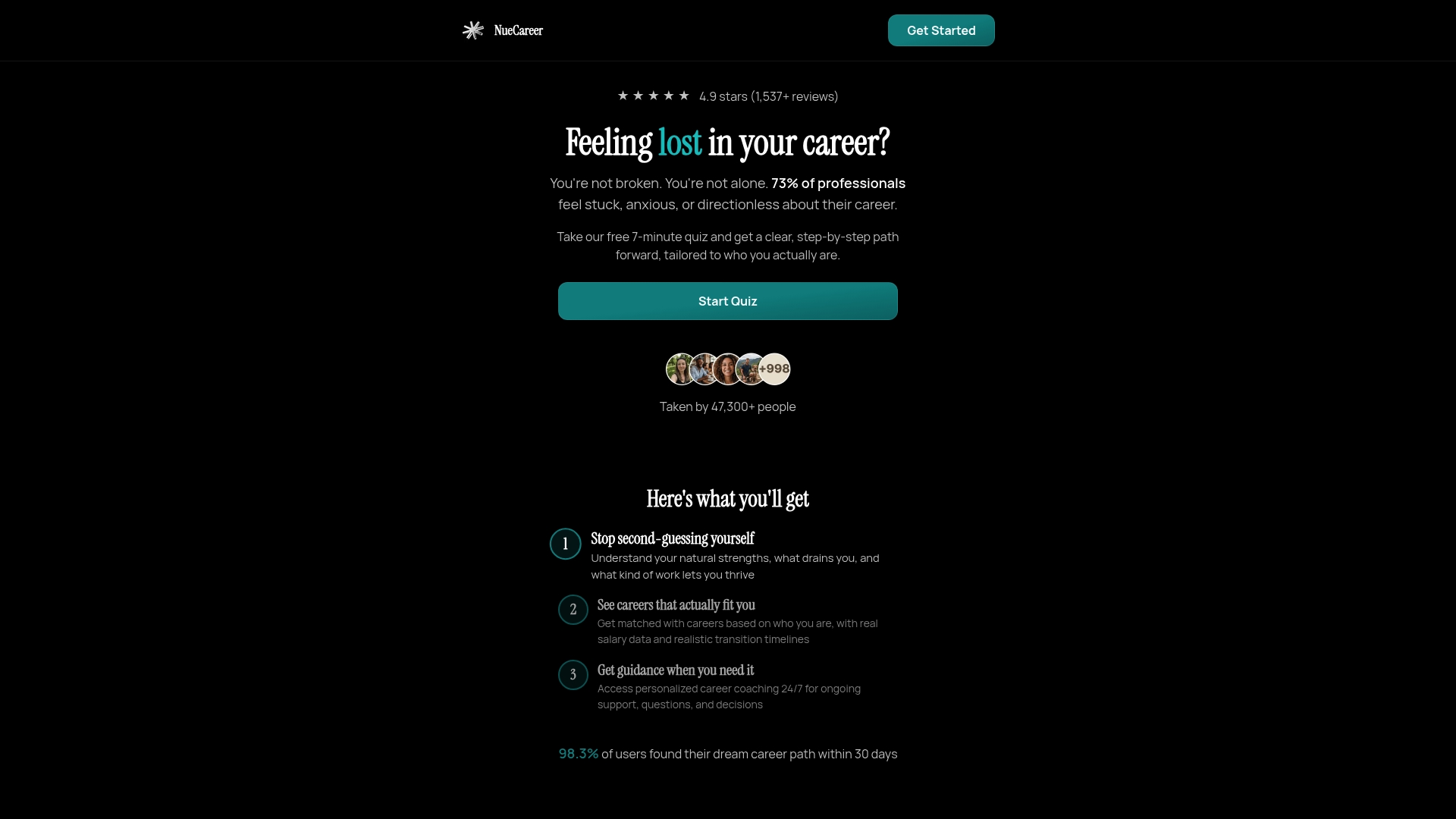
NueCareer gives you the foundation that most job search tools assume you already have. Start with the free career clusters quiz to identify your strengths and discover career paths aligned to who you actually are. Then use the free AI skills tool to identify exactly which skills to highlight on each application. From there, NueCareer's job boards, personalized roadmaps, and 24/7 coaching chat keep your search moving with confidence. If you are ready to bring structure, clarity, and direction to your entire career search, explore NueCareer and see what changes when you start from your strengths.
FAQ
What are job search organization tools?
Job search organization tools are software platforms that help job seekers track applications, tailor resumes, and manage their hiring pipeline. Popular examples include Teal, Huntr, Jobscan, and NueCareer.
Which free job search tracker is best in 2026?
Teal is the strongest free job application tracker for most job seekers, offering resume scoring, keyword matching, and a visual pipeline dashboard at no cost.
How do AI fit scores work in job search apps?
AI scoring tools analyze your resume against a job description and return a match percentage. Applying to roles above a 70 to 80 percent fit threshold reduces low-probability submissions and increases interview conversion.
Should I use multiple job search organization tools at once?
Use complementary tools rather than overlapping ones. Pair a tracker like Teal with a resume optimizer like Jobscan, and always maintain a personal master record alongside any third-party app.
When should I use a career coach instead of a job search tool?
Use a career coach when tools alone are not producing results or when you need help with positioning, interview preparation, or accountability. Career coaching services work best alongside organized tracking, not as a replacement for it.