
Get Replies Fast: 4 Cold Emails Job Seekers Can Send to Hiring Managers

Use four 75–125 word, mobile-scannable cold emails that start conversations with hiring managers. Includes a follow-up sequence and quick NueCareer tools...
Yes, targeted cold emails to hiring managers work, and often outperform portal applications. The winning format is short: 75 to 125 words, with one personalized opener, one proof point, and a low-effort ask like a 15-minute chat. Follow up once or twice, adding something new each time, and stop if you hear nothing after the third try.
TL;DR:
- Cold emails with personalized openers and relevant proof points have a higher open rate and can outperform portal applications, especially in small or newly moved teams.
- Finding the right contact involves searching LinkedIn, company websites, recent news, or mutual connections, then verifying the email address before sending.
- Subject lines that specify the role or include recent news perform better than vague ones, and the opening sentence must immediately establish relevance.
- Keep outreach concise, between 75 and 125 words, with one clear link, and avoid attaching resumes initially to prevent spam filters.
- Following up two or three times with new information increases response chances, but persistence should stop after three attempts if no reply is received.
Table of Contents
- How Cold Emailing a Hiring Manager Actually Works
- Who to Contact and How to Find Their Email
- What Subject Line and Opener Actually Get Opened?
- The Cold Email Structure That Fits on One Screen
- When and What to Say in Your Follow-Up
- Etiquette and Deliverability: Don't Undo Your Own Effort
- Three Short Examples Worth Copying
- NueCareer's Take on High-Impact Outreach
- How NueCareer Turns This Into a Repeatable System
- Sources
- FAQ
How Cold Emailing a Hiring Manager Actually Works
A cold email skips the applicant tracking system entirely. Instead of your resume sitting in a queue behind hundreds of others, your message lands directly in the inbox of the person who can actually say yes. Targeted outreach to hiring managers can outperform portal applications by a wide margin when the note reaches the right person and includes real personalization.
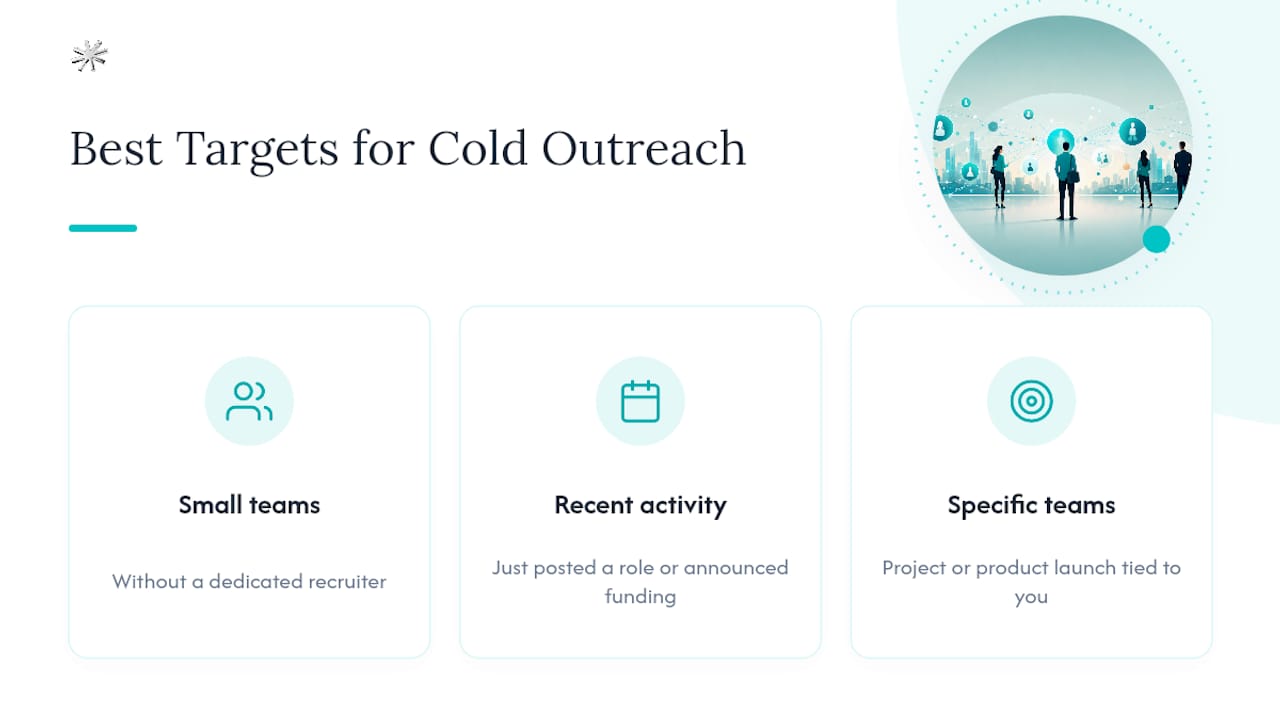
That does not mean every email gets a reply. A realistic benchmark is a conversation, an introduction, or a referral, not a job offer from message one. Cold outreach earns the strongest return in specific situations: small teams without a dedicated recruiter, companies that just posted a role or announced funding, and teams where you can name a specific project or product launch tied to your background.
Pro Tip: Check the company's news page or LinkedIn activity before writing. A hiring signal from the last two weeks (a launch, a hire, a press mention) gives you a natural reason to reach out now instead of "just checking in."
Cold outreach rewards people who do a little homework before they hit send. It punishes anyone sending the same paragraph to fifty inboxes.
Who to Contact and How to Find Their Email
Skip the recruiter unless you specifically want a screening conversation. Aim one level up from the role, usually the hiring manager or team lead who will actually supervise the position. For a marketing coordinator role, that is the marketing manager, not the VP.
A few reliable ways to find that person and their contact information:
- Search the LinkedIn People tab filtered by company and title to spot the likely hiring manager or team lead.
- Check the company's "team" or "about" page, which often lists department leads by name.
- Scan recent press releases or local news coverage, where quoted names frequently match the person running the team.
- Ask mutual connections directly. A short LinkedIn message asking "Do you know who leads the design team there?" costs nothing and often works.
- Use a free-tier email finder tool to guess the address once you have a name, then confirm the format against a publicly listed company email.
Before sending anything, verify the address. Most companies use a predictable pattern (first.last@company.com or first initial plus last name), and you can confirm that pattern with a free verification tool before you send. A bounced email does more than waste your effort. It can flag your own address as unreliable for future outreach, which matters if you plan to follow up later.
What Subject Line and Opener Actually Get Opened?
Vague subject lines like "Opportunity" or "Quick Question" get deleted on sight. Specific ones get opened because they signal the sender did their homework. Short, specific subject lines that name the role, team, or company consistently perform better than generic ones.
Three formulas that work:
- Role plus team: "Backend Engineer, Interested in Your Payments Team"
- Mutual connection: "Sarah Chen Suggested I Reach Out"
- Recent news hook: "Saw Your Series B, Curious About the Growth Role"
Your opening sentence has to earn the second sentence. Three patterns work well: reference something specific about their team's recent work, mention a mutual connection by name, or state your relevant experience in one clause tied directly to their open role. Skip "I hope this finds you well." It tells the reader nothing and wastes a line in a message that has almost none to spare.
Timing matters less than people assume. Sending on a Tuesday morning instead of a Friday afternoon might nudge your open rate slightly, but a sharp, relevant subject line beats perfect timing every time. A generic message sent at 9:00 AM on a Tuesday still gets ignored.
The Cold Email Structure That Fits on One Screen
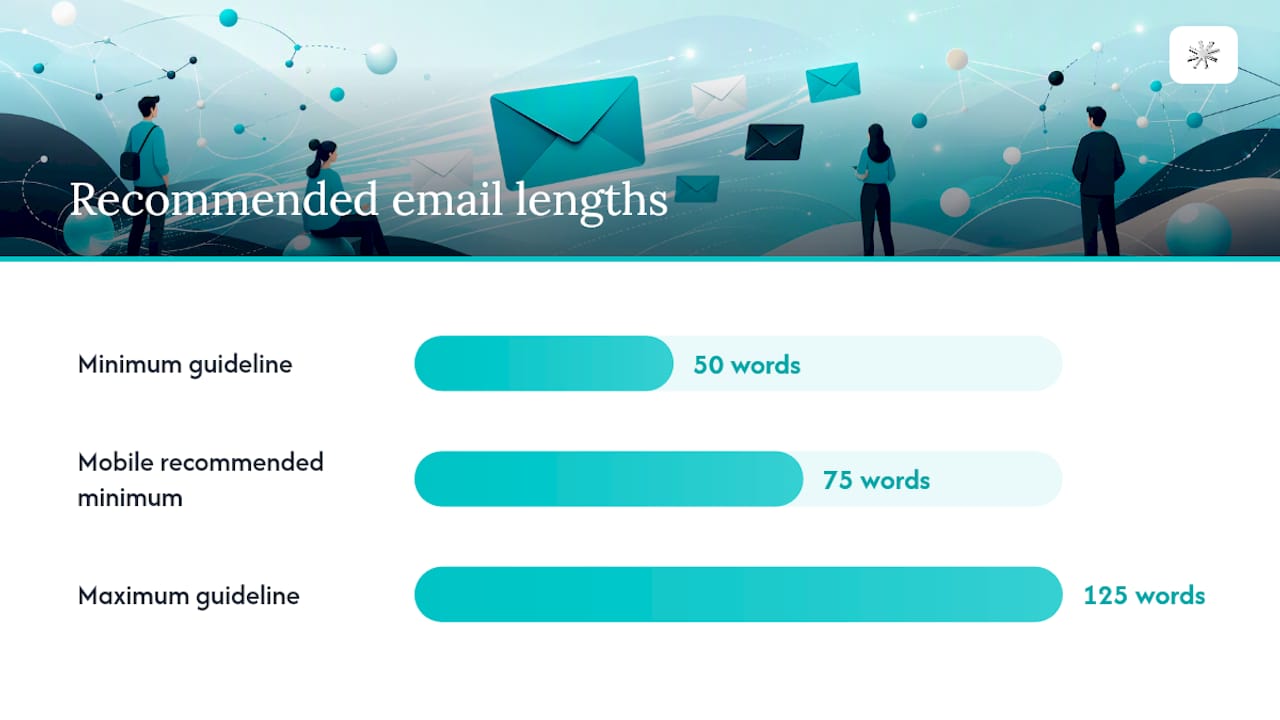
Every effective cold email follows the same five-part skeleton: subject line, opener, proof point, small ask, sign-off with one link. A cold email should run 50 to 125 words, open with who you are and why you're writing, and lead with a small request rather than a demand for a job. Other guidance narrows that window further, recommending 75 to 125 words so the whole note fits in a single mobile scan without scrolling.
A few rules apply across every version:
- Never attach a resume on the first message. It reads as a mass-blast and can trigger spam filters.
- Include exactly one link, ideally to a portfolio, LinkedIn profile, or relevant project.
- Tailor the proof point to a problem their team is likely solving, not a generic list of your skills.
Here are four templates you can adapt in minutes.
Junior candidate:
Subject: Marketing Intern Turned Full Time, Interested in Your Team
Hi [Name], I built and shipped a social campaign during my internship at [Company] that grew engagement 40% in six weeks. I noticed [Their Company] is expanding its content team and would love 15 minutes to share how I'd approach your next campaign. Portfolio here: [link]. Open to a quick call this week?
Mid-level professional:
Subject: Cut Support Response Time 30%, Curious About Your Ops Role
Hi [Name], I led a process overhaul at [Company] that cut average support response time by 30% in one quarter. I saw your team is scaling customer operations and wanted to introduce myself directly. Would you be open to a short call to compare notes? [LinkedIn link]
Career changer:
Subject: From Teaching to UX, One Project to Show You
Hi [Name], I spent six years teaching before retraining in UX design, and I just completed a case study redesigning [Relevant App]'s onboarding flow. I'd welcome five minutes of feedback if you have time, or a quick chat about your design team's current needs. Case study: [link]
No direct experience:
Subject: Aspiring Analyst, One Question About Your Team
Hi [Name], I'm building toward a data analyst role and have been following [Company]'s recent expansion. I put together a short analysis of [relevant public dataset] to show my approach. Would you be willing to share what skills matter most for your next hire? Happy to send the analysis either way.
When and What to Say in Your Follow-Up
Silence after one email is normal, not a rejection. Staged follow-ups work because most people are busy, not uninterested. Some outreach data suggests the majority of positive replies come after the second or third follow-up, not the first message.
A workable sequence:
- Day 0: Send the original email.
- Day 3 to 4: Send a brief nudge referencing something new, like a company update or a relevant article.
- Day 7: Send a second follow-up with a small piece of added value, such as a portfolio update or a specific insight about their product.
- Day 10 to 14: Send a final, low-pressure note asking if now is a bad time and offering to check back later.
Each follow-up needs a reason to exist beyond "just bumping this up." A short line referencing a recent company announcement, a relevant article you read, or an update to your own portfolio gives the reader something new to react to. A follow-up email generator can help you vary the wording across touches so message three doesn't read like a copy of message one.
After three attempts with no response, stop. Move to a different contact on the team, apply through the company portal directly, or revisit the opportunity in a month.
Etiquette and Deliverability: Don't Undo Your Own Effort
Pick one channel per person and stick with it. Contacting the same hiring manager on LinkedIn and by email in the same week reads as pushy, and experts specifically warn against this kind of cross-channel pileup. If you already sent a LinkedIn message, give it a week before trying email, and vice versa.
A short deliverability checklist keeps your message out of spam and your sender reputation intact:
- Verify the email address before sending, not after it bounces.
- Send from a consistent personal address rather than a new one for every outreach batch.
- Skip attachments on the first message; a resume PDF is one of the fastest ways to trip a spam filter.
- Keep the tone conversational, not transactional. "I'd love to hear your take" reads better than "Please review my qualifications."
Pro Tip: If LinkedIn is where the hiring manager is most active, a personalized LinkedIn message built around their recent posts often outperforms a cold email to the same person. Choose the channel where they actually show up, then commit to it.
Pushy outreach usually shares one trait: it asks for too much, too soon. Keep the ask small and the tone easy, and you avoid the two mistakes that get messages ignored or blocked.
Three Short Examples Worth Copying
Short, specific messages consistently beat long, polished ones. Each example below leads with a different kind of proof, matched to where the sender actually stands.
- Junior candidate, project-first proof: "I redesigned my university's event sign-up flow as a class project and cut drop-off by half in user testing. I'd love to hear how your team approaches onboarding." This works because it shows initiative without claiming professional experience the sender doesn't have.
- Mid-career, metric-driven result: "I managed a $200,000 vendor budget at my last role and renegotiated two contracts that saved 15% annually. I noticed your team might be scaling procurement and wanted to introduce myself." This works because a concrete dollar figure and percentage make the claim checkable and specific.
- Career changer, low-pressure sample offer: "I recently completed a freelance project rebuilding a nonprofit's donor database in Airtable, and I'd be glad to send a short write-up if useful. Would you be open to a quick chat about what your data team needs right now?" This works because it offers proof without demanding a meeting first.
NueCareer's Take on High-Impact Outreach
Most job seekers write one cold email, hear nothing, and give up. That's a targeting problem more often than a writing problem. NueCareer's approach starts with clarity on which roles actually fit your strengths, because a vague target produces vague proof points, and vague proof points get ignored.
The practical workflow: use a strengths assessment to narrow your target roles, draft one note written for a single named person rather than a template blast, verify the address, send it, then let a generator handle the follow-up variations so you're not staring at a blank reply box on day seven.
— Shane
How NueCareer Turns This Into a Repeatable System
Writing one great cold email is useful. Knowing exactly which roles to target before you write it is what actually moves the needle. NueCareer's 7-Minute Career Quiz matches you to roles built around your actual strengths, including paths you might not have considered, so every email you send is aimed at a job you're genuinely suited for instead of a guess.
Once you know your target, NueCareer's free tools take over the heavy lifting. The Letter of Interest generator drafts a personalized outreach note in minutes when there's no posted job to respond to. The job description analyzer pulls the exact language a team is using so your proof point matches what they're actually looking for. And when a hiring manager goes quiet, the follow-up email generator keeps your sequence sounding fresh instead of repetitive.
Start with the quiz. Everything else gets easier once you know exactly who to email and why you're a fit.
Sources
- How to Email a Hiring Manager (With Examples)
- How to Find and Email Hiring Managers Directly | Whali
- How to Write a Cold Email for a Job (2026) | PitchHired
- Cold email statistics and best practices — Woodpecker
FAQ
What is the 30/30/50 rule for cold emails?
There's no single agreed-upon "30/30/50 rule" for cold emailing hiring managers. If you've seen it referenced, it likely refers to a general sales-outreach framework rather than a job-search specific standard, so treat any exact breakdown with caution.
What is the 70/30 rule in hiring?
Like the 30/30/50 rule, the rule isn't a standard job-search or hiring benchmark backed by consistent data, and definitions vary by source. Focus instead on the structure that does have evidence behind it: a short, personalized message with one proof point and a small ask.
Is cold email still effective in 2026?
Yes. Targeted outreach that reaches a hiring manager directly can outperform portal applications, especially at smaller companies or teams actively hiring, though it still requires genuine personalization to work.
What is a good email to send to a hiring manager?
A good email runs 75 to 125 words, names a specific person, includes one concrete proof point tied to their team's needs, and closes with a small ask like a 15-minute call. Tools like NueCareer's Letter of Interest generator can help you draft that structure quickly if you're starting from scratch.