
Get Interviews Fast With Career Center Backed Resume Bullet Points

Use a career-center-backed formula for resume bullet points: six before/after rewrites, verb categories, and ATS checks to make bullets interview-ready.
The strongest resume bullet points follow one formula: action verb, specific task, measurable result. That combination works because it does two jobs at once. It gives applicant tracking systems the keyword context they scan for, and it gives recruiters the proof they're actually looking for. Master this pattern, borrowed from methods like XYZ and APR, and paired with tools like NueCareer's ATS Resume Checker, and vague duties become evidence someone should hire you.
TL;DR:
- Using action verbs paired with measurable outcomes makes resume bullets more effective for ATS and recruiters alike.
- Rephrasing vague duties into specific, quantifiable results significantly improves resume impact, even without workplace metrics.
- Tailoring bullets to match job descriptions and running them through ATS tools enhances keyword relevance and application success.
- Limiting recent roles to four to six bullets ensures recruiters focus on your strongest, most relevant accomplishments.
- Rewriting your top two bullets weekly against real job postings helps keep your resume current and compelling.
Table of Contents
- What Makes Resume Bullet Points Actually Work
- Before and After: Six Resume Bullet Rewrites You Can Copy
- Pick the Right Verb: Action Verbs by Category
- No Hard Numbers? Here's How to Quantify Anyway
- How Many Bullets Per Job, and How Long Should They Be?
- Tailoring Bullets to the Job Description Without Copying It
- Common Bullet Mistakes and a Six-Point Fix-It Checklist
- Tools That Put These Bullet-Writing Tactics Into Practice
- One Habit That Fixes Bullets Faster Than Any Rule
- How NueCareer Helps You Turn Bullets Into Interviews
- Sources
- FAQ
What Makes Resume Bullet Points Actually Work
Every effective resume bullet answers three questions in one line: what did you do, how did you do it, and what changed because of it. University career centers have taught variations of this for years, and they all boil down to the same skeleton.
The XYZ formula, popularized by Google's own hiring guidance and taught widely in career services, reads: "Accomplished X as measured by Y by doing Z." It forces you to lead with the outcome, not the task.

The APR formula (Action, Project or Problem, Result) works well for longer, more complex initiatives where the "problem" itself needs a sentence of context. Arizona's career center recommends it for roles involving multi-step projects rather than single, quick wins.
STAR (Situation, Task, Action, Result) belongs in interviews more than on paper, but the underlying logic, context before outcome, still shapes strong bullets.
- Use XYZ for quick, quantifiable wins: sales numbers, time saved, output increased.
- Use APR for projects with a clear problem you solved, like a broken process or a missed deadline.
- Use STAR logic mentally when drafting, then compress it into an XYZ or APR line for the page.
A quick example: "Managed customer accounts" becomes "Retained 94% of at-risk accounts by rebuilding onboarding emails (XYZ)." Same job, completely different signal.
Before and After: Six Resume Bullet Rewrites You Can Copy
Seeing the transformation matters more than reading about it. Career-center guidance consistently uses before/after pairs because they show exactly where a vague duty gains teeth.
- Sales: Before: "Responsible for selling products to clients." After: "Closed $340,000 in new business across 60 accounts by running weekly outreach campaigns."
- Marketing: Before: "Helped with social media content." After: "Grew Instagram engagement 47% in six months by launching a weekly reels series."
- Engineering: Before: "Worked on backend systems." After: "Cut API response time by 35% by refactoring three core database queries."
- Operations: Before: "Managed inventory." After: "Reduced stockouts by 22% by redesigning the reorder threshold system for 400 SKUs."
- Customer support: Before: "Answered customer questions." After: "Resolved 50+ daily tickets with a 96% satisfaction score by creating a shared troubleshooting guide."
- Entry-level/projects: Before: "Participated in a class project." After: "Led a 4-person team to build a budgeting app used by 30 classmates during a semester-long project."
Notice the last one. No employer, no paycheck, still a real number and a real scope. When you don't have workplace metrics yet, project-based scope counts.
Pick the Right Verb: Action Verbs by Category
The verb you choose sets the tone before the reader even gets to the result. Weak openers like "Responsible for" or "Helped" bury your role in passive language, and career-center research consistently flags them as the first thing to cut.
Group your verbs by what you actually did, then rotate them so no two bullets in a row start the same way:
- Leadership: Directed, oversaw, mentored, championed
- Build/create: Designed, launched, developed, engineered
- Improve: Streamlined, optimized, refined, upgraded
- Analyze: Assessed, diagnosed, forecasted, audited
- Growth: Expanded, scaled, accelerated, generated
- Collaboration: Partnered, coordinated, negotiated, aligned
For a full categorized list beyond these six groups, NueCareer's action verbs tool breaks down verbs by function so you're never stuck reaching for "assisted" again.
No Hard Numbers? Here's How to Quantify Anyway
Not every job hands you a spreadsheet of your own results. When that happens, alternative metrics still give a recruiter something concrete to picture.
- Team size: "Trained 8 new hires" instead of "trained new employees."
- Frequency: "Processed 40+ orders daily" instead of "processed orders."
- Time saved: "Cut reporting time from 3 hours to 45 minutes."
- Before/after comparison: "Increased class attendance from 60% to 85%."
- Conservative estimate with a qualifier: "Supported an estimated 200+ customer interactions per month."
A vague line like "Improved team communication" becomes "Reduced missed deadlines by an estimated 30% after introducing weekly status check-ins."
Pro Tip: If you genuinely can't estimate a number, describe scope instead, budget size, client count, or geographic reach. Scope reads as concrete even without a percentage attached.
How Many Bullets Per Job, and How Long Should They Be?
Recruiters skim. Practical formatting guidance suggests giving your most recent, most relevant roles the most real estate and trimming everything older.
- Current or most recent role: 4 to 6 bullets.
- Prior roles (within the last 5 to 7 years): 3 to 4 bullets.
- Older or less relevant roles: 1 to 2 bullets.
- Length: one line is ideal, two lines is the absolute max.
- Tense: present tense for your current job, past tense for everything before it.
- Order: lead each role with your highest-impact bullet, not your most recent task chronologically.
That last rule trips people up constantly. Bullets don't need to follow the order things happened. They need to follow the order that impresses.
Tailoring Bullets to the Job Description Without Copying It
A resume that says everything says nothing to an ATS. The fix is a short, repeatable pass before every application.
- Pull 3 to 5 priorities straight from the job description, look for repeated skills or requirements, not just job titles.
- Pick 2 to 3 existing bullets that already relate to those priorities.
- Swap the emphasis, not the truth. If the job description stresses leadership, lead with team size. If it stresses data, lead with the metric.
Here's the same accomplishment reframed three ways: "Led a team of 5 to redesign the onboarding process, cutting new-hire ramp time by 25%" can shift to "Cut new-hire ramp time by 25% through a redesigned onboarding process" for a process-focused role, or "Directed a 5-person team through a full onboarding overhaul" for a leadership-focused one.
Pro Tip: Run your tailored resume through an ATS Resume Checker before submitting. It flags missing keywords from the job description that your bullets could absorb naturally, without turning your resume into a keyword list.
Common Bullet Mistakes and a Six-Point Fix-It Checklist
Most weak bullets fail for the same handful of reasons: vague verbs, no measurable result, missing tools or methods, mixed tenses across a section, bullets that run two full lines, and the same three verbs repeated six times.
Run every bullet through this checklist:
- Does it start with a strong, varied action verb?
- Does it name a specific task, not a general duty?
- Does it include a measurable outcome or defensible scope?
- Does it mention a tool, method, or process where relevant?
- Is the tense consistent with the rest of that role?
- Does it cover one idea, not three stacked together?
One consistent finding from career-center analysis is that action verbs paired with numeric context serve both ATS parsing and human review simultaneously, which is exactly why this checklist works for both audiences at once. Start by rewriting your two weakest bullets first. They're usually the ones dragging the whole resume down.
Tools That Put These Bullet-Writing Tactics Into Practice
Knowing the formula is one thing. Applying it to your own scattered work history is another. A few tools make that gap smaller.
- The 7-Minute Career Quiz surfaces your core strengths, which often reveals achievements you'd otherwise describe as routine duties.
- The ATS Resume Checker validates whether your tailored bullets actually match the keyword patterns a job description demands.
- A resume objective writer helps frame the top of your resume so your strongest bullets aren't fighting a vague summary line above them.
- A personalized transition roadmap helps career changers translate unrelated experience into bullets that speak the new industry's language.
One Habit That Fixes Bullets Faster Than Any Rule
The single habit that improves resume bullets fastest isn't memorizing a formula. It's rewriting your top two bullets every week against a real job posting and checking whether a stranger would understand the result in five seconds. Most people write their resume once and never touch it again, which is exactly why it stops working. Treat your best bullets like a draft that's never finished.
— Shane
How NueCareer Helps You Turn Bullets Into Interviews
Writing sharp bullets is only half the battle. Knowing which strengths and achievements to lead with is the other half, and that's where a lot of job seekers get stuck. NueCareer is built for exactly that gap: instead of guessing which accomplishments matter, the 7-Minute Career Quiz surfaces your strengths and matches them to roles, so you know which bullets to lead with before you write a single line.
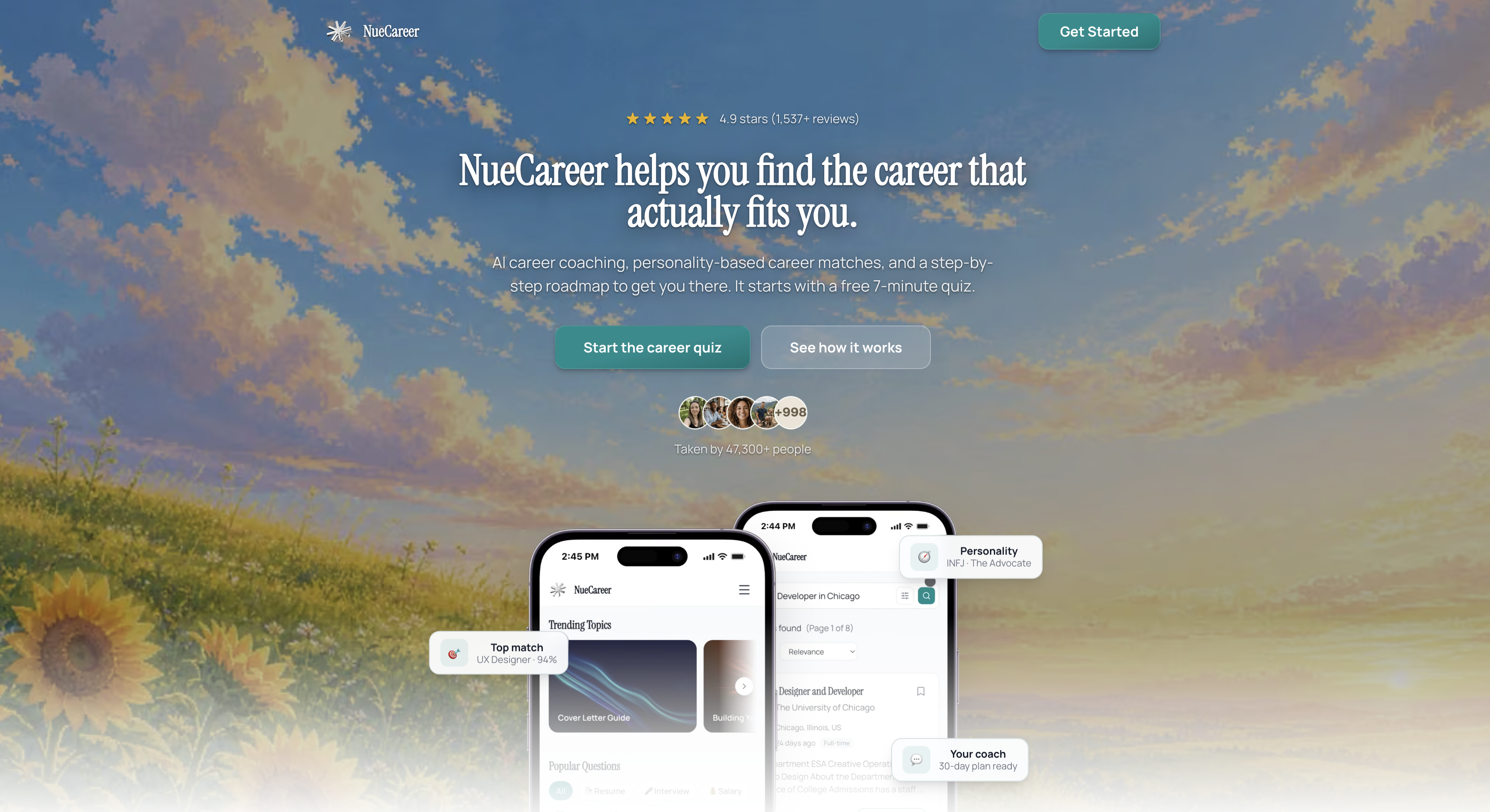
From there, the ATS Resume Checker tells you whether your rewritten bullets actually hit the keywords a specific job description expects, closing the loop between what you wrote and what the system reads. Pair that with personalized roadmaps and coaching chat, and you get a faster, more targeted version of the tailoring process this guide just walked through. Take the quiz, see your matches, and start applying with bullets that actually reflect what you're capable of.
Sources
- Writing Impactful Resume Bullets - Office of Career Strategy
- Resumes with Impact: Creating Strong Bullet Points
- Write Impressive Bullet Points Using APR Format
FAQ
What Is the 3 Bullet Points Rule?
The 3 bullet points rule generally refers to keeping older or less relevant roles down to 2 to 3 bullets each, so your resume's attention stays on recent, high-impact work. It's less a strict rule than a prioritization habit taught across career-center guidance.
What Are the 5 P's of a Resume?
There's no single, universally recognized "5 P's" framework in professional resume writing, definitions vary across sources. A safer approach is to stick with proven formulas like XYZ or APR, which are directly taught by university career centers.
Is It Okay to Have Bullet Points on a Resume?
Yes, bullet points are the standard format for listing accomplishments under each job because they're easier to scan than paragraphs. Keep each one to one line, two at most, and lead with a strong action verb followed by a measurable result.
What Are 10 Good Skills to Put on a Resume?
Strong resume skills typically mix hard skills (data analysis, project management, specific software) with transferable ones like communication, leadership, and problem solving, matched closely to the job description's own language. NueCareer's skills guide breaks down which skills to surface based on your target role.
How Many Resume Bullet Points Should Each Job Have?
Most guidance recommends 4 to 6 bullets for your current or most recent role, 3 to 4 for prior roles, and 1 to 2 for older positions. This keeps the resume focused on your most relevant, most recent achievements.