
Career Gap Scripts for Interviews: 90/10 Answers in 30–45 Seconds

Use ready 30–90 second scripts and the 90/10 rule to explain a career gap in interviews without oversharing. Includes resume edits, EEOC pointers, and...
When an interviewer asks about your career gap, the strongest answer follows a simple pattern: name the reason in one brief sentence, mention what you did to stay sharp, then pivot straight to why you're ready for this role. Career experts call this the 90/10 rule: spend about 10% of your answer on the gap and 90% on your value.
TL;DR:
- Most interviewers focus on your current readiness rather than the specifics of your career gap, especially if it is under a year.
- Framing your gap with a brief reason, followed by evidence of ongoing skill development or relevant activities, helps reassure hiring managers of your qualifications.
- Spend about 10% of your interview answer explaining the gap and 90% highlighting your recent skills and fit for the role for maximum impact.
- Clear, factual scripts and practicing your response aloud can boost confidence and coherence during interviews.
- Adjust your resume and LinkedIn to mask short gaps by emphasizing continuous activity and relevant projects or certifications obtained during the break.
Table of Contents
- What a career gap is and how hiring managers actually view it
- Common reasons for career gaps and how to frame each one
- A five-step framework for answering the gap question
- Copy-ready scripts you can adapt and rehearse
- Resume and LinkedIn edits that reduce visible gaps
- What actually works when you're the one explaining the gap
- Practicing your answer before the interview
- Sources
- FAQ
What a career gap is and how hiring managers actually view it
A career gap is any stretch of months or years when you weren't in paid employment, whether that came from a layoff, a health issue, caregiving, or a deliberate pause to study or travel. There's no universal cutoff that defines one, but most interviewers start asking specific questions once a gap stretches past several months.
Here's the reassurance worth holding onto: gaps are common. As of September 2025, people unemployed for 27 weeks or longer made up 23.6% of all unemployed people, a meaningful share of the labor market that includes plenty of qualified candidates sitting across the interview table from a hiring manager just like yours.
Most interviewers aren't trying to punish you for the gap itself. They're trying to answer a narrower question: are you ready now? That shifts the real test from "explain your absence" to "show your readiness," which is a much easier bar to clear. A short gap rarely draws follow-up questions at all. Once you're past the year mark, expect at least one clarifying question, and prepare for it rather than hoping it won't come up.

Common reasons for career gaps and how to frame each one
Most gaps fall into a short list of categories, and each one has a framing that keeps you honest without inviting a longer conversation than you want to have. The goal is a neutral descriptor followed by a quick reframe toward growth or continued skill use.
- Layoff or restructuring: "My role was eliminated in a company-wide restructuring." For those experiencing such situations, resources like Unfair Dismissal Preparation Australia can provide valuable support. Reframe: pivot to what you built in your last role and what you learned about the industry during your search.
- Caregiving or parental leave: "I stepped away to care for a family member." Reframe: mention how you stayed organized, managed logistics, or kept a hand in the field through freelance work.
- Education or certification: "I took time to complete a certification relevant to this field." Reframe: name the credential and connect it directly to the job description.
- Relocation: "I relocated for a partner's job and took time to establish myself in a new market." Reframe: mention research or networking you did in the new location.
- Travel: "I took planned time to travel." Reframe: highlight adaptability, independence, or cross-cultural experience if relevant to the role.
- Health or medical leave: "I took time for a health matter that's now resolved." Reframe: state you're fully able to perform the job's duties, without disclosing specifics.
- Career pivot: "I used the time to transition from one field to another." Reframe: describe the transferable skills you carried across, something a transferable skills guide can help you pin down.
Layoffs and caregiving are the two reasons interviewers hear most often, and both are widely accepted without much scrutiny. Neither requires an apology. State it plainly, then move on.
A five-step framework for answering the gap question
Walking into an interview with a plan removes the guesswork of the moment. This five-step framework gives you a repeatable structure you can adapt to almost any gap reason.
- Prepare: Write down your one-sentence reason before the interview, so you're not improvising under pressure.
- State: Say the reason plainly and briefly, without extra qualifiers or apologies.
- Validate: Add one sentence about what you did during the gap, whether that's a course, freelance project, or caregiving responsibility that built organizational skills.
- Pivot: Connect what you just described to the role you're interviewing for, naming a specific skill or accomplishment that applies.
- Close: End on genuine enthusiasm for the opportunity, not on the gap itself.
The 90/10 rule in practice: Career experts recommend spending roughly 10% of your answer on explaining the gap and 90% on your competence and fit for the role. In practice, that means one sentence on the reason and three or four sentences on what you bring to the table.
Pro Tip: *Time yourself. A tight answer runs 30 to 45 seconds.

A few habits separate a confident answer from one that raises doubt:
Do:
- Keep your explanation factual and brief.
- Lead with what you did, not what happened to you.
- Practice out loud until the transition to your pivot feels natural.
Don't:
- Apologize repeatedly or use language like "I know this looks bad."
- Volunteer more detail than the question asked for.
- Let the gap dominate more time than your qualifications do.
There's also a legal boundary worth knowing. Under U.S. law, employers generally cannot ask disability-related questions or require a medical exam before making a conditional job offer. If an interviewer asks something that edges into medical territory, you're allowed to redirect. A simple line works well: "I'd prefer to keep the medical details private, but I'm fully able to perform the essential duties of this role, and here's how." That protects your privacy while still answering the question the interviewer actually needs answered.
Copy-ready scripts you can adapt and rehearse
Having a script memorized removes the anxiety of finding the right words in the moment. Below are 30-second versions for the most common gap reasons, each built on the same brief reason, then value, then pivot structure.
- Layoff: "My position was eliminated during a company restructuring last year. I used that time to sharpen my project management skills through a certification and stayed connected to the industry through freelance consulting. I'm excited about this role because it lets me apply both directly."
- Caregiving: "I took time away from full-time work to care for a family member. During that period, I managed budgets, coordinated schedules, and handled logistics that sharpened my organizational skills. I'm ready to bring that same discipline to this team."
- Education: "I paused my career to complete a certification in data analysis. That gave me hands-on experience with tools this role uses daily, and I'm eager to put that training to work right away."
- Travel: "I took planned time to travel and step back from full-time work. It gave me perspective on working across different cultures and time zones, which I think translates well to a team like this one."
- Medical leave: "I took time for a health matter that's now fully resolved. I'm ready and able to take on the responsibilities of this role, and I'm looking forward to getting started."
- Career pivot: "I spent that time transitioning from marketing into product management, building skills through project work and coursework. This role is exactly the kind of opportunity I was preparing for."
For a 60 to 90 second version, add one more concrete detail: the name of a course, a specific freelance client, or a volunteer project. That extra sentence gives the interviewer something tangible to remember. For more script templates, adapting the wording to your own history helps it sound natural rather than rehearsed.
On tone, keep personal or medical details private unless you choose to share them, and never feel obligated to fill silence with more explanation than you planned. In a phone screen or panel interview, compress further: lead with your pivot sentence first if time is tight, since panels often move fast and reward candidates who get to the point.
Resume and LinkedIn edits that reduce visible gaps
Before you ever get to the interview, small formatting choices on your resume and LinkedIn profile can reduce how often the gap question comes up at all.
- Use a combination resume format that leads with a skills summary before your chronological work history, so the gap isn't the first thing a recruiter sees.
- List years instead of months for each role, which naturally smooths over gaps shorter than a year.
- Add a project or consulting line for freelance work, volunteer projects, or coursework completed during the gap, even if unpaid.
- Include certifications and courses in a dedicated skills or education section, showing you stayed active in your field.
A resume line might read: "Independent Consultant, 2024 to 2025: Advised two small businesses on marketing strategy while completing a Google Analytics certification." A LinkedIn headline could say: "Marketing professional | recently completed data analytics certification | open to new opportunities." Tools like a portfolio project guide can help you decide what's worth listing.
As for timing, most gaps don't need proactive explanation on the application itself. Save the explanation for the interview, where you control the framing, unless the application specifically asks about employment history gaps.
What actually works when you're the one explaining the gap
Honesty paired with brevity beats over-explaining every time. Candidates who apologize repeatedly or bury their answer in detail tend to make interviewers more curious, not less. The candidates who do best treat the gap as a factual footnote and spend their energy on what they can do starting Monday.
That's the same principle behind the tools we build at a career coaching platform: a short, clear script practiced a few times beats a long, anxious one improvised on the spot. If you're unsure what your gap period actually taught you, a career quiz or a mock interview run can surface skills you already have but haven't put into words yet.
— Shane
Practicing your answer before the interview
Knowing the right words is one thing. Saying them out loud, under pressure, with confidence, is another. That's where a bit of structured practice pays off more than another hour of reading advice.
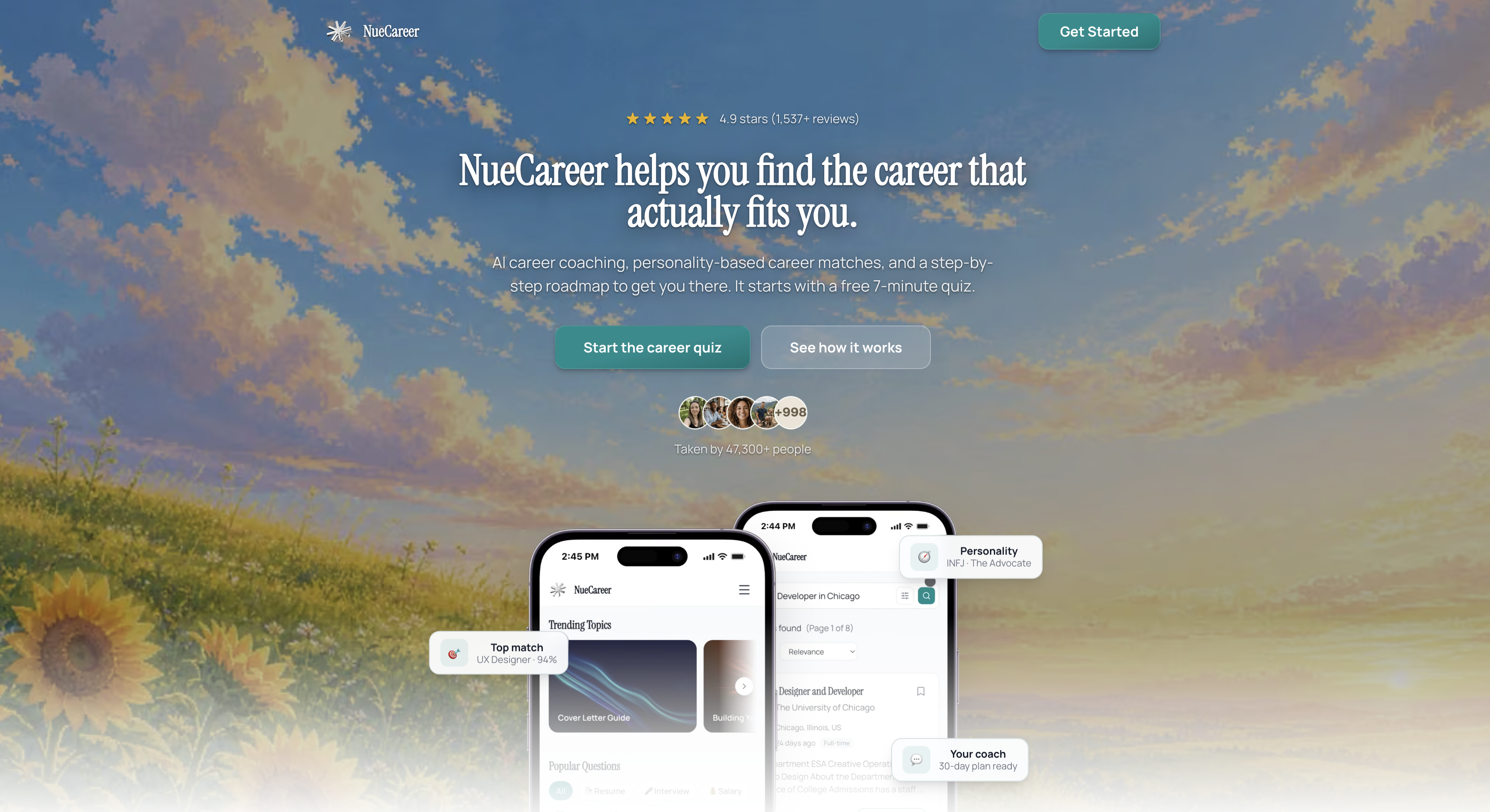
NueCareer's 7-Minute Career Quiz helps you identify the strengths worth building your gap script around, especially if the gap involved a shift in direction you haven't fully named yet. From there, Mock Interview Practice lets you rehearse your 30-second answer out loud and get feedback before the real conversation, and the built-in resume and cover letter tools help make sure your written materials match the story you'll tell in person.
A simple path: take the quiz to clarify your focus areas, draft your one-sentence gap explanation, then rehearse it inside a mock interview until it feels natural instead of memorized. Start with the career quiz or explore the full toolkit to build your answer from the ground up.
Sources
- How to answer, 'Tell me about this gap on your resume' in a job interview
- Long-term unemployed accounted for 23.6 percent of all unemployed people in September 2025 : The Economics Daily : U.S. Bureau of Labor Statistics
- Pre-employment inquiries and disability | U.S. Equal Employment Opportunity Commission
FAQ
How can I explain my career gap in an interview?
State the reason for your gap in one brief sentence, then spend most of your answer on what you did to stay engaged and how that connects to the role. This follows the 90/10 rule, spending a small portion on explanation and the rest on your fit.
What is the 90/10 rule in an interview?
The 90/10 rule means spending roughly 10% of your answer explaining the career gap and 90% focused on your skills, recent learning, and relevance to the job, according to career experts. This keeps the conversation centered on your readiness rather than your absence.
How much career gap is acceptable?
There's no fixed threshold, but shorter gaps under six months rarely draw extra questions, while gaps stretching past a year are more likely to prompt a follow-up. Long-term unemployment is common enough that it made up 23.6% of all unemployed people as of September 2025.
Is a one year gap bad on a resume?
A one-year gap is not inherently bad and is common enough that most interviewers will simply ask about it rather than dismiss you for it. What matters more is how clearly you explain it and how quickly you pivot to your skills and readiness for the role.