

Three moves separate candidates who move forward from candidates who get a polite rejection email: researching the role deeply enough to speak its language, building three or four tight STAR stories plus a handful of technical talking points you can narrate out loud, and confirming your setup so nothing but your answers determines the outcome. Most phone screens run 20 to 30 minutes, which means every minute has to count. Below, we walk through exactly how to prepare for each piece, with scripts, timing drills, and a practice schedule you can follow no matter how much runway you have.
TL;DR:
- Prepare six or seven reusable STAR stories, keep each answer under two minutes, and rehearse one minute versions aloud with cold follow up questions.
- Most technical screens last 20 to 30 minutes, but security or senior roles may run 45 to 60 minutes; tailor practice to the format.
- With three days, polish three stories, review familiar algorithm patterns, and run one timed mock; with 24 hours, review aloud and prioritize rest.
- Ask recruiters about next steps, hiring managers about team challenges, and peers about daily work; send a specific thank you email within 24 hours.
- Keep your introduction to 60 to 90 seconds, and test your signal, headset, backup call method, and quiet space before the interview.
Table of Contents
- The checklist to run in the hour and the minute before your call
- Build and deliver a sharp STAR-based story bank for engineering interviews
- Your practice plan for short technical screens
- Voice, pacing, and recovering from interruptions on the call
- What to ask, how to close, and what to do after you hang up
- Time-boxed practice plans for however much time you have
- Resources you can put to work today
- What actually decides a phone screen
- Try NueCareer: take the quiz, then book a mock interview
- FAQ
- Sources
The checklist to run in the hour and the minute before your call
Small failures sink phone screens more often than hard questions do. A recruiter who hears fumbling, silence, or "sorry, can you repeat that?" three times in ten minutes starts doubting your attention to detail long before the technical questions begin.
An hour before the call, confirm the basics:
- Your resume and the job description are open and visible, not buried in a folder.
- You know the recruiter's name, pronouns, and title, pulled from the calendar invite or LinkedIn.
- You've picked a quiet, private space and told anyone nearby not to interrupt you.
- Your headset is charged and paired, with your phone backup charged too.
In the sixty seconds before you pick up, run a faster version of the same check: test your signal with a quick call to a friend, close every browser tab except your notes, and open your code editor if the recruiter mentioned a live coding component. Then rehearse your opening line in your head, something close to this:
- "Hi, this is [your name], thanks for taking the time today."
- "I'm excited to talk about the [role title] position, happy to start wherever's useful for you."
- If asked to introduce yourself: a 60 to 90 second walkthrough of your current role, one relevant project with a result, and why this role caught your attention.
Keep that self-introduction tight. Recruiters have heard the five-minute life story a hundred times, and it rarely helps you.
Build and deliver a sharp STAR-based story bank for engineering interviews
A strong story bank is the single highest-leverage thing you can prepare, because the same six or seven stories, reshaped slightly, answer nearly every behavioral question a software engineering interviewer will ask.
Start by identifying themes rather than memorizing scripts:
- A time you owned a project end to end, including a mistake you caught.
- A measurable impact you drove, ideally with a number tied to performance, cost, or users.
- A collaboration that required convincing a skeptical teammate or stakeholder.
- A failure you can discuss honestly, with what you changed afterward.
- A moment you led without formal authority, like mentoring or driving a technical decision.
- A trade-off you made under time or resource pressure, and how you decided.
Each story should fit the STAR shape on a tight budget: one sentence of situation, one sentence of task, two or three sentences of concrete actions with a measurable result, and 15 to 30 seconds of reflection on what you learned. STAR answers targeted at about two minutes or less keep a recruiter's attention and avoid the rambling that makes even a great story land flat.
Timing drills matter more than most candidates expect. Record yourself telling each story once, listen back, and cut anything that doesn't serve the result. Then run 1-minute speed versions of each story so you have a short form ready if an interviewer interrupts with a follow-up. Pair practice, where a friend plays interviewer and asks a cold follow-up question, exposes the gaps that solo rehearsal misses. Mock interviews that mirror real timing and voice-only format produce the best transfer to the actual call, which is why rehearsing out loud matters more than reading your stories silently.
During the call itself, you can tailor a story in seconds. If the job description emphasizes cross-team collaboration, lead with your collaboration story and swap in a detail that echoes language from the posting. That small adjustment signals you read the role closely, not that you're reciting a generic script.
Pro Tip: Keep a one-page story bank open during the call, bulleted by theme, not written as full sentences. Full sentences tempt you to read; bullets let you speak naturally.

Your practice plan for short technical screens
Technical phone screens for most software engineering roles run inside that same 20 to 30 minute window, though specialized positions like security or senior technical roles can stretch to 45 to 60 minutes with added domain probes. Know which version you're walking into before the call starts, since a recruiter or the job posting usually signals it.
Your study list should stay focused rather than exhaustive:
- Twenty to thirty algorithm problems covering arrays, strings, hash maps, trees, and basic graph traversal, the patterns that show up repeatedly in 20-minute formats.
- Three design or domain-specific talking points if you're interviewing for a senior role, ready to discuss trade-offs in system design, scaling, or your specialty area.
- One or two debugging war stories, since interviewers often ask how you'd approach a broken build or a failing test under time pressure.
How you narrate your approach matters as much as reaching a correct answer. Start by asking one or two clarifying questions out loud, state your plan before you code, and talk through your logic as you go rather than falling silent. Close with a quick complexity analysis and a sentence on trade-offs you considered. Some larger companies split the technical screen time deliberately: Amazon's guidance for technical program manager interviews allocates roughly half the time to behavioral questions and half to technical problems, and expects candidates to fold metrics into their answers wherever possible.
A short mock script helps you rehearse the rhythm: "Let me make sure I understand the constraints, can inputs be negative?" followed by "I'll start with a brute-force approach, then optimize," followed by narrating your code line by line. If you get stuck, say so directly: "I'm not sure this is optimal, let me think through an alternative," rather than going silent for thirty seconds.
Pro Tip: If you freeze on a problem, talk through what you'd try next rather than guessing silently. Interviewers grade your reasoning process as much as your final answer.

Voice, pacing, and recovering from interruptions on the call
Phone screens strip away body language, which means your voice carries all the signal a recruiter gets. A flat, rushed delivery reads as nervous even when your answer is strong.
Before you dial in, confirm a short physical checklist: headset charged, phone charger within reach, a backup call method ready in case your connection drops, and your resume, the job description, and a one-page note sheet in front of you.
Once you're on the call, a few vocal habits make a real difference. Slow down slightly, since most people speed up when nervous. Breathe between sentences instead of running them together. Use a short pause before answering a hard question, since a two-second silence reads as thoughtful, not unprepared. Smiling while you talk genuinely changes your tone, even over the phone.
Interruptions happen. If your call drops, call back immediately and open with a brief, confident line: "Sorry about that, my connection dropped, picking up where we left off." Phone screens act as a filter recruiters use to decide who advances, and how calmly you handle a glitch is itself part of what they're evaluating.
A short, legible note sheet beats a full script every time. Write the interviewer's name, two or three bullet reminders per story, and a space to jot details the interviewer mentions, like team size or a tool name, so you can reference it later in the call without breaking your flow.
What to ask, how to close, and what to do after you hang up
The questions you ask reveal as much about your judgment as your answers do, and they should shift depending on who's on the other end of the call.
For a recruiter, ask about timeline and next steps:
- "What does the process look like after this call, and what's the typical timeline?"
- "Is there anything in my background you'd like me to expand on?"
For a hiring manager, ask about the team's actual problems:
- "What's the biggest challenge the team is tackling right now?"
- "What does success look like in this role after six months?"
For a peer or future teammate, ask about day-to-day reality:
- "What does the tech stack look like, and how often does it change?"
- "What's a typical week like on the team?"
Close the call by confirming interest and timeline, not compensation: "This sounds like a great fit based on what we discussed, I'm looking forward to hearing about next steps." Save salary conversations for later rounds unless the recruiter raises it first.
Within 24 hours, send a short thank-you email that references one specific detail from the call, a project the interviewer mentioned or a question you enjoyed answering. A concise follow-up email sent within a day keeps you memorable without feeling pushy. If you haven't heard back after the timeline the recruiter gave you, a brief, polite check-in email a few days past that date is reasonable; more than one follow-up before then usually isn't.
Time-boxed practice plans for however much time you have
How you prepare should match how much runway you actually have, not an idealized version of prep.
With seven or more days:
- Build your full story bank and edit each story to the 60 to 90 second STAR format.
- Work through 20 to 30 algorithm problems, spaced across several days rather than crammed into one.
- Run two to three mock interviews, mixing behavioral and technical formats.
With three days:
- Polish three STAR stories you're most confident will come up, rather than trying to perfect all seven.
- Review core algorithm patterns rather than new problems, and do one timed mock call.
- Test your call setup, headset, signal, and quiet space, at least once before the actual call.
With 24 hours or less:
- Re-read the job description and skim your three strongest stories once, out loud.
- Do a five-minute setup check: charge everything, confirm your space is quiet, and reread your notes sheet.
- Get real rest rather than cramming; fatigue undermines pacing and clarity more than an unreviewed algorithm pattern does.
Realistic mock interviews, timed and voice-only, remain one of the highest-leverage prep activities available no matter how much time you have left, because they surface the gaps that silent review never catches. After each mock, ask your practice partner for specific feedback: was your STAR answer under two minutes, did your technical narration make sense without seeing your screen, and did your closing question sound genuine rather than rehearsed.
Resources you can put to work today
A prep plan only works if you actually practice it rather than just reading about it. A few tools make that easier to act on immediately.
- The 7-Minute Career Quiz helps you get clear on your strengths before you decide which stories to lead with, especially useful if you're not sure which of your experiences to highlight.
- The Behavioral Interview Question Generator builds a tailored set of likely questions so your story bank practice targets what you'll actually be asked.
- Mock Interview Practice lets you run a timed, realistic session before the real call, which fits directly into the three-day and seven-day plans above.
- The interview follow-up email generator takes the guesswork out of your post-call thank-you note.
If your prep plan also involves project or product management interview practice specifically, The Freelance PM Club offers courses and coaching worth a look for that narrower track.
What actually decides a phone screen
After years of watching candidates prepare, the pattern is consistent: clarity beats cleverness. The candidates who advance aren't always the most technically gifted on the call, they're the ones who sound like they know exactly what they did, why it mattered, and how to explain it to someone who wasn't there. Curiosity shows up too, in the questions you ask back. One habit worth building: spend ten minutes a day editing one story down to its sharpest version, rather than trying to perfect your whole bank in one sitting the night before.
— Shane
Try NueCareer: take the quiz, then book a mock interview
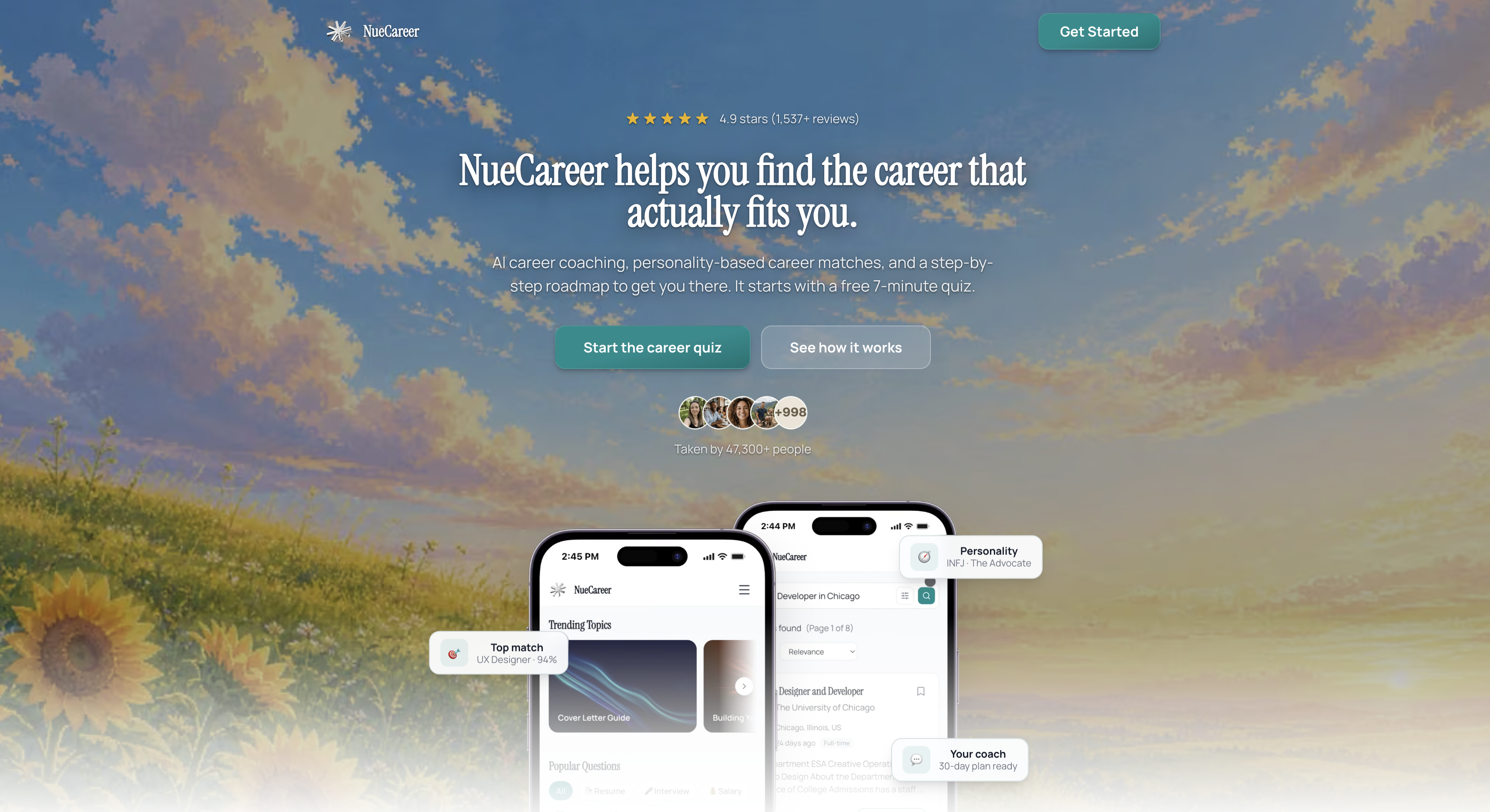
We built our tools around exactly the gap most candidates hit: knowing what to study is easy, knowing which stories and strengths to lead with is harder. Our 7-Minute Career Quiz takes the guesswork out of which experiences to highlight, and our Mock Interview Practice tool lets you rehearse a timed, realistic call before the one that counts.
- Take the quiz to clarify your strengths before you build your story bank.
- Run a mock interview on your three-day or seven-day practice schedule.
- Use our resume and cover letter tools to make sure your application matches the story you tell on the call.
FAQ
What is the biggest red flag to hear in an interview?
Vague, evasive answers to direct questions about past work are one of the clearest red flags interviewers listen for, since they suggest either exaggeration or a lack of real ownership over the work described. A candidate who can't explain their own specific contribution to a team project raises the same concern.
What should you avoid saying in a phone screen interview?
Avoid badmouthing a past employer or manager, since it reads as a lack of professionalism regardless of how justified the complaint feels. Also avoid bringing up compensation before the recruiter does, and avoid rambling past the two-minute mark on behavioral answers, since concise STAR answers hold attention better than long ones.
What is the 80/20 rule in interviewing?
In practice, that means a tight story bank and a focused technical review list matter more than trying to prepare for everything.
How long should you prepare for a phone screening?
A solid baseline is at least 30 minutes of focused research on the company and role before any call, with deeper prep, building your story bank and running mock interviews, spread across the days you have available. A week gives you room for full story editing and multiple mock calls, while 24 hours is enough for a final review and setup check if you've already done the groundwork.
What should I do right after a phone screen ends?
Send a short thank-you email within 24 hours that references one specific detail from the conversation, which keeps you memorable without sounding generic. If you haven't heard back by the timeline the recruiter gave you, a brief, polite follow-up a few days later is appropriate.
Sources
- Phone Interview Tips in 2026: How to Nail the First Screen and Move Forward – Career Services| Central Washington University
- Security Engineer Interview Prep (2026 Guide) – Custom Career Content | Toppel Career Center | University of Miami
- Interviewing in Tech? All the Tips You Need to Land That Job – Gateway Career Center | Lafayette College