
Start Week 1: Job Search Checklist, Printable Workflow + 7 Minute Quiz

Compact five phase job search checklist with a printable workflow, weekly plan examples, tracking tips, and the 7 Minute Career Quiz to speed setup and...
The fastest way to get organized is to follow a repeatable, five-phase checklist: foundation, per-application steps, outreach, interview prep, and tracking. Start this week by setting a weekly schedule and building a master resume, the two moves that make every later step faster. The full checklist, with a printable structure you can reuse for every role, follows below.
TL;DR:
- Prioritize outreach by focusing on weak ties and requesting informational chats to increase the likelihood of referrals over cold applications.
- Batch application tasks weekly to save time and improve efficiency, aiming for five tailored applications and three outreach messages each week.
- Use a simple, updated tracker to monitor application status and follow-ups, setting reminders immediately after submitting each role.
- Prepare four to six STAR stories aligned with role requirements and rehearse them to improve interview performance and reduce anxiety.
- Aim for an average of 42 days and between 30 to 200 applications before securing an offer, and revisit your resume or targets if no traction occurs after three weeks.
Table of Contents
- The complete job search checklist, step by step
- How to turn the checklist into a weekly plan with measurable goals
- Tools and simple systems to track applications and stay organized
- Networking and referrals: templates and priority order
- Interview preparation and post-interview checklist
- Realistic timeline and benchmarks for expectation setting
- How NueCareer maps to the checklist and shortens setup
- Handling job offers and rejections with best practices
- Self-care and managing job search stress
- Author coaching perspective: staying resilient during the search
- Try the 7-Minute Career Quiz to speed up your foundation phase
- FAQ
- Sources
The complete job search checklist, step by step
A good checklist does two things: it removes decision fatigue and it makes your effort repeatable. Break your search into five phases and work through them in order.
Phase A: Foundation
- Build a master resume that holds every accomplishment, metric, and responsibility you've ever had.
- Set up or refresh your LinkedIn profile with a clear headline and summary.
- Define your career priorities (industry, salary range, location, work style).
- List a set of target companies that fit those priorities.
- Identify three to five references and confirm they're willing to vouch for you.
University career centers consistently structure job searches into these same planning, preparation, implementation, and tracking stages, which suggests the sequence matters more than any single tactic.
Phase B: Per-application
- Research the role and company before you write a word.
- Identify three to five key requirements from the posting.
- Tailor three to five resume bullets to match those requirements.
- Write a targeted cover letter opening that names the role and one specific reason you fit.
- Run an ATS compatibility check before submitting.
- Submit through your preferred channel and log the date.
Phase C: Outreach Prioritize warm and weak ties, request 20-minute informational chats, and always ask who else you should talk to.
Phase D: Interview and follow-up Prepare four to six STAR stories, rehearse on a regular cadence, and send a thank-you note within 24 hours.
Phase E: Track and review Keep a simple tracker and review it weekly to see what's working.
Pro Tip: Batch Phase B tasks for all your applications in one sitting each week. Switching between research, tailoring, and submitting repeatedly wastes more time than doing each in a single focused block.
How to turn the checklist into a weekly plan with measurable goals
A checklist only works when it has a schedule attached. Career action plans built by university programs suggest allocating roughly half your time to networking and outreach, a quarter to tailoring materials and applying, 15% to researching companies, and the remainder to job boards, a split that reflects how much referrals outperform cold applications.
Translate that into weekly goals:
- Five tailored applications
- Three outreach messages
- Two informational chats
One sourced benchmark worth planning around: online applications convert at roughly 2% success, which is why outreach deserves the lion's share of your week. If three straight weeks produce no interviews, it's time to revisit your resume, your target list, or your outreach script rather than just applying faster.
Tools and simple systems to track applications and stay organized
You don't need elaborate software, just a tracker you'll actually update. At minimum, record the company, role, date applied, contact name, status, and your next follow-up date.
- A spreadsheet works well if you're applying to fewer than 20 roles at once.
- A Trello or Notion board helps once you're juggling multiple stages (applied, interviewing, offer) across dozens of applications.
- Calendar reminders for follow-ups prevent a chat from going cold.
- Saved email templates speed up thank-you notes and status check-ins.
For a ready-made structure, our guide on tracking job applications without losing your mind walks through the columns and automations that keep a search organized without becoming a second job.
Pro Tip: Set your follow-up reminders the moment you apply, not after you realize you forgot. A reminder set in the heat of submission is the one you'll actually see.
Networking and referrals: templates and priority order
Contact weak ties first: former colleagues, alumni from your school, and past managers you haven't spoken to in a while. These relationships tend to open doors faster than close friends who already know everything about your search.
- Send a short note requesting a 20-minute informational chat, not a job.
- Close every conversation with: "Who else should I be talking to?"
- Ask for an introduction only after the conversation has built some trust.
- Follow up within 48 hours with a brief thank-you that references something specific you discussed.
This approach treats networking as information gathering first, which makes people far more willing to help.
Interview preparation and post-interview checklist
Preparation collapses interview anxiety into a routine you can repeat.
- Map four to six STAR stories to the requirements listed in the job posting.
- Rehearse out loud at least twice, once alone and once with a mock interviewer.
- Confirm tech, attire, and route or login details the night before.
- Send a thank-you note within 24 hours of the interview.
- Prepare your negotiation range before an offer arrives, not after.
If a role goes quiet after a strong interview, it's reasonable to send one polite check-in two weeks later. Our 30-step interview guide and follow-up email generator cover the finer details of both steps.
Pro Tip: Write your thank-you note the same day as the interview while details are fresh, then schedule it to send the next morning.
Realistic timeline and benchmarks for expectation setting
A job search runs longer than most people expect. The average time-to-hire is about 42 days, and many candidates submit between 30 and 200 or more applications before landing an offer. Those numbers aren't a sign something's wrong. They're the baseline.
Use them to set weekly targets instead of daily panic. If your application count climbs past 100 with no traction, that's the signal to rework your resume, narrow your target list, or add a skill-building step rather than simply applying to more postings.
How NueCareer maps to the checklist and shortens setup
Phase A, building your foundation, is where most searches stall before they start. The 7-Minute Career Quiz speeds that up by matching you to roles built around your strengths, then handing you a personalized roadmap.
From there:
- Use the resume and cover letter tools to tailor materials for Phase B.
- Run the ATS Resume Checker before every submission.
- Use coaching chat when outreach scripts or interview answers need a second opinion.
Handling job offers and rejections with best practices
An offer deserves a pause, not an immediate yes. Ask for 24 to 48 hours to review the details in writing, including salary, benefits, start date, and any contingencies. Compare the offer against your original priorities list from Phase A rather than reacting to relief or excitement alone.
If the offer falls short, negotiate specifics rather than making a vague request for "more." Providing clear targets backed by your research gives the employer something concrete to respond to. If you decide to decline, do it promptly and graciously. Recruiters remember candidates who communicate clearly, and today's rejection is sometimes tomorrow's opportunity at the same company.
Rejections sting, but they carry useful information when you let them. A rejection after multiple interview rounds is worth a short, polite request for feedback. Not every recruiter will respond, but when they do, it's often the clearest signal you'll get about what to adjust.
Keep every rejection in your tracker with a one-line note on what you learned. Over a few months, patterns emerge: maybe your interview answers run too long, or your resume keeps getting past screening but stalling at the hiring-manager stage. That pattern is more valuable than any single outcome, and it's the reason Phase E, tracking and review, exists in the first place.

Self-care and managing job search stress
A job search is a marathon with no fixed finish line, and that uncertainty is exhausting on its own. Treating your well-being as part of the checklist, not an afterthought, keeps you functional long enough to see it through.
Protect a consistent sleep and movement routine even when application deadlines feel urgent. Set a firm stop time each day so the search doesn't bleed into every waking hour, and build in at least one activity each week that has nothing to do with job hunting. Isolation makes rejection feel heavier than it is, so keep regular contact with friends, family, or a support group of other jobseekers who understand the specific frustrations of the process.
Watch for signs that stress is affecting your output: rushed applications, skipped follow-ups, or dread before every networking call. When that happens, it's often more productive to take a short, planned break than to push through at reduced quality. If the search stretches past a few months and stress feels unmanageable, consider structured support, whether that's a career coach, a therapist, or a portfolio-building project that gives you a sense of progress while applications are pending.

Author coaching perspective: staying resilient during the search
Treat your search like a project with a weekly review, not an emotional rollercoaster you ride day to day. Small, repeatable actions, five applications, three outreach messages, beat sporadic bursts of effort followed by burnout. If you've been consistent for a month with no traction, that's the moment to bring in structured help rather than push harder alone.
— Shane
Try the 7-Minute Career Quiz to speed up your foundation phase
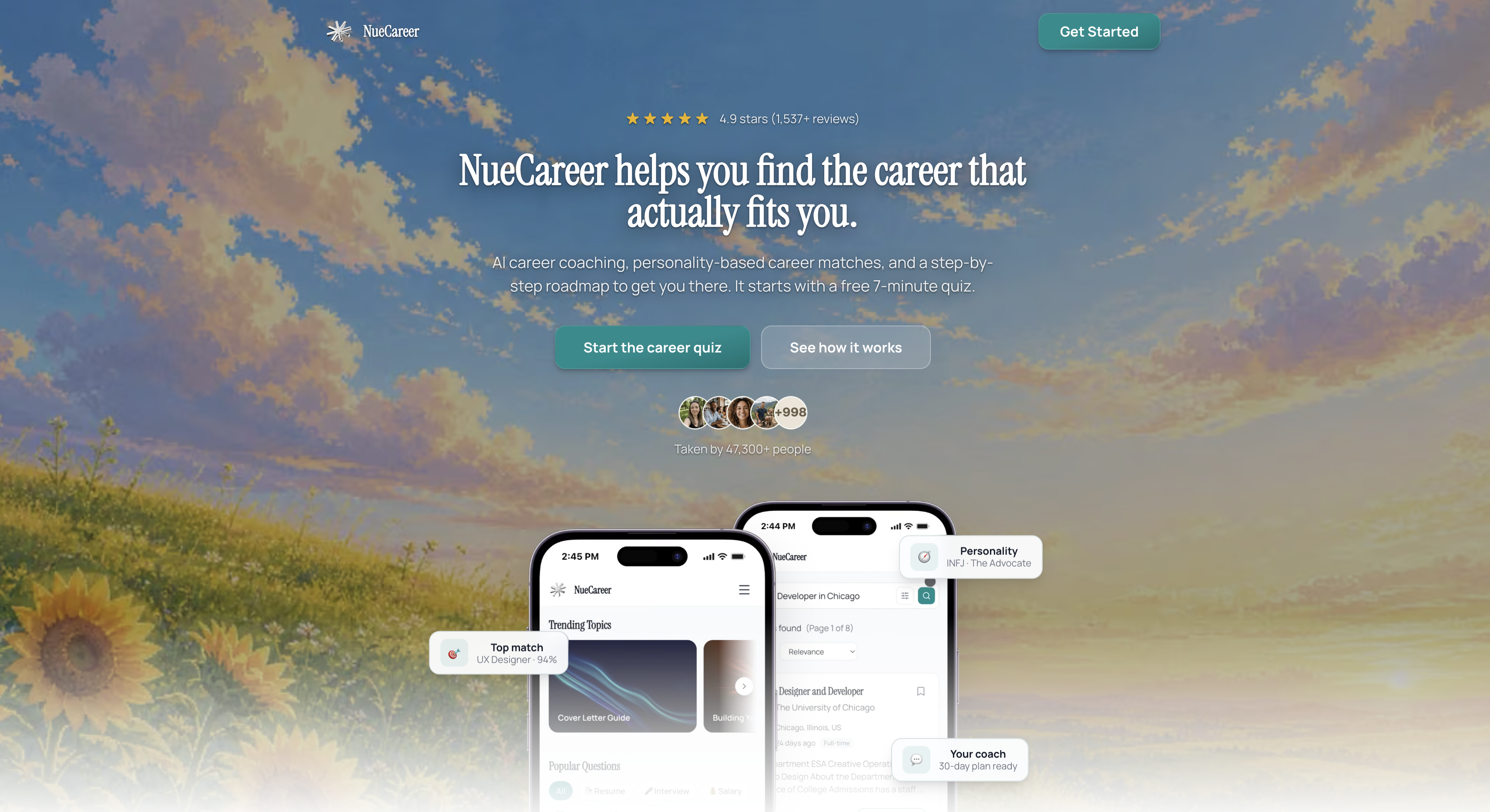
Building a master resume and figuring out your target roles from scratch, Phase A of this checklist, is the slowest part for most people. The 7-Minute Career Quiz shortens that by matching you to career paths built around your actual strengths, including roles you might not have considered on your own.
From your results, NueCareer builds a personalized transition roadmap, and our resume, cover letter, and ATS tools handle Phase B tailoring so you spend less time rewriting and more time applying. Take the quiz, get your roadmap, and start your week three with momentum instead of a blank page.
FAQ
What are the three R's of job search?
The three R's commonly refer to research, relationships, and resume, meaning you research target roles and companies, build relationships through networking, and tailor your resume to match what you find. This framing echoes the planning, outreach, and tailoring phases covered throughout a standard job search plan.
What are the 10 steps for conducting a job search?
A typical search covers defining your priorities, building a master resume, setting up LinkedIn, listing target companies, researching each role, tailoring your materials, networking for referrals, applying, preparing for interviews, and tracking every application with consistent follow-up. These steps map directly onto the five-phase checklist above.
What jobs make $3,000 a month without a degree?
Several occupations that typically require no formal educational credential, including skilled trades and transportation roles, can reach that income level depending on experience, location, and overtime, according to BLS occupational data. Exact pay varies widely by region and employer, so checking the specific occupation's median wage is the most reliable way to confirm a target income.
How long does a typical job search take?
Based on Bureau of Labor Statistics data, the average time-to-hire runs around 42 days, though it can take longer depending on your industry and target role. Setting weekly application and outreach goals, rather than fixating on a deadline, tends to keep momentum steady through that stretch.
Sources
- Create a job search plan | CareerOneStop
- Hand Laborers and Material Movers : Occupational Outlook Handbook: U.S. Bureau of Labor Statistics
- Job Search Checklist (PDF) - Greensboro College