
What Does Portfolio Career Mean for Working Professionals?

Discover what a portfolio career means for professionals. Explore its benefits, autonomy, and how to structure your diverse income streams.
TL;DR:
- A portfolio career is a planned structure built on multiple income streams and roles, offering resilience.
- Professionals should start with a stable anchor role, then add leveraged assets and develop reputation-based income over time.
A portfolio career is defined as a professional structure built on multiple concurrent income streams and roles, rather than dependence on a single employer. The term was popularized by management thinker Charles Handy in the 1990s, but the model has grown sharply relevant for working professionals today. Portfolio careers are emerging across age groups and sectors as deliberate, flexible career models offering autonomy and real risk reduction. Unlike a side hustle or gig work, a portfolio career is a planned construction. It treats your expertise, relationships, and time as assets to be allocated across multiple roles with different risk profiles.
What does portfolio career mean, and how is it structured?
A portfolio career is not about replacing one salary with many invoices. According to the Optionality Lab framework, portfolio careers construct a resilient professional architecture that balances income risk profiles to ensure stability. That distinction matters because it shifts the goal from "earning more" to "building something that holds up when one piece fails."
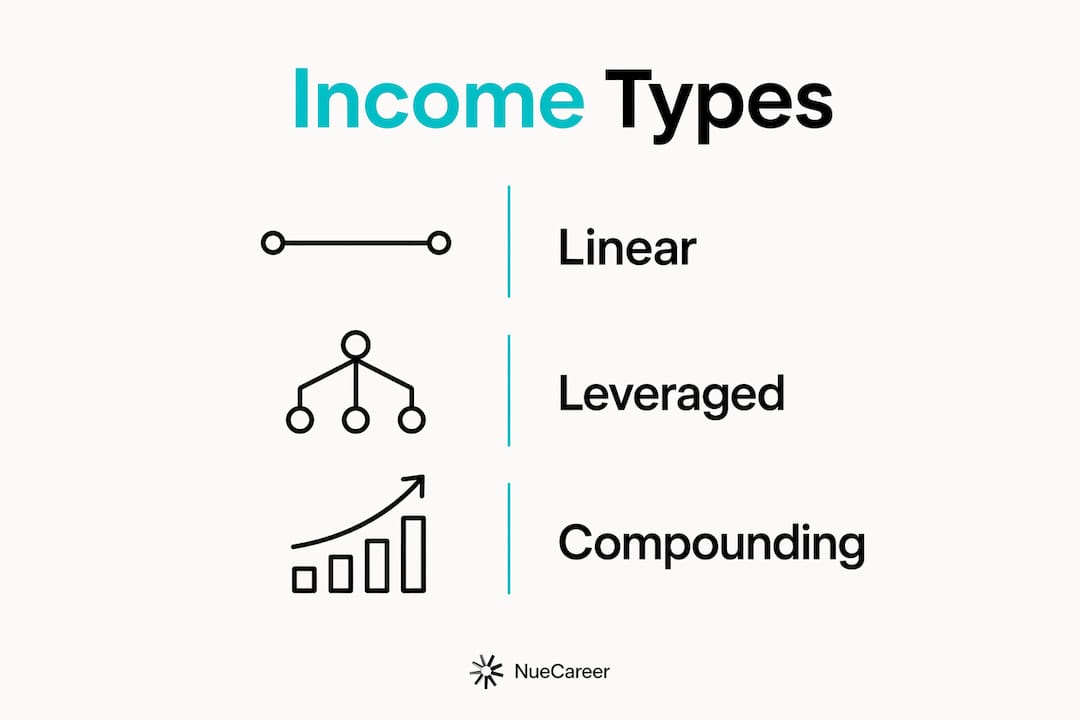
The structure rests on three income types:
- Linear income: Time-for-money roles such as consulting, part-time employment, or fractional executive work. These are predictable and immediate but cap out at the hours you can sell.
- Leveraged income: Revenue from assets or products that generate money without proportional time input. Think online courses, licensing agreements, or published guides.
- Compounding income: Earnings that grow through reputation and network effects over time. Speaking fees, advisory board seats, and referral-based consulting fall here.
Each income type carries a different risk level. Linear income is the most stable but the least scalable. Leveraged income takes time to build but reduces your reliance on any single client. Compounding income is the slowest to develop and the most durable once established.
| Income type | Time required | Risk level | Example |
|---|---|---|---|
| Linear | High | Low | Part-time consulting |
| Leveraged | Medium (upfront) | Medium | Online course |
| Compounding | Low (ongoing) | Low (long-term) | Advisory board seat |

Pro Tip: Map your current income against these three types before adding anything new. Most professionals discover they are 100% linear, which means one lost client wipes out everything.
How does a portfolio career differ from freelancing or gig work?
This is the most common point of confusion, and it matters. Freelancers sell time to multiple clients in one function. A freelance copywriter still does one thing, just for several buyers. A portfolio career builds multiple income streams with genuinely different profiles, roles, and purposes.
The distinction goes deeper than income mechanics. Portfolio careers include three categories of activity:
- Remunerated work: Paid roles and projects that generate direct income
- Contribution activities: Mentoring, board roles, or community work that build reputation and relationships without immediate pay
- Wellbeing activities: Work that sustains your energy, identity, and long-term capacity
That third category is what separates a portfolio career from a hustle. You are not just stacking jobs. You are designing a working life that holds together.
Michael Moran, a recognized voice in career design, frames it clearly:
"A portfolio career is a deliberate identity. It balances paid work, contribution, and wellbeing. It is a strategic career choice, not forced gig work or underemployment."
The misconception that portfolio careers equal precarious gig work actively undermines their strategic value. Gig work is reactive. A portfolio career is designed. If you want to understand how the freelance career path compares in practice, the differences in planning, identity, and income structure are significant.
How do you start building a portfolio career?
The most common failure point is trying to launch everything at once. Building income streams sequentially — anchor first, then leverage, then equity — is the approach that actually works. Attempting all three at once dilutes focus and usually produces nothing sustainable.
Here is a practical sequence to follow:
Establish your anchor role. This is your primary income source. It should cover your fixed costs and give you breathing room. A part-time consulting contract, a fractional role, or retained advisory work all qualify. Do not leave this step until it is genuinely stable.
Add one leveraged income stream. Once your anchor is solid, build one asset-based income source. This could be a course, a workshop series, or a licensing arrangement. Expect six to twelve months before it generates meaningful revenue.
Develop compounding income over time. Speaking engagements, advisory seats, and referral networks grow through reputation. You cannot force this step. It follows from doing the first two well.
Plan your benefits and tax structure early. Portfolio workers must manage their own insurance, taxes, and retirement planning. These are not optional details. Set up a separate business account, work with an accountant who understands self-employment income, and review your coverage annually.
Protect your wellbeing activities. Schedule them the same way you schedule client work. Professionals who skip this step burn out within two years and collapse back into a single employer relationship.
Pro Tip: Use a career roadmap to plot your income streams against a 12-month timeline. Seeing the sequence visually prevents the trap of trying to do everything in month one.
A single employer is a single point of failure. Portfolio careers reduce that risk by distributing income across multiple sources and relationships. That is not a philosophical preference. It is a structural advantage.
What are the benefits and challenges of a portfolio career?
The benefits are real and specific. The challenges are equally real and often underestimated.
Benefits worth building toward
- Income resilience: Losing one client or contract does not end your income. Other streams continue while you replace what you lost.
- Autonomy: You choose who you work with, when you work, and what you prioritize. This is the benefit most professionals cite first.
- Professional breadth: Working across multiple roles builds a wider skill set and a stronger network than most single-employer careers produce.
- Alignment: You can include work that matters to you, not just work that pays. Contribution activities and wellbeing roles become part of your professional identity.
Challenges to prepare for honestly
Portfolio careerists give up traditional employer benefits like pension contributions and sick pay. That trade-off is real and should be planned for before you make the shift.
| Challenge | What it means in practice |
|---|---|
| No employer benefits | You fund your own pension, health insurance, and sick leave |
| Tax complexity | Multiple income sources require careful quarterly tracking |
| Identity coherence | Explaining "what you do" becomes harder without a single job title |
| Income timing | Different streams pay on different cycles, creating cash flow gaps |
Managing your own insurance, taxes, and retirement planning requires proactive attention. Most professionals underestimate this until their first tax filing as a portfolio worker. The administrative load is manageable, but it does not manage itself.
The identity challenge is subtler. Your career identity shifts when you stop having a single job title. Some professionals find this freeing. Others find it disorienting. Knowing which camp you fall into before you start is worth the self-reflection.
A portfolio career comprises multiple professional activities that produce sustainable income and fulfillment. The key word is "sustainable." If the structure does not hold up under pressure, it is not a portfolio career. It is just a busy period.
Key Takeaways
A portfolio career is a deliberate professional structure built on multiple income streams with different risk profiles, designed to replace the single-employer model with something more resilient and aligned.
| Point | Details |
|---|---|
| Definition clarity | A portfolio career combines linear, leveraged, and compounding income streams into one resilient structure. |
| Sequential building | Start with an anchor role, then add leveraged income, then develop compounding income over time. |
| Not freelancing | Portfolio careers include contribution and wellbeing activities, not just paid client work. |
| Benefits trade-off | You gain autonomy and income resilience but must self-manage benefits, taxes, and retirement. |
| Identity matters | Clarifying your career identity before building helps you choose roles that align with who you are. |
Why I think most professionals are closer to a portfolio career than they realize
Shane here. After years of watching professionals wrestle with career uncertainty, the pattern I see most often is this: people already have the raw materials for a portfolio career. They consult informally on the side. They mentor colleagues. They have a skill that could become a course or a workshop. What they lack is the frame to see it as a structure worth building deliberately.
The professionals who struggle most are the ones who treat every non-primary income source as temporary. They keep waiting to "get serious" about it. The ones who thrive treat each income stream as a permanent piece of architecture from day one. They plan for it, protect time for it, and measure it.
The other thing I would push back on is the idea that a portfolio career is only for senior professionals. The sequencing model works at any career stage. A mid-career professional with ten years of domain expertise has more than enough to start an anchor role and one leveraged stream. The barrier is usually mindset, not credentials.
Think of it as a construction project, not a side hustle. Side hustles are optional. Architecture is intentional. That shift in framing changes everything about how you invest your time and energy.
Exploring student agency in professional development shows that the same principles of self-directed growth apply across career stages. Ownership of your path is not a senior-level privilege.
— Shane
How Nuecareer can help you find your portfolio career fit
Building a portfolio career starts with knowing what you are actually good at and what kinds of work energize you. That clarity is harder to find than most people expect.
Nuecareer's 7-minute career quiz identifies your strengths and matches you to career paths built around who you are, including paths you may never have considered. From there, the platform gives you personalized roadmaps, 24/7 coaching chat, and a full suite of resume and cover letter tools. If you are ready to map out what your portfolio career could look like, the career clusters quiz is a practical place to start. It takes minutes and gives you a clear picture of where your skills could take you across multiple roles.
FAQ
What is the simplest definition of a portfolio career?
A portfolio career is a professional structure built on multiple concurrent income streams and roles rather than a single employer. It is a deliberate career design, not a temporary arrangement.
How is a portfolio career different from having a side hustle?
A side hustle is typically a secondary income source treated as optional. A portfolio career treats every income stream as a permanent, planned piece of a larger professional structure.
What jobs suit a portfolio career path?
Consulting, coaching, fractional executive roles, teaching, writing, and advisory work all suit portfolio careers well. Any role that can be scoped as a project or retainer fits the model.
Do portfolio careers require giving up employer benefits?
Portfolio careerists do give up traditional employer benefits like pension contributions and sick pay. They replace these by self-managing insurance, retirement accounts, and tax planning.
How long does it take to build a stable portfolio career?
Building a stable portfolio career typically takes two to three years when following a sequential approach. The anchor role should be stable before adding leveraged or compounding income streams.