

An interview debrief is the internal conversation a hiring team has after interviewing candidates. The people who met you compare notes, discuss how your qualifications line up with the job, and agree on a recommendation for the hiring manager. You are not in the room. But knowing how it works helps you interview more clearly, follow up with purpose, and wait with less anxiety.
This guide walks through the process step by step, from the hiring team's side. Then it turns to what matters most to you: what a debrief means for your chances, and how to run a debrief of your own while the team runs theirs.
TL;DR
- A debrief is a hiring-team meeting (or shared discussion) after interviews, where interviewers share evidence from their notes and scorecards and recommend next steps.
- It usually happens soon after the final interview and before reference checks, and the hiring manager typically owns the final decision.
- Teams look at skills, role fit, and concrete examples from your answers, so specific, structured answers are easier for them to defend.
- A debrief does not always mean a decision that day. The answer can come later, for example after reference checks.
- Use the waiting time for your own debrief: write down what happened, send a prompt thank-you, and keep other applications moving.
Table of Contents
- What an interview debrief actually is
- Who is in the room and when it happens
- The interview debrief process, step by step
- What hiring teams weigh when they discuss you
- What a debrief means for you as a candidate
- Run your own debrief while you wait
- When the feedback is not what you hoped
- Our perspective: treat every interview as data
- Prepare so the debrief works in your favor
- Find roles worth debriefing about
- FAQ
- Sources
What an interview debrief actually is
The term can mean two different things, and job seekers often mix them up.
- The internal hiring debrief. This is a formal discussion after an interview in which the panel shares thoughts, impressions and observations about the candidate. The team discusses how well each candidate's qualifications align with the job requirements. This is what most people mean by the interview debrief process, and it is the focus of this article.
- A conversation with you. Sometimes a hiring manager invites you to a "debrief" after a presentation or a later-round interview to talk about the role in more detail. That is a continuation of the interview, not the team's decision meeting. Treat it as another conversation to prepare for.
If a recruiter tells you the team will "debrief" on Thursday, they mean the first kind. It is a good sign that the process is structured, and that your candidacy will be discussed on the evidence rather than on someone's passing impression.
Who is in the room and when it happens
At a university, the setup is easy to see. Cornell's hiring process describes a debrief as a meeting between HR and the search committee that takes place after the interviews stage and before the reference check stage. Corporate teams vary, but the pattern is similar:
- The hiring manager, who leads the discussion and typically holds the responsibility for the final hiring decision.
- Everyone who interviewed you, such as future teammates, a cross-functional partner, or a panel member.
- A recruiter or HR partner, who keeps the discussion on the job criteria and records the outcome.
Timing matters. Guidance for hiring teams says a debrief should happen as soon as possible after all interviews are completed so feedback stays fresh and less open to bias. A structured meeting commonly runs 30 to 45 minutes, though if the team is comparing several finalists, the process can stretch across a few days while interview schedules finish.
That last point explains many silent weeks. The team often cannot debrief on you until the last candidate has been interviewed.
The interview debrief process, step by step
Exact formats differ from company to company, but a well-run debrief tends to follow these steps.

1. Interviewers write their notes before they talk
Each interviewer records what they saw and heard, ideally before the group conversation begins. Yale's guidance for hiring managers notes that detailed, objective notes help qualify and justify an evaluation, and that structured interviews support a fair and equitable process. Scorecards rate you against criteria the team set in advance.
2. The team shares evidence, not just impressions
The federal 18F team's hiring guide says interviewers should share interview evidence and data, discuss scores and discrepancies, and create a unified candidate summary. Good debriefs ask "what did the candidate actually say or do?" rather than "did I like them?"
3. Differences are discussed, not averaged away
When one interviewer rated you high and another low, the debrief is where that gets explored. The same 18F guide argues that scores should spark discussion about discrepancies rather than be used mathematically to force a decision. Yale's guidance similarly says a hiring manager should seek differing perspectives to validate evaluations and scoring.
This is encouraging if you had one shaky answer. A single weak moment is one data point, and a strong example elsewhere in the interview can balance it.
4. The team agrees on a recommendation
The hiring manager uses the collective information to advance the candidate, reject them, or seek additional information. Some hiring teams treat interviewer recommendations as inputs for the manager rather than votes that must reach total consensus.
5. The decision is made now or later
A debrief can produce a move-forward recommendation, but the hiring manager may decide then or later, for example after reference checks. Some teams also hold the debrief asynchronously, through shared documents, emails or chats instead of one meeting. So a debrief may never look like a meeting from your side at all.
What hiring teams weigh when they discuss you
Knowing the criteria helps you prepare answers that are easy to repeat in that room. Hiring teams commonly consider a candidate's skills, qualifications, fit for the role, understanding of the company and its mission, culture fit, and any red flags. Effective teams focus on objective, competency-based evidence rather than subjective impressions.
Think of it this way: whatever you say is going to be summarized by someone else, in one or two sentences, to people who were not there. The easier you make that summary, the better you are represented.
| What the team needs to say about you | What you can do in the interview |
|---|---|
| "She has done this kind of work before." | Give one or two specific examples with scope, actions and results. |
| "He understands what the role is for." | Tie your answers to the problems the team described to you. |
| "She communicates clearly." | Answer in a clear structure and stop when you have made your point. |
| "He will work well with us." | Ask real questions about how the team operates and listen to the answers. |
| "We have no concerns about the gap in her background." | Address a career change or gap directly and briefly, and connect it to the role. |
If you are changing careers, structured stories do the heavy lifting. Our STAR method examples show how to turn experience from a different field into evidence an interviewer can write down, and our behavioral interview question generator lets you practice with questions tailored to the role.
What a debrief means for you as a candidate
Here are the honest answers to the questions we hear most.
Does a debrief mean I got the job? Not by itself. It means the team is evaluating candidates in an organized way. The outcome is a recommendation, and the hiring manager may decide that day or after reference checks.
Why haven't I heard back if they already debriefed? Debriefs often sit between interview rounds, and the next steps include reference checks, approvals, and offer preparation. Those steps take time that you cannot see.
Can I influence the debrief after the interview? Indirectly, yes. A thoughtful thank-you message that restates one or two points of fit gives the recruiter or hiring manager something concrete to bring into the discussion. Keep it short and specific, and send it quickly. Our guide to sending thanks within 24 hours has templates, and the interview follow-up email generator drafts one from the details of your conversation.
Should I ask about the debrief? It is perfectly reasonable to ask at the end of your interview, "What does the decision process look like from here, and when should I expect to hear from you?" The answer sets your expectations and tells you when it is appropriate to follow up.
Run your own debrief while you wait
The team is not the only one who should process the interview. Harvard's career guidance suggests that after an interview you reflect on your own performance, assess what you learned about the role, and consider debriefing with a mentor or colleagues to gain perspective. That works well as a short routine.
A 20-minute personal debrief
- Write it down the same day. List the questions you were asked, as many as you remember, while they are fresh.
- Mark your strongest and weakest answers. Which story landed? Which one rambled? Note what you would say differently, without judging yourself.
- Record what you learned about the job. What does a normal week look like? What problem is the team trying to solve? What worried them?
- Check your fit honestly. Did the role energize you, or did you feel your enthusiasm dip? A debrief is a two-way decision. You are evaluating them as well.
- Capture follow-up details. Names, topics you discussed, anything you promised to send. Use these in your thank-you note.
- Pick one thing to practice. One focused improvement beats a long list of regrets.
If you want a partner for step 6, you can rehearse out loud with mock interview practice before your next round.
Keep your search moving
Waiting passively is the hardest part, and it is where anxiety grows. Keep applying to other roles, and use your debrief notes to sharpen your materials. If the interview revealed which skills the employer cares about, add them to your resume where they honestly belong, with help from our skills for a job application tool.
It also helps to talk to people. A mentor, a former colleague, or someone working in your target field can offer perspective you cannot get alone, and informational interviews are a low-pressure way to build those conversations while you wait.
When the feedback is not what you hoped
Sometimes the debrief leads to a no. That hurts, and it does not mean you are on the wrong path. Often it means another candidate matched a narrow requirement more closely. Many employers will not share detailed feedback, but a polite request to the recruiter is worth sending. Ask one question: "Is there anything you would suggest I strengthen for similar roles?" If they answer, treat it as one data point alongside your own notes.
If several interviews end the same way, step back and look at the pattern. It may be your interview structure, or it may be that the target role is not aligned with your strengths. That second possibility is worth taking seriously, and it is exactly where a reset can help. Our career satisfaction factors checklist can help you name what you want your next role to give you.
Perspective
Our perspective: treat every interview as data
Most people think about the debrief as something that happens to them. We see it differently. The hiring team debriefs on you, and you should debrief on them. Both conversations are collecting evidence about fit.
The people we hear from are working adults who feel stuck, and many of them walk into interviews for roles they chose by default, not by design. When that happens, even a strong interview feels hollow, and a rejection feels like proof they are in the wrong place. We built NueCareer around the opposite idea: start with who you are, then choose the roles worth interviewing for.
That is why we start with a 7-minute quiz that identifies your strengths and matches you to career paths, including ones you may never have considered. Our personalized roadmap, 24/7 coaching chat and tailored application tools are designed to help you walk into each interview with a clear story about why this role fits you. When you can tell that story, a hiring team has something clear to carry into its debrief.
Use each interview as a lesson, not a verdict. Write down what you learned, adjust, and go again with more confidence.
Shane
Prepare so the debrief works in your favor
The best way to influence a conversation you will never attend is to make it easy for the people in it. A few practical habits do that.
- Know your three strongest examples. Pick three stories that show different skills, and be ready to adapt them to the role.
- Name the result. Interviewers remember outcomes. "Cut onboarding time by a week" is easier to carry into a debrief than "I improved processes."
- Mirror the job description. Use the employer's own terms for the skills they need, where they are true for you.
- Close with a summary. Finish by stating in one sentence why you are a fit. It may be the very sentence an interviewer repeats.
- Send your thank-you within a day. Our free thank-you email generator gets you to a clean draft in minutes.
Find roles worth debriefing about
A strong interview process starts earlier than the interview. If you are not sure which direction fits you, the 7-minute career quiz maps your strengths to career paths and shows options you may not have considered. From there, the platform builds a personalized roadmap and gives you coaching chat, job boards and resume and cover letter tools tailored to the roles you are targeting, so each application and each interview has a clear purpose.
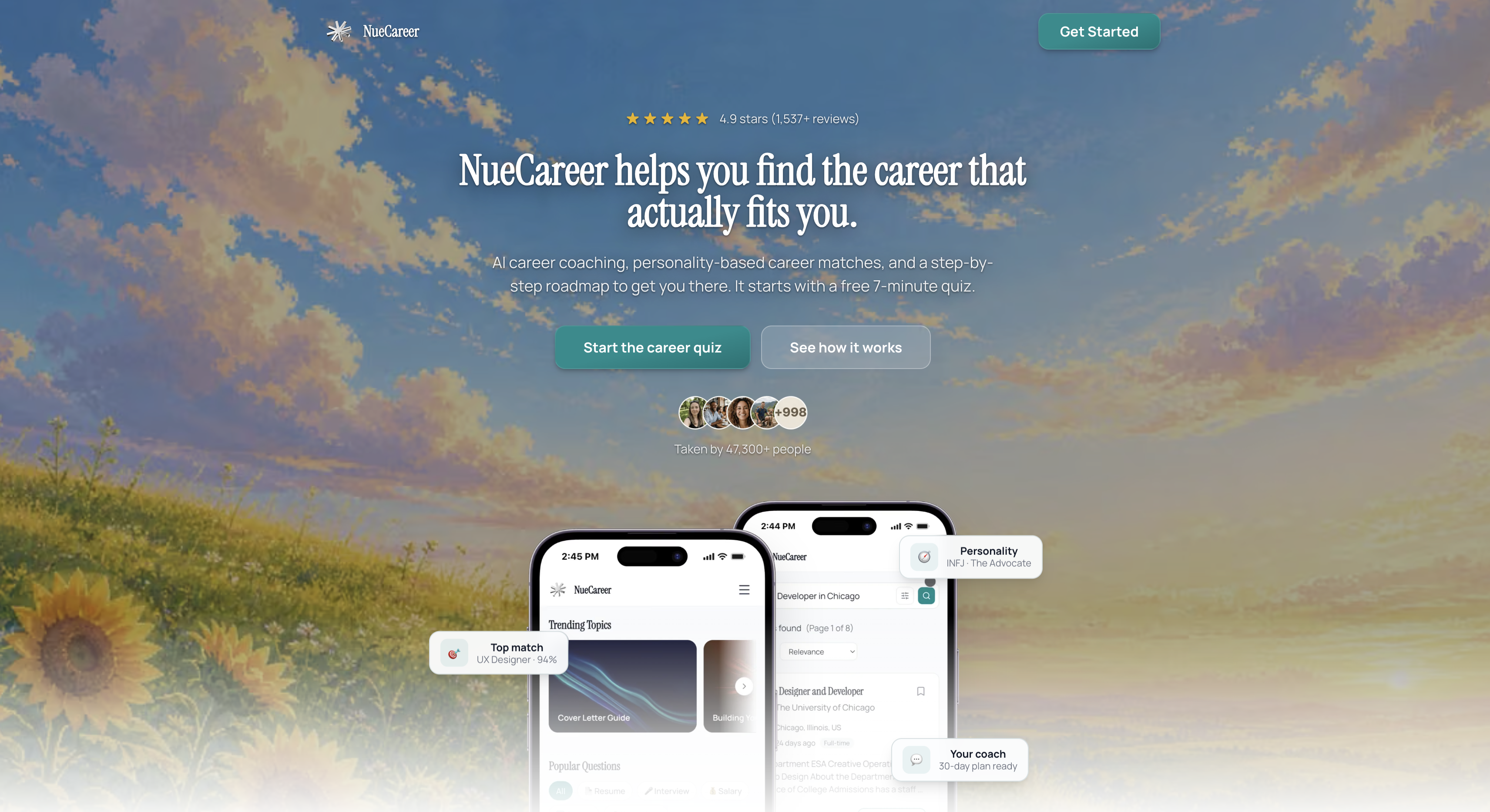
If you are already interviewing, explore our interview and application tools for mock interview practice, an ATS resume checker and more.
FAQ
What is the interview debrief process?
It is the structured discussion a hiring team holds after interviews. Interviewers share notes and scorecard evidence, talk through any disagreements, and recommend whether to advance, reject or gather more information. The hiring manager typically makes the final call.
How long after my interview does the debrief happen?
Teams are encouraged to debrief as soon as possible after all interviews finish, because memories fade and bias creeps in. If other finalists are still being interviewed, yours may wait several days. Cornell's process places it after interviews and before reference checks.
Does a post-interview debrief mean I got the job?
No. It means the team is deciding. The hiring manager may share a decision right after the debrief, or collect recommendations and decide later, such as after reference checks. Use the waiting time to send a thank-you and keep applying.
Can I ask for feedback after the debrief?
Yes. Send a brief, polite note to your recruiter or hiring manager thanking them and asking for one suggestion you could use for similar roles. Not every employer will reply with detail, so pair any answer with your own interview notes.
Is a hiring manager's request for a "debrief" with me a good sign?
Usually it means they want to continue the conversation about the role, often after a presentation or later-round interview. Prepare as you would for any interview: review the role, bring questions, and be ready to discuss how you would approach the first months.
Sources
- Interview Debrief Best Practices, Lever
- Using Interview Debriefs to Make More Informed Hiring Decisions, JobScore
- Debrief Process, Cornell Facilities and Campus Services
- Interview Debrief and Calibration, Pin
- How to Run a Successful Interview Debrief, BrightHire
- Debrief meeting guide, 18F Guides
- Scheduling and Conducting Effective Interviews, Yale
- Interview Debrief Process: 6 Steps to Better Decisions, Cogniver
- After the Interview, Harvard Writing Center