
What Happens in a Panel Interview, and How to Walk in Ready

Discover how panel interviews work and learn to identify key signals for success, enhancing your preparation and confidence.
A panel interview means two or more interviewers question you together in a single session, and you can gauge how it's going by watching for three signals: the panel builds on each other's questions instead of asking in isolation, you're trading specific evidence (numbers, examples, outcomes) rather than generalities, and someone mentions a next step or timeline before you leave the room. Those signals matter because panels are built to compare notes in real time. When engagement, specificity, and forward motion all show up, you're likely doing well.
Use this as your mental scorecard:
- Engagement: Panelists react to each other's questions, not just yours.
- Evidence exchange: You're citing metrics and outcomes, not just describing responsibilities.
- Next-step cues: Someone references timing, additional rounds, or who decides.
Key Takeaways
Panel interviews reward candidates who prepare structured, quantified stories and stay consistent across every panelist's question.
| Point | Details |
|---|---|
| Definition matters | A panel interview means two or more interviewers question one candidate together in real time. |
| Roles shape questions | HR weighs culture fit, hiring managers weigh technical ramp-up, peers weigh collaboration. |
| STAR keeps you scorable | Compress Situation, Task, Action, Result into 90 to 120 seconds with a measurable result. |
| Eye contact builds trust | Spend roughly 90% of your time on eye contact, reserving notes for brief keyword glances. |
| Practice with real tools | Nuecareer's 7-Minute Career Quiz and question generator turn the 7-day plan into rehearsal. |
Table of Contents
- How Panel Interviews Work and Differ From Other Formats
- What a Typical Panel Interview Timeline Looks Like
- What Panelists Are Actually Scoring
- Your 7-Day Panel Interview Preparation Plan
- How to Handle the Room Once You're In It
- Common Panel Interview Questions and How to Structure Answers
- What Changes in a Virtual Panel Interview
- Following Up After a Panel Interview
- Sources
- FAQ
How Panel Interviews Work and Differ From Other Formats
A panel interview puts one candidate in front of multiple interviewers at once, all hearing the same answers and reacting in real time. Companies use this format because it saves scheduling time and lets several decision-makers evaluate you simultaneously instead of running separate one-on-one rounds.
Panels typically mix roles for a reason:
- Hiring manager: owns the decision and probes technical readiness.
- HR partner: screens for culture and behavioral fit.
- Peer: tests day-to-day collaboration.
- Cross-functional stakeholder: checks how you'll work across teams.
- Senior leader: occasionally joins to weigh strategic thinking.
This is different from a one-on-one, where you build rapport with a single person, and different from a group interview, where multiple candidates compete for attention. In a panel, you're the only candidate, but you're managing several observers who may compare impressions live or shortly after instead of relying on secondhand notes.
What a Typical Panel Interview Timeline Looks Like
Panels rarely improvise. Interviewers usually agree beforehand on an agenda and divide up who covers which topic, so your questions may bounce between panelists in a planned rotation rather than randomly.
The in-room flow generally follows this arc:
- Brief introductions, often with each panelist stating their role.
- A rotation of questions, sometimes structured around a task or short presentation.
- Open Q&A where you can ask each panelist something specific.
- A close where someone explains what happens next.
After you leave, the panel typically debriefs and compares scores, often against a shared rubric.
Pro Tip: When a panel uses a scorecard, specific and quantifiable answers score higher than polished but vague ones. Panelists need something concrete to write down, not just something to remember.
What Panelists Are Actually Scoring
Panels tend to evaluate a consistent set of signals: role fit, communication clarity, collaboration, technical competence, problem solving, culture fit, and composure when a question gets redirected or challenged. Different panelists usually weight these differently.
- HR partner tends to weigh culture and behavioral fit most heavily.
- Hiring manager focuses on technical skill and how fast you'd ramp up.
- Peer interviewer cares most about day-to-day collaboration and communication style.
- Cross-functional stakeholder looks for how you handle competing priorities.
Panels also test whether you can bridge different perspectives in the room and stay composed when redirected, which is its own competency separate from your technical answers. Phrase your answers with quantified outcomes ("cut onboarding time by three weeks") and brief team context ("working alongside two other departments") so each panelist hears the version of your story that speaks to their priority.
Your 7-Day Panel Interview Preparation Plan
A structured week beats last-minute cramming, and it maps directly onto how to prepare for a job interview more broadly, just compressed for a multi-interviewer format.
- Day 1: Refine your 30-second elevator pitch and confirm the job description's top three priorities.
- Day 2: Research every named panelist on LinkedIn and note their likely angle (technical, cultural, cross-functional).
- Day 3: Write six STAR stories covering leadership, conflict, failure, achievement, collaboration, and a metric-driven win.
- Day 4: Rehearse each story aloud, timed to 90 to 120 seconds.
- Day 5: Run a full mock panel with two or three people playing different roles.
- Day 6: Test your tech (camera, mic, backup device) and print resumes for every expected panelist.
- Day 7: Review your notes once, then rest. Do not cram new material the night before.
Each STAR story should follow Situation, Task, Action, Result, but compress it: one sentence of setup, one of your specific action, and a closing line with a number attached. A tool like NueCareer's interview question generator can build role-specific practice questions so your mock panel mirrors the actual rotation you'll face.
For the mock interview itself, assign roles ahead of time (one person as hiring manager, one as HR, one as a peer), set a hard time limit per question, and have your mock panelists jot quick notes on clarity and pacing using Iteration's AI interview practice. Iterate after each round rather than trying to fix everything at once.
Pro Tip: Prepare at least one tailored question per panelist, plus two extras. Coursera's research on panel dynamics notes that treating the session as a two-way conversation, rather than an interrogation, changes how panelists read your composure.
Bring a printed resume for every confirmed panelist, even in 2026 when most communication happens digitally. It signals preparation and gives each interviewer something to reference during their own note-taking.
How to Handle the Room Once You're In It
Address whoever asked the question directly, then bring in the rest of the panel with brief eye contact as you close your answer. This keeps the asker engaged without ignoring everyone else at the table.
Constant note-checking reads as disengaged, even when you're just organizing your thoughts.
- Track panelists by seat number or initials, not full names, so your notes stay fast to reference.
- Write only keywords, not full sentences, so you're not looking down when someone asks a follow-up.
- When panelists disagree or interrupt, acknowledge both viewpoints briefly before answering, and use signposting language like "To your point on X, and building on that for Y..." to stay in control of the thread.
Pro Tip: If a normally quiet panelist hasn't spoken in a while, make brief eye contact directly with them during your answer. It shows emotional intelligence and often draws them into the next question.
Common Panel Interview Questions and How to Structure Answers
Expect a mix of behavioral, situational, and role-specific prompts, plus the near-universal opener.
- "Tell me about yourself."
- "Walk us through a time you disagreed with a teammate."
- "How would you handle competing priorities from different stakeholders?"
- "Describe a project that failed and what you learned."
- "Why this role, and why now?"
- "How do you handle feedback you disagree with?"
- "What's an example of a time you influenced someone without formal authority?"
- "How would you ramp up in your first 90 days?"
Structure every behavioral answer with STAR: Situation, Task, Action, Result. For panels, compress it into a 90 to 120 second version so multiple interviewers can score your answer consistently without it running long.
- One sentence of context (Situation and Task combined).
- Two or three sentences on your specific action.
- One closing sentence with a measurable result.
A candidate for a customer success role might answer "describe a time you saved an account" with: "A client threatened to cancel after a missed deadline. I owned the follow-up call personally, mapped a recovery plan with engineering, and delivered a fix within 48 hours. The account renewed and became one of our top three references that year." That's structure, action, and a number, all inside two minutes.
What Changes in a Virtual Panel Interview
Virtual panels add logistics that in-person interviews don't require. Position your camera at eye level, check lighting so your face isn't backlit, and clear your background before the call starts.
- Test your mic and headset at least a day ahead, not five minutes before.
- Confirm your internet connection is stable, and know your backup plan (phone hotspot, dial-in number) if it drops.
- Address silent panelists by name on camera, since body language cues are harder to read remotely.
- Use chat sparingly, mainly to share a link or clarify a detail, not to answer questions.
Have a backup device charged and know who to contact if the connection fails, so a tech hiccup doesn't cost you the interview.
Following Up After a Panel Interview
Debrief with yourself within an hour: write down three things you learned about the role, three moments where you communicated your strengths well, and one thing to improve next time.

Send individual thank-you notes to each panelist within 24 to 48 hours, referencing a specific detail from your conversation with that person rather than a generic template. If you haven't heard back within a week, one polite follow-up is appropriate; if there's still silence two weeks after that, send a brief closing note and move forward with other opportunities.
How Panels Read Consistency
Panelists compare notes after you leave, and what stands out most is whether your story holds together across different questioners. If your answer to the HR partner about teamwork contradicts what you told the hiring manager about ownership, that gap gets flagged in the debrief. Treat the whole session as one conversation with multiple threads, not separate interviews stitched together, and let your questions to them do some of the evaluating too.
Turn This Plan Into Practice With Free Tools
Reading a 7-day plan is one thing. Actually rehearsing STAR stories, generating panel-specific questions, and identifying which achievements to quantify is another, and that's the gap NueCareer's free tools are built to close. Nuecareer's 7-Minute Career Quiz helps you pinpoint which strengths to lead with before you ever walk into the room, so your STAR stories target what this specific panel is likely scoring.
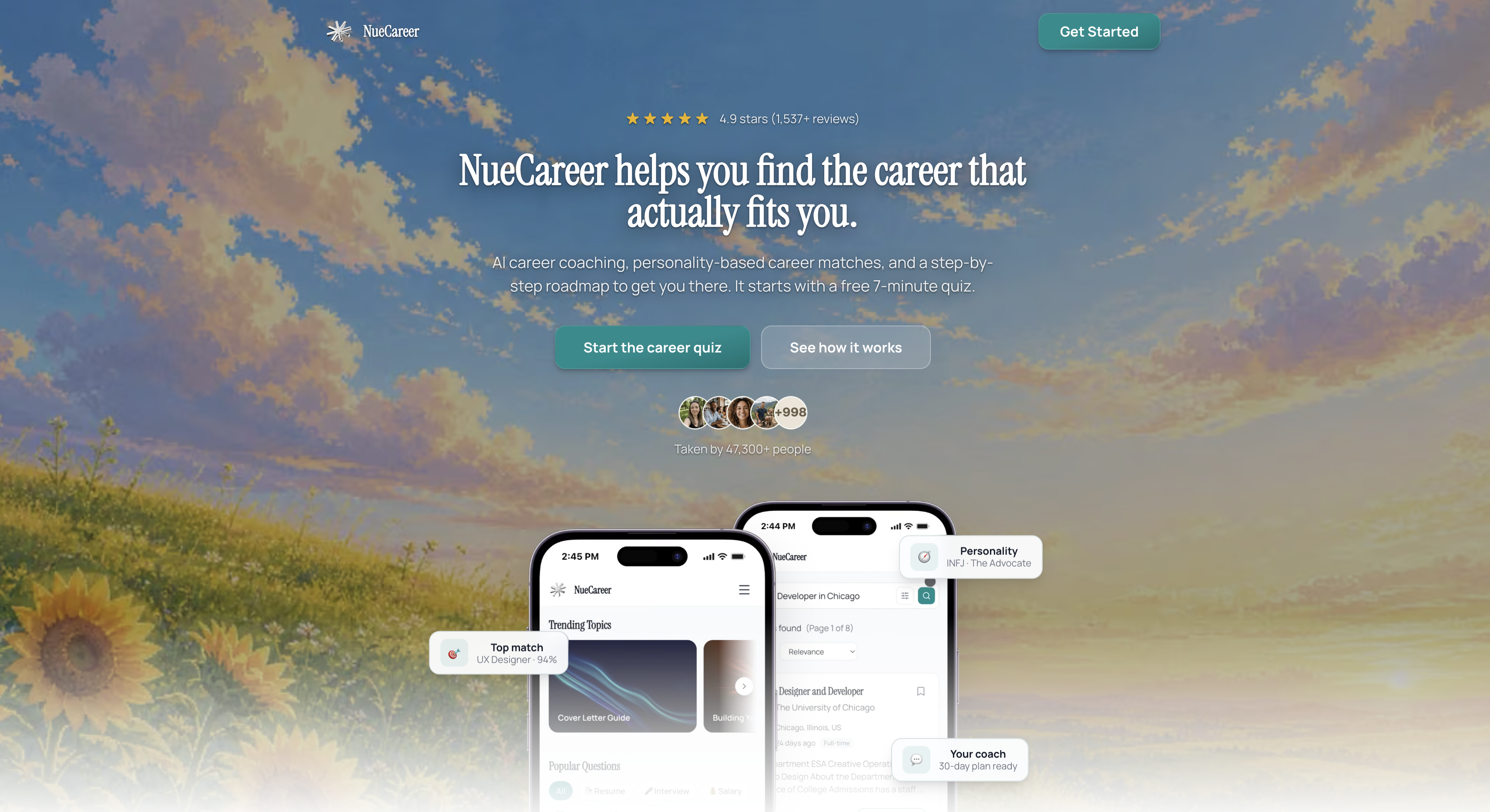
Pair the quiz with the free skills-to-metrics tool to pull the exact numbers your STAR answers need, and use the interview question generator to simulate the rotation a real panel would run. These aren't separate resources bolted onto your prep. They're the same templates referenced in the 7-day plan above, just built to practice with instead of just read. Start with the quiz and turn day three of your plan into an actual rehearsal today.
Sources
- How to Ace Your Next Panel Interview - USC Online
- 5 hacks to ace panel interviews — Forbes
- Panel interview — Coursera article
- What Is a Panel Interview and How to Succeed in One – Career Services | University of Texas Permian Basin
FAQ
How Do You Successfully Pass a Panel Interview?
Prepare six STAR stories with measurable results, research each panelist's likely focus, and rehearse aloud until your answers land within 90 to 120 seconds. Nuecareer's interview question generator can help you simulate the actual rotation before the real thing.

What Usually Happens in a Panel Interview?
Two or more interviewers ask questions in a planned rotation, often around an agenda they've agreed on beforehand, followed by open Q&A and a debrief where panelists compare notes against a shared rubric.
Is a Panel Interview Harder Than a One-on-One?
It's not necessarily harder, but it demands more attention management since you're addressing multiple people with different priorities at once. Candidates who prepare role-specific questions for each panelist tend to find the format more manageable.
What Should You Avoid Doing in a Panel Interview?
Avoid fixating on only one panelist, giving contradictory answers to similar questions from different interviewers, and rambling past the two-minute mark on any single response. Consistency across the whole conversation matters more than any single standout answer.