
Career Changers: Skills Based Resume Template and 7 Minute Quiz

Practical steps for career changers: copy a skills based resume template, craft metric-backed bullets, and use NueCareer’s 7 Minute Career Quiz and resume...
A skills-based resume groups your abilities into categories instead of listing jobs in order, and it works best when your skills matter more than your job titles: career changes, employment gaps, first jobs, or freelance work. Copy the template below, tailor the skill groups to the job posting, and back each one with a number. Purdue OWL, Coursera, and tools like resume builders can all help you get there faster.
TL;DR:
- Skills-based resumes are most effective when changing industries, addressing employment gaps, applying for first jobs, or showcasing freelance work, especially when job titles are less relevant.
- Including concrete results and numbers in skill descriptions significantly increases credibility, such as managing 60 client accounts with a 94% retention rate or reducing reporting time by five hours weekly.
- Hiding work history or creating overly creative layouts risks suspicion from recruiters and ATS software, which favor clear, standard sections and keyword matching.
- Using a hybrid or chronological resume format is preferable if your work history is steady and relevant, reserving the skills-based approach for when your titles don't reflect your abilities.
- Tools like the 7-Minute Career Quiz and ATS resume checkers can help identify your core strengths and ensure your resume passes parsing tests, making your skills more visible to recruiters.
Table of Contents
- What Is a Skills-Based Resume and When Should You Use It?
- Skills-Based Resume Template and Example
- How to Build a Skills-Based Resume Step by Step
- Writing Skill Entries That Actually Convince Recruiters
- When a Skills-Based Resume Can Backfire
- How NueCareer Helps You Execute Every Step
- A Practical Note on Making the Switch
- Build Your Skills-Based Resume With NueCareer
- Sources
- FAQ
What Is a Skills-Based Resume and When Should You Use It?
A skills-based resume, also called a functional resume, organizes your qualifications around competencies rather than employers. Instead of a work history that reads "Marketing Coordinator, 2021 to 2023, Marketing Coordinator, 2019 to 2021," you get headings like "Project Management" or "Client Communication," each followed by evidence pulled from wherever you actually built that skill. A reverse-chronological resume does the opposite: it centers your job titles and dates, with skills folded into the bullet points underneath each role, according to Indeed's comparison of the two formats.
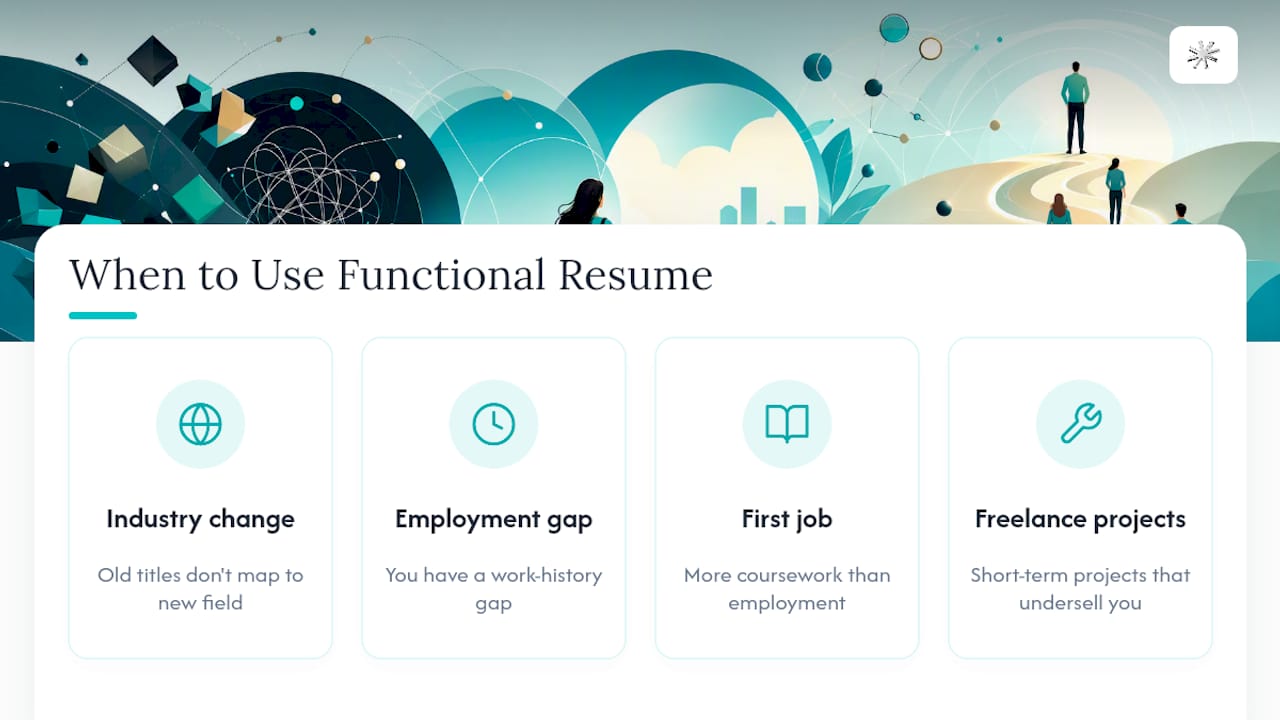
The functional format tends to work best in four situations: you're switching industries and your old titles don't map cleanly to the new one, you have a gap in your work history you'd rather not headline, you're applying for your first professional job and have more coursework than employment, or you're pitching freelance and project-based work where a string of short-term titles undersells your range. Coursera's guide to functional resumes points to these same four cases as the format's sweet spot.
If you have a steady, relevant work history and a hiring manager would want to see your career progression, skip the functional format. A hybrid resume, which leads with a skills summary but still lists jobs chronologically underneath, usually wins in that case.
Skills-Based Resume Template and Example
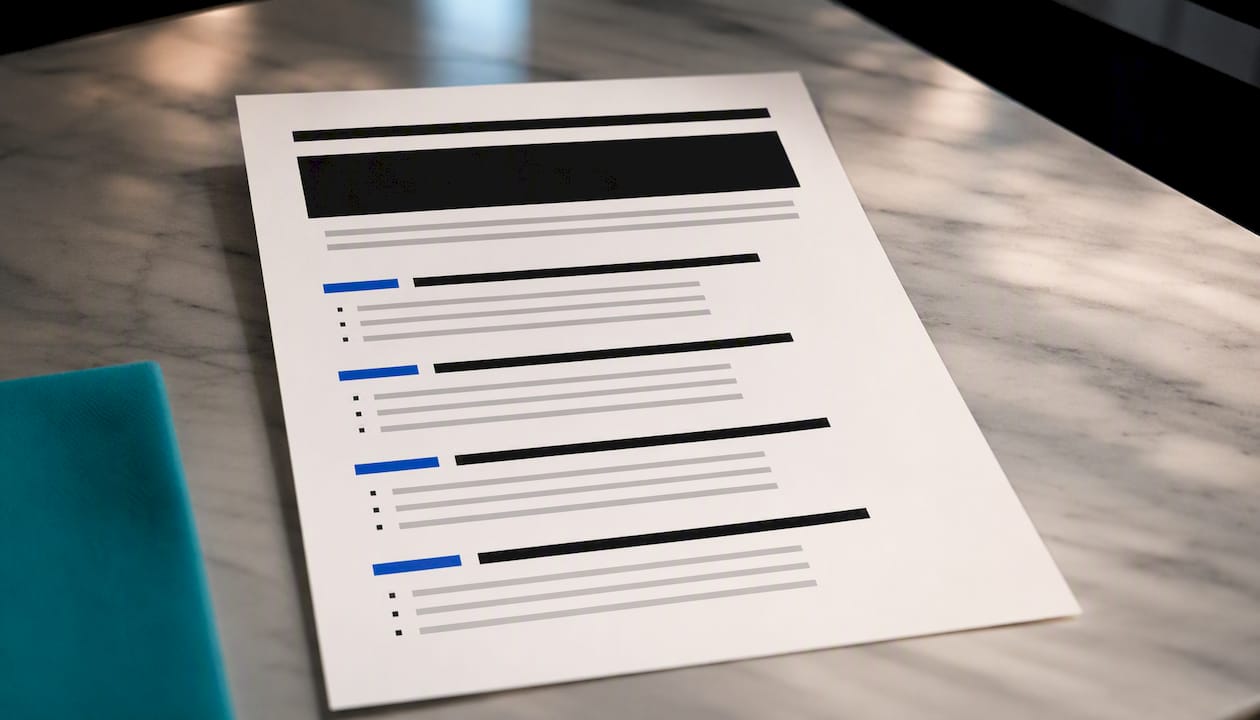
Here's a skeleton you can fill in directly, based on the structure Purdue OWL recommends for skills-based formats:
- Header. Name, phone, email, city and state, LinkedIn URL.
- Summary or objective. Two to three sentences that bridge your background to the job you want. A tailored summary gives the career change resume advice from Excelsior OWL real weight, since it gives the hiring manager context before they hit your skills.
- Skills sections (three to four categories). Each one gets a heading and two to four bullets with numbers attached.
- Condensed work history. Job title, employer, and dates only. No bullet points here.
- Education. Degree, school, graduation year (or "expected").
- Certifications (optional). Only if relevant to the target role.
Here's how that looks for someone moving from teaching into corporate training:
Summary: Former high school educator transitioning to corporate learning and development, bringing eight years of curriculum design and audience engagement experience.
Project Design & Curriculum Development
Public Speaking & Facilitation Led professional development workshops for 40+ colleagues, consistently rated 4.7/5 on post-session surveys.
Keep the layout plain. Standard headings, no text boxes, no tables inside the document itself. That single choice protects you from the ATS problems covered later on.
How to Build a Skills-Based Resume Step by Step
Start with the job posting, not your own memory. Pull out every skill and requirement it names, and keep the list next to you as you write.
- Extract keywords from the job description. Circle the nouns and phrases that repeat, then match each one to something you've actually done. If the posting says "cross-functional collaboration" three times, that phrase needs to appear somewhere in your skills section.
- Inventory your transferable skills. Don't limit this to paid jobs. Pull from class projects, volunteer roles, side gigs, and coursework. NueCareer's guide to identifying transferable skills walks through this process in more depth if you're stuck.
- Group everything into three or four categories. Fewer, stronger categories beat six thin ones. Aim for the categories the job posting itself implies.
- Write two to four result-focused bullets per category. Every bullet should answer "so what?" with a number, a scope, or a concrete output.
- Condense your work history. List titles, employers, and dates with no elaboration. Keep the dates honest and consistent. Gaps you can explain in an interview are far less risky than gaps a recruiter has to guess at.
- Do a final tailoring pass. Reread the posting one more time, swap in its exact language where you can, and cut anything that doesn't serve the role you're applying to.
NueCareer's career change resume tips cover several of these steps in more detail, particularly the keyword matching stage, which trips up more career changers than any other part of the process.
Writing Skill Entries That Actually Convince Recruiters
A skill listed with no proof is just a claim. Recruiters skim past unsupported adjectives like "strong communicator" or "detail-oriented" because everyone writes them. What moves the needle is a number attached to a specific action, a practice Coursera's functional resume guide identifies as the single most common fix that separates weak skills sections from convincing ones.
Here's what that looks like in practice:
- Data Analysis: Built a weekly reporting dashboard in Excel that cut manual reporting time by 5 hours per week.
- Customer Relationship Management: Managed a portfolio of 60 client accounts, maintaining a 94% retention rate over two years.
- Team Leadership: Trained and onboarded 15 new volunteers for a nonprofit food pantry, reducing new-volunteer errors by half within the first month.
Lean on strong action verbs: "built," "managed," "trained," "reduced," "designed," "launched." Pull your evidence from wherever it actually happened, whether that's a paid role, a class project, or unpaid work.
Pro Tip: If your strongest evidence comes from volunteer or unpaid work, don't undersell it. Instead of "helped organize a fundraiser," write "coordinated a volunteer fundraising drive that raised $12,000 for local youth programs." Specific numbers make unpaid experience read just as credibly as paid work.
When a Skills-Based Resume Can Backfire
Some recruiters see a functional resume and immediately assume the applicant is hiding something, usually a gap or a lack of relevant experience. That skepticism is real, and the fix is to keep your condensed work history visible rather than omitted entirely. Hiding your timeline altogether raises more red flags than a gap ever would.
ATS software adds another layer of risk. Stick to standard section headings ("Skills," "Work History," not creative alternatives), avoid columns, tables, and graphics inside the document, and mirror the job posting's own keywords, a practice Coursera's resume guide backs as essential for parsing.
Recruiters often scan a resume for roughly seven seconds before deciding whether to keep reading. Every heading and bullet needs to earn its place at a glance.
If your work history is steady and relevant, a hybrid or chronological format will usually outperform a functional one. Reserve the skills-based approach for when your titles genuinely don't tell your story.
How NueCareer Helps You Execute Every Step
Building the skill categories above gets easier when you know your own strengths cold. The 7-Minute Career Quiz surfaces the strengths worth building a skills section around, especially if you're not sure what to call your own abilities yet.
From there:
- The Skills to Put on a Job Application tool helps you match your inventory to what a specific posting wants.
- The Resume Skills Guide walks through wording and phrasing choices in more depth.
- The ATS Resume Checker on the NueCareer tools page tests your draft before you submit it.
A Practical Note on Making the Switch
Career changers waste a lot of energy trying to make their old titles sound more relevant than they are. That effort is better spent naming the actual skills underneath those titles and proving them with numbers. A functional resume isn't a trick to disguise a gap or a pivot. It's a more honest way to present what you can actually do when your job history doesn't say it for you.
— Shane
Build Your Skills-Based Resume With NueCareer
Once you know which format fits your situation, the next challenge is filling it with the right skills and language, and that's exactly where most career changers get stuck staring at a blank page. Start with the 7-Minute Career Quiz to identify your core strengths, then move into the resume and cover letter tools to turn those strengths into skill categories and metric-backed bullets. The ATS Resume Checker tests your draft against the same parsing rules recruiters' software applies, so you're not guessing whether your formatting will survive the scan. Head to the NueCareer tools page to run your resume through the checker and build your skills section from a plan that's actually yours.
Sources
- Functional resume guide: What it is and how to write one
- Skills résumé sample — Purdue OWL
- Chronological vs. functional resume: Which format is best?
FAQ
What Are Good Skills to Put on a Resume?
Strong choices include project management, data analysis, client communication, budget management, and team leadership, as long as each one is backed by a specific, measurable result.
What Are 10 Good Skills to List on a Resume?
A solid mix includes project management, data analysis, client relations, budgeting, team leadership, problem solving, technical writing, scheduling, negotiation, and process improvement, chosen based on what the job posting actually asks for.
What Are the Top Skills Recruiters Look For?
Recruiters most often prioritize skills tied directly to the job posting's own language, so the "top" skills change by role. The safest approach is matching the posting's keywords using a tool like NueCareer's job application skills tool rather than guessing at a universal list.
What Is the 7-Second Rule for Resumes?
It refers to the short window recruiters typically spend scanning a resume before deciding whether to read further, which is why clear headings and quantified bullets matter more than dense paragraphs.
Is a Functional Resume Bad for ATS Systems?
A functional resume can pass ATS software fine if you use standard headings and a simple layout, but overly customized formatting or graphics can cause parsing errors, according to Coursera's functional resume guide.