
Network Less, Build More: Introverts Win With 20–30 Minute Chats

Research backed playbook for introverts: use weak ties, async contributions, and 20–30 minute conversations. Take a 7 minute quiz to set clear networking...
Networking for introverts works best when you trade volume for depth: prioritize one-on-one outreach, async contributions, and planned follow-up at overcrowded events. Research on weaker professional ties shows these connections often create more job mobility than close contacts, and a thank-you note sent within 24 to 48 hours after a conversation keeps that connection warm. Below, we walk through the scripts, prep routines, and follow-up habits that make this approach work.
TL;DR:
- Focusing on a few meaningful, one-on-one interactions and asynchronous engagement can create more career opportunities than attending many crowded events.
- Preparing a brief research, script, and exit strategy for each interaction significantly boosts confidence and effectiveness, especially for those lower in extraversion.
- Sending a personalized thank-you note within 24 to 48 hours after conversations helps keep weak ties active and can lead to future career mobility.
- Limit networking activities to one or two per week to preserve energy and ensure quality interactions rather than scattered efforts.
- Using tools like templates, online communities, and goal-oriented plans enhances consistency and reduces the anxiety of networking for introverts.
Table of Contents
- Priority tactics you can start using this week
- How to prepare: research, scripts, and energy management
- Running informational interviews that lead somewhere
- Build visibility through LinkedIn and niche communities
- A follow-up plan that fits your energy budget
- What the research says and how to apply it
- A low-volume approach that actually holds up
- Where NueCareer fits into your networking plan
- FAQ
- Sources
Priority tactics you can start using this week
You do not need a packed calendar to build a strong professional network. A handful of well-chosen actions, repeated consistently, beats a dozen scattered ones.
- Start with warm introductions. Ask a current contact to introduce you to one person in their network rather than cold-emailing a stranger.
- Request one-on-one conversations. A 20-minute coffee chat or informational interview is far more manageable than a mixer.
- Build async visibility. Comment thoughtfully on posts in your field or contribute to a niche online group instead of relying only on live events.
- Bring a buddy or host something small. A dinner for four people you'd like to know better does more than a ballroom of strangers.
- Cap your event load. Commit to one networking activity per week, not five, so you can show up with energy instead of dread.
- Prepare exit lines in advance. Phrases like "I want to let you get back to the room, but I'd love to continue this over email" give you a graceful out.
- Use templates for outreach and follow-up. A reusable script removes the blank-page anxiety that often stalls introverted networkers before they start.
Structured preparation matters more than raw social stamina. Field experiments on networking self-efficacy found that short, structured training sessions raised networking confidence and improved reemployment outcomes, with the biggest gains among people lower in extraversion. Practicing a script once or twice before using it does real work. For more tactics tailored to job changers, our guide to career change networking strategies walks through additional approaches.
Pro Tip: Pick one tactic from this list, use it three times this week, and track only one outcome, such as how many replies you get. Resist adding a second tactic until the first one feels routine.
How to prepare: research, scripts, and energy management
Preparation is where introverts have a natural edge, as explained in our partner's guide on how to build student rapport. A little structure before any interaction lowers anxiety and makes the conversation feel less like performance and more like a plan you're executing.
- Research the person in five minutes. Check their LinkedIn profile and recent company news for one specific, genuine point of connection.
- Write a 90-second introduction. Lead with curiosity about their work rather than a rehearsed pitch about yourself.
- Prepare three solid questions. Open-ended questions about their path or challenges keep the conversation moving without you carrying it alone.
- Plan your logistics. Arrive a few minutes early, scout a quiet corner if the setting allows it, and schedule recovery time right after.
- Time-box the interaction. Decide in advance how long you'll stay, and use a scripted exit line when that time is up.
Pro Tip: Treat the prep routine like a checklist, not a mood you have to summon. The structure does the emotional work so you don't have to.
Running informational interviews that lead somewhere
A short, well-run conversation is often more valuable than hours spent working a room. Stanford's Alumni Association frames informational interviews as a low-pressure way to learn directly from someone doing the work you're curious about, not a job pitch in disguise.
- Send a short request by email or LinkedIn message with a specific subject line, such as "Quick question about your path into product design."
- Keep the ask small: 20 to 30 minutes, with a clear reason you're reaching out.
- Prepare six strong questions covering their day-to-day work, what surprised them, and what they'd do differently.
- Capture next steps during the call, such as a resource they mention or a name they offer to share.
Our guide to informational interview tips includes a longer question bank if you want more to draw from. After the call, send a follow-up within 24 to 48 hours that references something specific they said, which UC Berkeley's Career Center recommends as standard practice for keeping the relationship active.
Build visibility through LinkedIn and niche communities
Live events are not the only path to new contacts. Asynchronous channels let you build relationships on your own schedule, without the drain of real-time small talk.
- Clean up your profile first. A clear headline and summary that state what you're looking for help the right people find you.
- Write short, specific posts. Sharing a lesson from a recent project invites comments and connection requests more than a generic update does.
- Join niche groups where your field actually talks shop. Slack communities, subreddits, and LinkedIn groups tied to your industry are lower-pressure than open networking events, a tactic Forbes highlights for introverts who want inbound interest without live-event stress.
- Ask existing weak ties for one introduction at a time. A specific, single ask is easier for someone to act on than a broad request for help.
A follow-up plan that fits your energy budget
Good networking is mostly maintenance, and maintenance can be lightweight. The goal is consistency, not constant outreach.
- Send a thank-you within 24 to 48 hours. Mention one specific detail from the conversation and offer to stay in touch.
- Ask for introductions sparingly and specifically. Name the one connection or type of role you're hoping to learn about.
- Check in quarterly, not constantly. Share an article, congratulate a promotion, or just ask how a project turned out.
- Keep a short list of contacts and a rough date for your next touchpoint, so maintenance never depends on memory alone.
Moderately weak ties produce the strongest career mobility benefits, according to a large-scale study of LinkedIn connections, which means the acquaintance you check in with twice a year may matter more than your closest colleague. Our interview follow-up email tool can help you draft that note quickly when you'd rather not start from a blank page.
What the research says and how to apply it
The case for low-volume networking is not just comfort, it's backed by data. The weak-ties study found that distant connections, used deliberately, outperform dense networks of close contacts for job mobility. Separately, networking intervention research found that structured practice raises confidence and reemployment quality, especially for people who find networking draining. Together, these findings support exactly what we've outlined here: fewer, better interactions, with real preparation behind them.
If you want help turning this into a plan, there are several tools available to support the process, including a career quiz to help identify strengths and set networking goals, personalized roadmaps to translate goals into next steps, coaching chat to assist with outreach message preparation, and follow-up email tools to help write timely thank-you notes.

A low-volume approach that actually holds up
I've watched plenty of capable people talk themselves out of networking because they pictured a ballroom full of small talk. The reality is that one honest 20-minute conversation, followed up on time, tends to do more for a career than a night of forgettable introductions. Introversion is not a networking deficit, it's a reason to be selective about where your energy goes. Pick one tactic from this piece, try it this week, and watch what a single well-placed follow-up can do.
— Shane
Where NueCareer fits into your networking plan
If you're not sure what kind of connections to even pursue, that clarity has to come before the outreach does. Our 7-Minute Career Quiz identifies your strengths and matches them to career paths, including ones you may not have considered, so your networking has a clear direction instead of a vague goal.
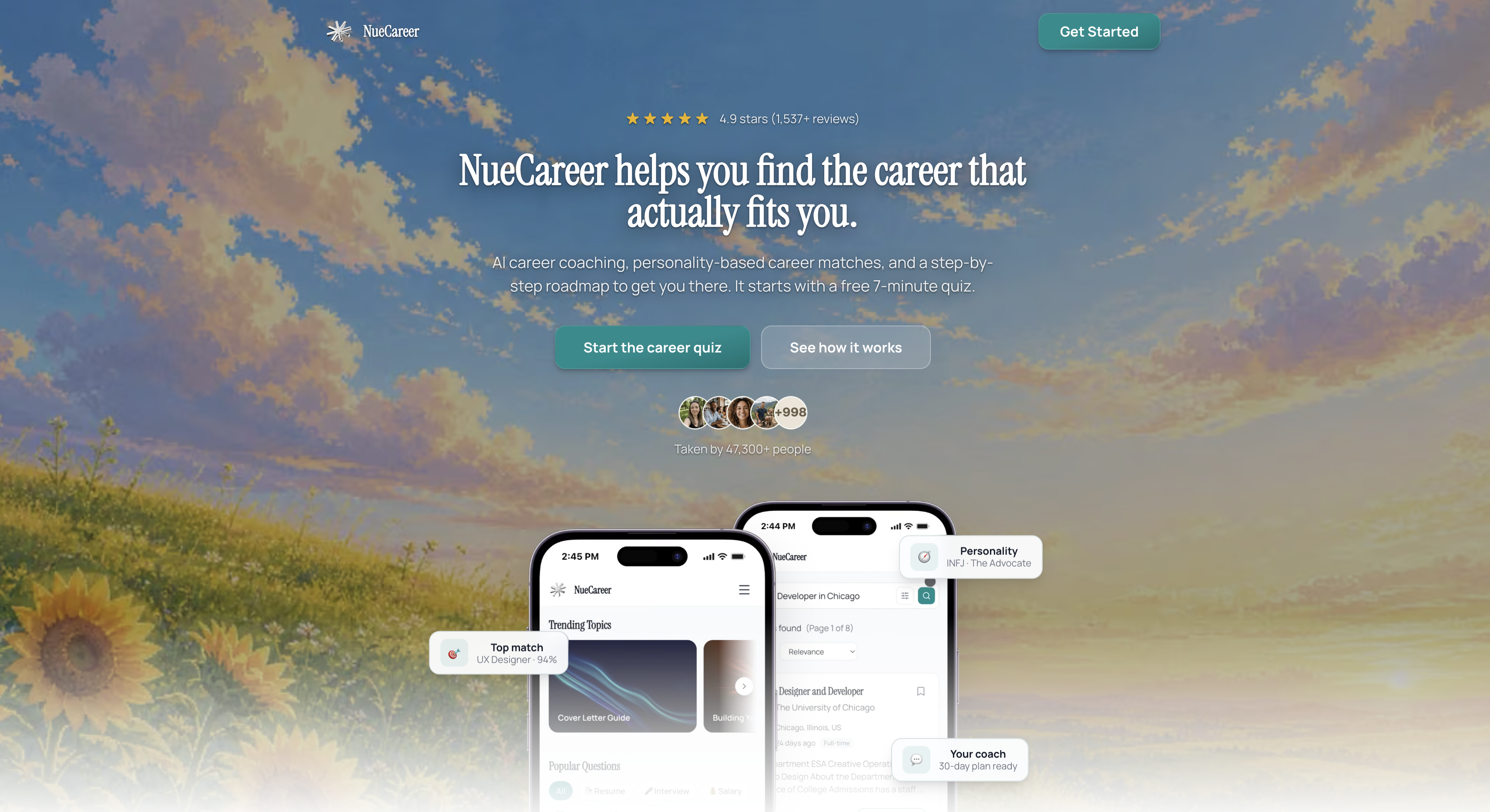
From there, our personalized roadmaps and 24/7 coaching chat help you figure out exactly who to reach out to and what to say, and our follow-up email generator handles the part that trips up most people: writing a timely, specific thank-you note. Take the quiz to get your networking goals mapped out in one sitting.
FAQ
What is the best networking strategy for introverts?
The most effective approach favors a small number of one-on-one conversations and async contributions over large events. Research on weak ties supports this: distant, lightly maintained connections tend to create more career opportunities than a packed schedule of surface-level interactions.
How soon should I follow up after networking?
Send a thank-you email within 24 to 48 hours of the conversation, a timeline UC Berkeley's Career Center recommends for informational interviews. Reference something specific the person said and offer a clear way to stay in touch.
How do I ask for an informational interview without feeling pushy?
Keep the request short, specific, and time-bound, asking for 20 to 30 minutes rather than an open-ended meeting. Stanford's Alumni Association frames these conversations as a chance to learn, which takes the pressure off both sides.
Can introverts really succeed at networking?
Yes. Intervention research on networking self-efficacy found that structured practice improved confidence and outcomes, with the largest gains among people lower in extraversion. Preparation and selectivity matter more than natural sociability.
How can I figure out which networking goals make sense for me?
Start by identifying your strengths and the kind of work you're actually aiming for, since that shapes who you should be talking to. Our 7-Minute Career Quiz is built to help with exactly that first step.
Sources
- A team of MIT, Harvard and Stanford scientists finds “weaker ties” are more beneficial for job seekers on LinkedIn | MIT Sloan
- Informational interviews | UC Berkeley Career Center
- Networking interventions that increase networking self-efficacy and proximal benefits (BRIO research) | Carlson School / Wanberg et al.
- Acing the career conversation: what to do before, during and after | Stanford Alumni Association