

A typical UX designer in the United States earns base pay in a range consistent with multiple salary sources in 2026, varying with employer and experience level. Total compensation runs meaningfully higher at large tech companies once you add bonuses and equity. Your exact number depends on experience level, location, and employer tier, which the sections below break down one at a time.
TL;DR:
- Large tech companies and top metro areas like San Francisco or New York tend to pay 15% to 30% more than the national average for UX designers.
- Total compensation at big firms can reach $150,000 to $170,000 or higher when bonuses and equity are included, though base salaries are typically lower.
- Moving from an agency to an in-house product team significantly increases earning potential due to higher pay scales and scope of responsibility.
- Skill gaps in research methods, data literacy, and prototyping tools like Figma actively influence salary growth, especially when backed by measurable results.
- Salary negotiation should rely on percentile data and a clear demonstration of scope rather than titles or experience alone.
Table of Contents
- Salary by Experience Level: Entry to Principal
- Where You Work Changes What You're Paid
- Base Salary vs. Total Compensation: What Your Offer Letter Doesn't Say Upfront
- How to Raise Your UX Designer Salary
- Our Take: The Real Bottleneck Isn't Salary Data, It's Positioning
- Ready to Find Your Highest-Paying Path Forward?
- Where These Salary Figures Come From
- Sources
- FAQ
Salary by Experience Level: Entry to Principal
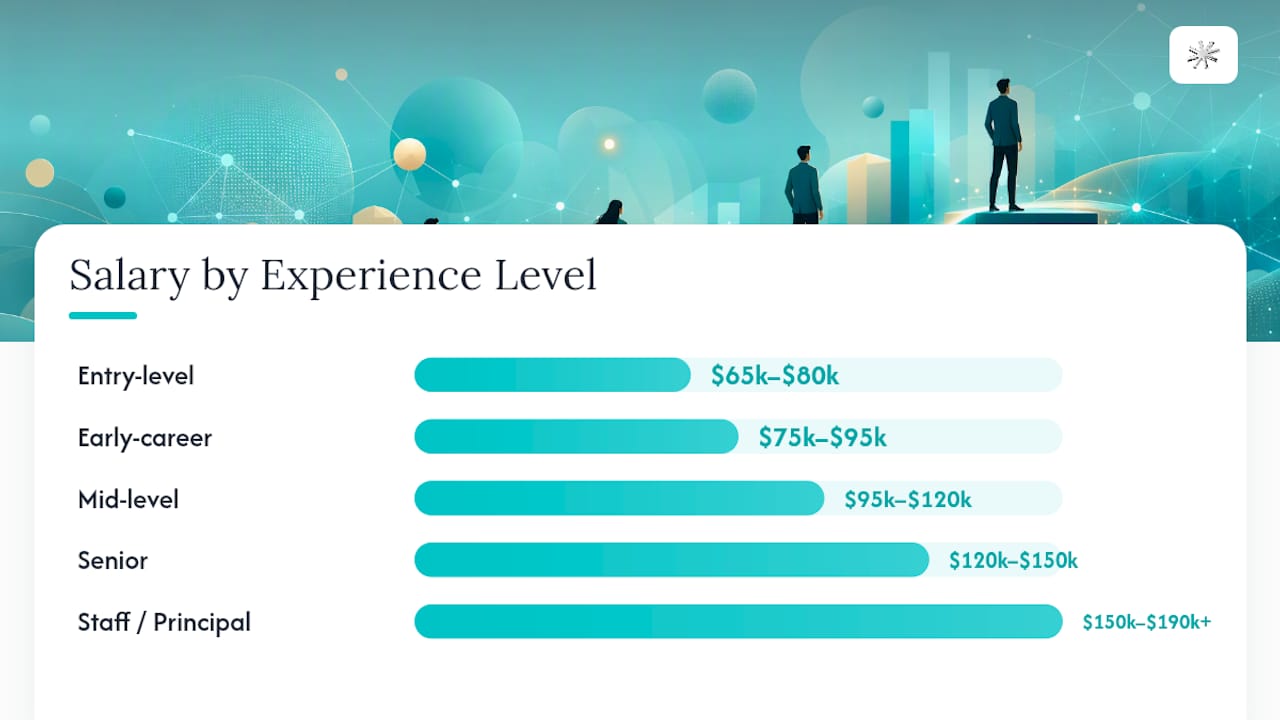
Your title matters less than your scope of responsibility, and that scope is what drives the jump from one pay band to the next. Here's roughly how the ladder plays out:
- Entry-level (0 to 1 year): Typically $65,000 to $80,000 base. Many first roles land at agencies or in-house teams doing execution work under a senior designer.
- Early-career (1 to 3 years): Usually $75,000 to $95,000. You're now owning small features end-to-end and starting to build a portfolio of measurable outcomes.
- Mid-level (3 to 5 years): Commonly $95,000 to $120,000, tracking close to the Indeed and ZipRecruiter averages cited above. You're leading projects, not just tasks.
- Senior (5-plus years): Often $120,000 to $150,000 base, with total comp climbing higher at product companies once equity is added.
- Staff or principal: Frequently $150,000 to $190,000-plus base, especially on individual contributor (IC) tracks at larger tech employers, where staff designers set design strategy across a product line rather than a single feature.
Choosing the IC track versus a management track changes your trajectory more than your current title does. Management pay tends to climb faster early but flattens without continued scope growth, while a strong IC track rewards depth of expertise and can outpace management comp at senior levels.
Pro Tip: When you're angling for a level jump, don't just ask for the title. Document the scope you already carry (cross-team projects, research you've led, revenue-linked outcomes) and use that as your evidence, since employers price scope, not seniority labels.
Where You Work Changes What You're Paid
Geography and employer type move your paycheck more than almost any other factor. A ZipRecruiter salary breakdown shows that company tier and role scope predict pay better than job title alone, which explains why two "senior UX designers" can be $40,000 apart.
- Top-paying metros. San Francisco, Seattle, and New York consistently post the highest UX salaries, often 15% to 30% above the national figures cited earlier, driven by big tech presence and cost of living.
- Employer tier. Big tech and well-funded product companies tend to pay the most, followed by mid-size scale-ups, with agencies and smaller consultancies generally paying the least for comparable work.
- Remote pay bands. Many companies now peg remote salaries to a location tier rather than a flat national rate, so a remote offer from a San Francisco company may still discount pay if you live somewhere with a lower cost of living.
One consistent finding across salary trend reports: location and employer tier are among the strongest predictors of UX pay, often outweighing years of experience alone.
Base Salary vs. Total Compensation: What Your Offer Letter Doesn't Say Upfront
Base salary is only one line item. The full offer includes a bonus target, equity, and benefits, and employers report these differently depending on company size and stage.
- Bonus: Usually a percentage of base, often 5% to 15% at product companies, tied to company and individual performance.
- Equity (RSUs or options): Common at tech companies, vesting over three to four years, and can add real value once the company's stock price grows.
- Benefits: Health coverage, 401(k) matching, and stipends vary widely but rarely show up in the headline salary number quoted online.
Industry reporting suggests equity and bonuses can meaningfully boost a designer's real annual earnings at scale-ups and large tech employers, though the exact contribution varies by company and vesting schedule.
A UX designer with a $130,000 base at a large tech firm, plus a 10% bonus target and vesting RSUs, could see total compensation land closer to the $150,000 to $170,000 range once equity value is factored in, according to Glassdoor's total pay data.
Always ask recruiters to separate base, bonus, and equity value in writing before you compare two offers.
How to Raise Your UX Designer Salary
Every jump in pay traces back to one of three levers: what you can prove you can do, where you choose to work, and how you negotiate. Here's the order that tends to move the needle fastest.
- Close specific skill gaps. UX research methods, data literacy, and Figma fluency remain the most requested skills in job postings. Pick the one you're weakest in and build a case study around it, not just a course certificate.
- Build measurable case studies. "Redesigned onboarding" says nothing. "Redesigned onboarding, cut drop-off by 18%" gets you a callback and a stronger opening offer.
- Move toward product companies. Switching from an agency to an in-house product team is one of the most reliable ways to raise your ceiling, since agencies typically pay less for comparable scope.
- Target a higher-cost metro or a location-agnostic remote role. Even without relocating, some companies pay national-tier remote salaries rather than location-adjusted ones.
- Negotiate with percentile data in hand. Walk into a raise or offer conversation citing the 75th percentile figures from sources like ZipRecruiter, not just the median, especially if your portfolio and scope justify it.
Pro Tip: Time your ask. Negotiating right after you've shipped a measurable win, or right before your annual review cycle, gets better results than a mid-project request with no fresh evidence to point to.
Our Take: The Real Bottleneck Isn't Salary Data, It's Positioning
Most UX salary guides stop at the numbers. The harder problem for most job seekers isn't finding the median, it's figuring out which gap in their own background is quietly capping their offers. Maybe it's a thin portfolio. Maybe it's applying only to agencies when product companies pay better for the same skill set. Maybe it's simply not knowing how to translate your current experience into the language a hiring manager searches for.
That's where a structured assessment earns its keep. A structured approach starts by identifying your actual strengths and mapping them against the roles most likely to pay well for them, then builds a roadmap that targets the specific skill or portfolio gap holding your offers back. Paired with tools that tailor your resume and cover letter to the exact language of a target job posting, that roadmap turns salary research into a faster, more confident job search rather than another tab you close and forget.
— Shane
Ready to Find Your Highest-Paying Path Forward?
Salary data tells you what the market pays. It doesn't tell you which path fits your actual strengths, or which skill gap is quietly keeping your offers below the median. That's the gap the 7-Minute Career Quiz is built to close: a short strengths assessment that matches you to roles you're positioned to win, including paths you may not have considered.
Once you know your target role, the Free Job Description Analyzer helps you decode exactly what a hiring manager is looking for, so your resume speaks their language instead of guessing at it. If you're still weighing UX against other high-paying paths, our breakdown of the highest-paying jobs in the US is worth a look before you commit. Start with the quiz, then let your personalized roadmap tell you what to fix first.
Where These Salary Figures Come From
- Glassdoor: Median total pay data blending base and bonus compensation.
- Indeed: Average base salary figures pulled from job postings and reported pay.
- ZipRecruiter: Average annual and hourly pay with percentile breakdowns.
- PayScale: Comparative average skewing toward smaller employers.
- Coursera: Aggregated 2026 UX salary guide contextualizing multiple sources.
Sources
Ask five salary sites what a UX designer makes and you'll get five different answers. That's not a data error. It's a measurement problem, and understanding it will save you from underselling yourself in a negotiation.
Glassdoor puts median total pay for U.S. UX designers around $108,000 a year, a figure that blends base salary with bonuses and other cash compensation. Indeed reports a higher average base salary alone, roughly $114,719, because it's measuring a narrower slice of the pie. ZipRecruiter lands close to that at about $112,198 annually, or near $53.94 an hour, but shows a wide spread between its 25th and 75th percentile earners. Meanwhile, PayScale reports a lower average near $84,141, likely because its sample skews toward smaller employers and junior titles.
The takeaway: base salary and total compensation are not the same number, and neither is "average" and "median." Here's how the major sources stack up:
- UX Designer salary in United States | Glassdoor
FAQ
Does UI or UX design pay more?
They're close, but UX roles that include research and strategy responsibilities often edge out pure UI (visual) roles, since UX scope tends to expand into product decisions that carry more weight in performance reviews.
Is UX still a good career in 2026?
Yes. Demand for digital product roles remains steady, and BLS data on related digital design occupations shows continued growth in the broader tech and design labor market.
Can a UX designer make $300,000?
It's possible, but only at senior, staff, or principal levels at large tech companies once equity and bonuses vest on top of a high base salary. It's not typical for early or mid-career designers.
Is UX design a lot of coding?
No. Most UX roles focus on research, wireframing, and prototyping in tools like Figma rather than writing production code, though basic front-end literacy can help you collaborate with engineers and may modestly boost pay.