

The fastest path from military to civilian jobs starts with a skills-first self-assessment, enrollment in DoD SkillBridge or an apprenticeship if you're still eligible, and an updated resume and LinkedIn profile built around transferable accomplishments rather than military jargon. Lean on SkillBridge, VA's VR&E program, and a tool to speed up the match between what you've done and what employers are hiring for. Start today: list your top five skills, check SkillBridge eligibility, and rewrite one resume bullet in civilian language.
TL;DR:
- Eligible service members can use their final 180 days for SkillBridge training or internships, with more than 3,000 approved organizations participating.
- Start exploring career options 12 to 24 months before separation; apply for TAP, an Employment Navigator, and SkillBridge or apprenticeship opportunities around six months out.
- On USAJOBS, veterans’ preference can move eligible applicants ahead of equally qualified nonveterans; OPM explains how the points apply to each category.
- Registered apprenticeships combine paid work with structured training; short certificates or boot camps work best as additions, not substitutes, for practical experience.
- Compare total compensation, because military housing and health benefits do not carry over; if base pay is fixed, ask about relocation help or bonuses.
Table of Contents
- Common civilian job categories where veterans often land
- How to translate your military skills into civilian job titles
- Turning applications into interviews and offers
- Official programs that smooth the transition: SkillBridge, TAP, VR&E, and federal hiring
- Apprenticeships and hands-on training routes
- Your transition timeline: from planning to your first six months
- How a strengths-based quiz speeds up your military transition
- Adjusting to civilian workplace culture and expectations
- Using veteran status to your advantage in hiring
- Negotiating salary during your military to civilian transition
- Taking care of your mental health during the transition
- Treating your transition as a career design project
- Try the 7-Minute Career Quiz and build your job plan today
- FAQ
- Sources
Common civilian job categories where veterans often land
Your military background maps onto several career families that consistently hire veterans because the skills transfer directly and demand stays steady.
- Federal and public service: security clearances, discipline, and mission focus translate well, and veterans' hiring preference gives you an edge on USAJOBS.
- Healthcare and emergency services: medics, corpsmen, and combat medics often move into EMT, nursing, or allied health roles with added certification.
- Logistics and supply chain: anyone who managed inventory, transport, or deployment logistics fits naturally into warehouse management or procurement.
- IT and cybersecurity: signal, intelligence, and communications roles align with network administration and security analyst positions.
- Skilled trades and construction: mechanics, engineers, and construction specialists step into electrician, HVAC, or heavy equipment roles, often through apprenticeships.
- Management and operations: NCOs and officers with team leadership experience fit supervisory and operations management roles.
- Protective services: military police and security forces transition smoothly into corporate security, law enforcement, or corrections.
Job postings for these roles show up on federal boards, industry-specific sites, and general job boards, so cast a wide net rather than limiting your search to one channel.
How to translate your military skills into civilian job titles
Stop hunting for an exact MOS-to-job-title match. Most service members overthink this step, when the real goal is matching your core skills, not your code, to what employers need. A single MOS can map to five or six different civilian careers depending on which skills you emphasize.
- List your core skills first: leadership, logistics planning, crisis decision-making, technical troubleshooting, whatever you actually did, not your job title.
- Match those skills to civilian language: "platoon sergeant" becomes "supervised a 30-person team and managed $2 million in equipment," a shift transition experts call the most common gap in veteran resumes.
- Use labor-market tools to confirm fit: O*NET and CareerOneStop let you compare occupations by skill overlap, salary, and outlook before you commit to a target title.
- Build keyword density around the civilian job description, not your military one, so applicant tracking systems recognize your experience.
Before and after examples help: "Led convoy security operations" becomes "Managed logistics and risk protocols for time-sensitive operations across multiple sites." Our job application skills tool can help you convert specific duties into resume-ready phrases.
Pro Tip: Rewrite one bullet at a time and read it back as if you'd never served, if it still makes sense, it will make sense to a hiring manager.
Turning applications into interviews and offers
Your resume, LinkedIn profile, and interview answers need the same civilian-facing language you used to translate your skills, as explained in this career change CV guide.
- Open your resume with a summary that states your target role and top three transferable skills, not your rank or years of service.
- Quantify results wherever possible: budgets managed, people supervised, incidents resolved, using our resume summary examples as a starting template.
- Update LinkedIn with a civilian-friendly headline, join veteran-focused groups, and message people in your target industry for informational calls.
- Practice STAR-format answers (Situation, Task, Action, Result) using military scenarios reframed around teamwork, problem-solving, and leadership under pressure.
- Run your resume through an ATS checker before submitting, since missing keywords can knock you out before a human ever sees it.
Our career change resume guide walks through additional formatting choices that help veteran resumes clear automated screens.
Official programs that smooth the transition: SkillBridge, TAP, VR&E, and federal hiring
Several government programs exist specifically to close the gap between military service and civilian employment, and using them early makes a measurable difference.
- DoD SkillBridge lets you use your final 180 days of service for an internship, apprenticeship, or training with an approved partner organization, with more than 3,000 organizations currently participating.
- TAP and the Employment Navigator and Partnership Program (ENPP) connect transitioning service members and spouses with one-on-one career coaching and partner organizations through the Department of Labor.
- VA Vocational Rehabilitation and Employment (VR&E) supports veterans with service-connected disabilities through tracks including re-employment, rapid access to employment, and long-term training, and can fund tuition and a subsistence allowance.
- Federal hiring authorities give veterans preference points on USAJOBS, and OPM's Fedshirevets resource explains how to use that advantage.
A significant portion of employed Gulf War-era II veterans work for the federal government, a reminder that public service remains one of the most consistent landing spots for veterans who use their hiring preference well.
Apprenticeships and hands-on training routes
Registered apprenticeships let you earn a paycheck while you train, which makes them one of the most practical routes into skilled trades without taking on student debt.
- Registered apprenticeships combine paid work with structured training and can raise long-term earnings without a four-year degree.
- Helmets to Hardhats connects veterans directly to construction and trade unions looking to hire.
- The DoD Career Skills Program links SkillBridge-style training to specific employer partnerships before you separate.
- Short certificates or bootcamps work best as a complement to hands-on training, not a replacement for it, when you need a fast-track credential in IT or healthcare.
Your transition timeline: from planning to your first six months
Start exploring career options 12 to 24 months before separation if your timeline allows it. Early planning gives you access to SkillBridge slots, apprenticeship openings, and TAP counseling before the rush.
- 12 months out: complete a skills self-assessment and start researching target industries.
- 6 months out: enroll in TAP, meet with an Employment Navigator, and apply to SkillBridge or apprenticeship programs.
- 180 days out: finalize your SkillBridge placement if eligible, since this window is your last chance to use it.
- 90 days out: update your resume, LinkedIn, and start mock interviews.
- First 6 months post-separation: follow up on applications weekly, keep networking, and revisit your plan if something isn't working.
| Milestone | Action |
|---|---|
| 12 months out | Self-assess skills and target industries |
| 6 months out | Enroll in TAP, meet ENPP navigator |
| 180 days out | Finalize SkillBridge placement |
| 90 days out | Update resume and LinkedIn, mock interviews |
| First 6 months post-separation | Weekly follow-ups and continued networking |
Our career transition timeline breaks this schedule down further if you want a week-by-week version.
How a strengths-based quiz speeds up your military transition
Mapping your skills manually takes time you may not have in your final months of service. A 7-Minute Career Quiz identifies your core strengths and matches you to career paths you may never have considered, then builds a personalized roadmap around that match.
- The quiz pairs with your SkillBridge or TAP planning by narrowing your target roles before you start applying.
- A 24/7 coaching chat answers transition-specific questions as they come up, not just during business hours.
- Resume and cover letter tools translate your match directly into application-ready documents.
- A tailored job board surfaces openings that fit your specific results, cutting down search time.
Combining a structured quiz result with official program timing gives you a faster, more targeted path than researching alone.
Adjusting to civilian workplace culture and expectations
Military structure rewards clear chains of command and defined roles. Civilian workplaces often reward initiative, informal communication, and comfort with ambiguity, which can feel disorienting at first. Meetings run longer, decisions take more input, and feedback tends to be less direct than what you're used to.
Expect a learning curve around communication style. Civilian colleagues may not respond well to blunt directives, even when your intent is efficiency, so reframing instructions as suggestions or questions often lands better. Hierarchy also looks different: a junior employee's opinion might carry real weight in a civilian meeting, something that takes adjustment if you're used to rank-based deference.
Work-life boundaries shift too. Many civilian employers expect you to manage your own schedule and advocate for your own career growth rather than waiting for orders. That autonomy can feel freeing or uncomfortable depending on your personality, and either reaction is normal.
Give yourself three to six months to recalibrate before judging whether a role or company culture fits. Ask a mentor or a veteran coworker to flag communication habits you might not notice on your own. Most veterans find the adjustment manageable once they understand it's a cultural shift, not a sign that their skills don't translate.
Using veteran status to your advantage in hiring
Veteran status comes with real, usable advantages in the civilian hiring process. Federal employers apply veterans' preference points during hiring, which can move your application ahead of equally qualified non-veteran candidates, and USAJOBS explains exactly how those points are calculated for your category.
Beyond federal preference, many private employers run veteran hiring initiatives or partner with organizations like Helmets to Hardhats specifically to recruit former service members. Mentioning your veteran status on applications and in interviews isn't just transparency, it signals leadership experience, security clearance, and reliability that many employers actively seek.
Certifications earned during service also carry weight. If your MOS included technical training, check whether it maps to a civilian license or certification through your state's credentialing office, since many states offer expedited paths for veterans with relevant military training. Security clearances in particular hold real market value in government contracting and defense-adjacent industries, and letting that clearance lapse without active use can mean starting the process over later.

Don't bury your veteran status at the bottom of a resume. A brief, confident mention in your summary or cover letter, paired with the skills it demonstrates, works better than treating it as incidental background.
Negotiating salary during your military to civilian transition
Military pay follows a fixed, transparent scale, which means many veterans enter civilian salary negotiations without much practice haggling. That's a disadvantage worth correcting before your first offer arrives.
Research the civilian market rate for your target role using tools like CareerOneStop before you talk numbers with any employer. Military experience often undervalues itself on paper because rank and responsibility don't map cleanly to civilian titles, so a service member who managed millions in equipment and dozens of people may initially apply for roles well below their actual skill level.
When an offer comes in, don't accept the first number automatically. Ask for time to consider it, even briefly, and come back with a specific counter based on your research, not a vague request for "more." If the employer can't move on base salary, ask about signing bonuses, relocation assistance, or accelerated review timelines instead, since veterans often have moving costs that civilian hires don't.
Factor in that your military benefits, housing allowance, and healthcare won't carry over, so compare total compensation, not just the salary number, against your current standard of living. A lower-sounding salary with strong benefits can outperform a higher number with thin coverage.

Taking care of your mental health during the transition
Job searching after service can stir up stress that has little to do with your resume. Loss of structure, identity questions, and the uncertainty of civilian life all compound the pressure of finding the right role, and that's a normal reaction, not a weakness.
The VA offers mental health resources specifically for veterans navigating transition, including counseling through VA medical centers and the Vet Center program, which operates outside the formal VA disability system and doesn't require a service-connected rating to use. Peer support groups, many run by veterans for veterans, offer a space to talk through the adjustment without having to explain your background from scratch.
Build small routines during your search: consistent sleep, physical activity, and a daily structure for job applications can protect your mental health as much as any single interview outcome. If the job search stretches longer than expected, that's common, not a sign you're doing something wrong, and leaning on your support network matters as much as polishing your resume.
Treating your transition as a career design project
Reframe your transition as a project with milestones, not a single leap into the unknown. That shift in mindset alone reduces a lot of the pressure.
Track progress the way you'd track any mission: set weekly goals, measure applications and conversations, and adjust the plan when something isn't working. Keep networking even after you land interviews, since the next opportunity often comes from a conversation, not a job board.
— Shane
Try the 7-Minute Career Quiz and build your job plan today
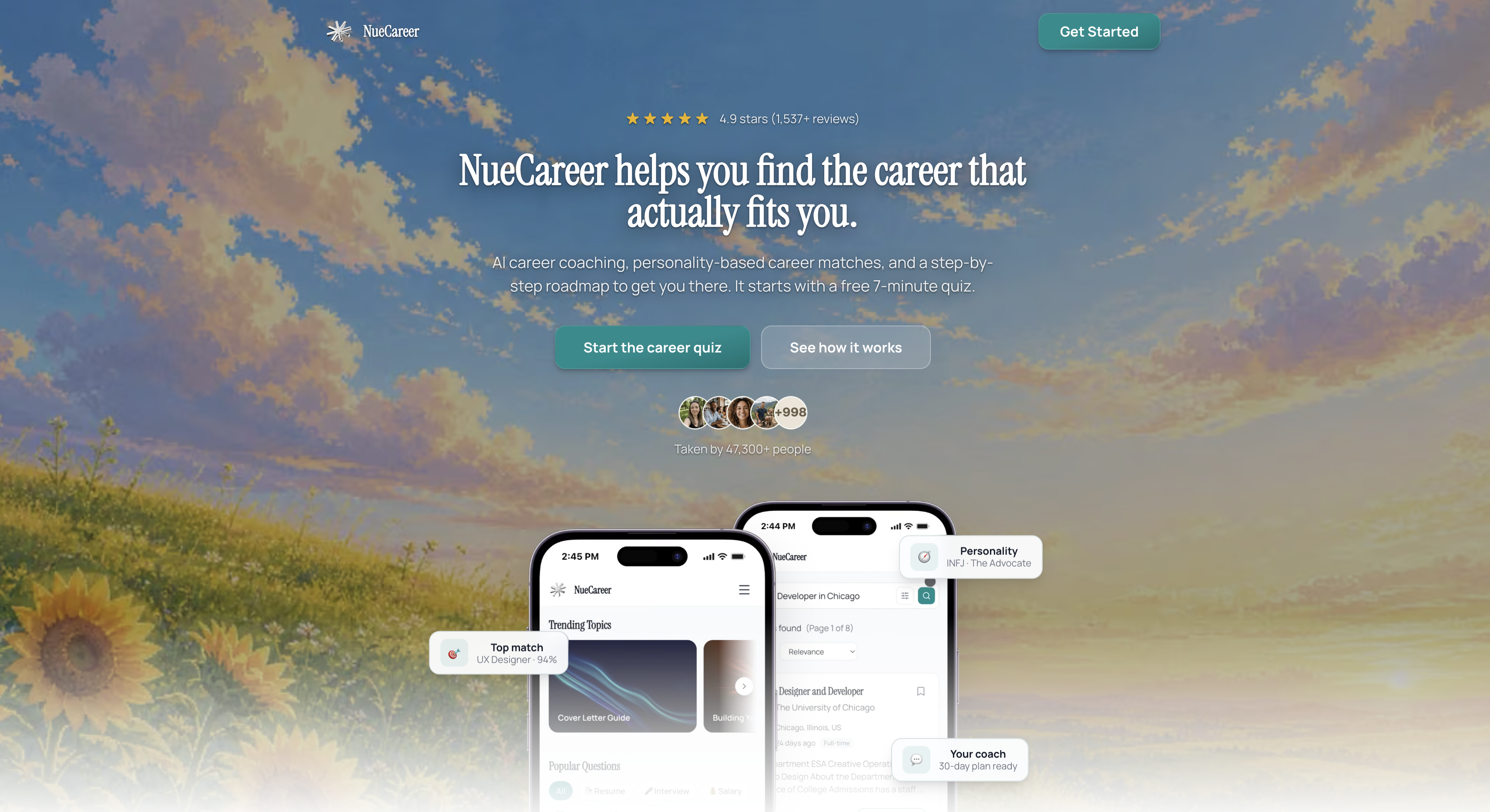
Translating a military career into civilian terms takes real work, and we built our 7-Minute Career Quiz to shortcut the guesswork. Answer a few questions and get a personalized career match plus a transition roadmap built around your actual strengths, not a generic list of "veteran-friendly" jobs. It picks up right where your skills translation work leaves off, turning your results into an application-ready plan. Take the quiz now and see which careers fit before you spend another week second-guessing your next move.
FAQ
What are some available veteran jobs in Texas?
Veterans in Texas commonly find openings in federal service, healthcare, logistics, and skilled trades, mirroring national demand patterns. Checking USAJOBS for federal listings and state workforce boards for regional openings gives the broadest view of what's currently available in your area.
How do I successfully transition from military to civilian life?
Start 12 to 24 months before separation if possible, use programs like TAP, SkillBridge, and VR&E, and translate your skills into civilian language before you start applying. Build a timeline with concrete milestones, from your skills assessment through your first six months post-separation, and treat the adjustment to civilian workplace culture as part of the plan.
Which military jobs are most transferable to civilian life?
Roles involving logistics, technical maintenance, medical support, IT, and leadership tend to transfer most directly because the underlying skills map to high-demand civilian fields. The exact MOS matters less than the core skills you emphasize when you reframe your experience for civilian employers.
What jobs are like the army?
Civilian roles with structure, teamwork, and mission-driven work, like law enforcement, emergency services, corporate security, and operations management, feel closest to the pace and culture of military service. Protective services and logistics roles in particular echo the hierarchy and coordination many veterans are used to.
Sources
- Employment Situation of Veterans news release (BLS)
- SkillBridge - Outreach and Transition Services (VA)
- Employment Navigator & Partnership Program (DOL VETS)
- Veteran Readiness and Employment (VR&E) (VA)
- Veteran job seekers (OPM / Fedshirevets)