
What Does Job Market Mean? A Clear Explanation

Discover what does job market mean and how it affects job availability, seekers, and wages. Understand its impact on your career today.
The job market is the economic space where employers who need workers and people who need jobs find each other. It is not a physical place you can visit. Think of it as a constantly shifting balance between two forces: the number of open positions employers are trying to fill, and the number of people actively looking for work. The Cambridge Dictionary defines it as "the number of jobs that are available in a particular place or area of work, or the people who are looking for work." Economists also call it the labor market, and the two terms are used interchangeably.
The core components of the job market include:
- Job availability: The total number of open positions across industries and locations
- Active job seekers: Workers currently looking for employment, including those re-entering after a break
- Wages and compensation: The pay employers offer, shaped by competition for talent
- Economic conditions: Broader forces like GDP growth, inflation, and consumer demand that expand or contract hiring
- Skills alignment: How well the workforce's abilities match what employers actually need
Table of Contents
- What factors shape job market conditions?
- Why understanding the job market matters to you
- Navigating the modern U.S. job market with confidence
- Key Takeaways
- FAQ
What factors shape job market conditions?
The job market is never static. Several forces push and pull it in different directions, sometimes at the same time.
- Supply and demand: When job market tightness occurs, meaning demand for workers exceeds supply, candidates gain leverage on salary and conditions. The reverse creates more competition among applicants.
- Technology and automation: AI and automation are reshaping which skills employers value most. Roles that involve repetitive tasks are shrinking, while demand for digital fluency and critical thinking is growing.
- Demographic shifts: An aging workforce reduces labor supply in some sectors, creating openings but also skill gaps that take years to fill.
- Education and training: Government policies that fund workforce training programs directly influence how prepared the labor supply is to meet employer needs.
- Industry cycles: Some sectors expand rapidly while others contract, creating uneven conditions across the market at any given time.
Understanding these forces helps you read the market rather than just react to it.
Why understanding the job market matters to you
Whether you are searching for your first role or considering a career change, knowing how the job market works gives you a real advantage. Here is why it matters:
- Strategic positioning: When you understand what employers need, you can align your skills and experience to meet that demand before you even apply.
- Smarter salary negotiation: A tight market means employers need you more. Knowing that shifts how you approach compensation conversations.
- Economic awareness: Unemployment rates are one of the clearest signals of job market health. Rising unemployment usually means more competition; falling unemployment often signals opportunity.
- Local relevance: National headlines about the job market can be misleading. Local and industry-specific micro-markets often tell a completely different story from the national average.
- Business planning: Companies use labor market data to forecast hiring needs, set compensation budgets, and identify where talent is scarce.
The job market is not just background noise. It is the environment you are operating in, and reading it well changes your outcomes.
Navigating the modern U.S. job market with confidence
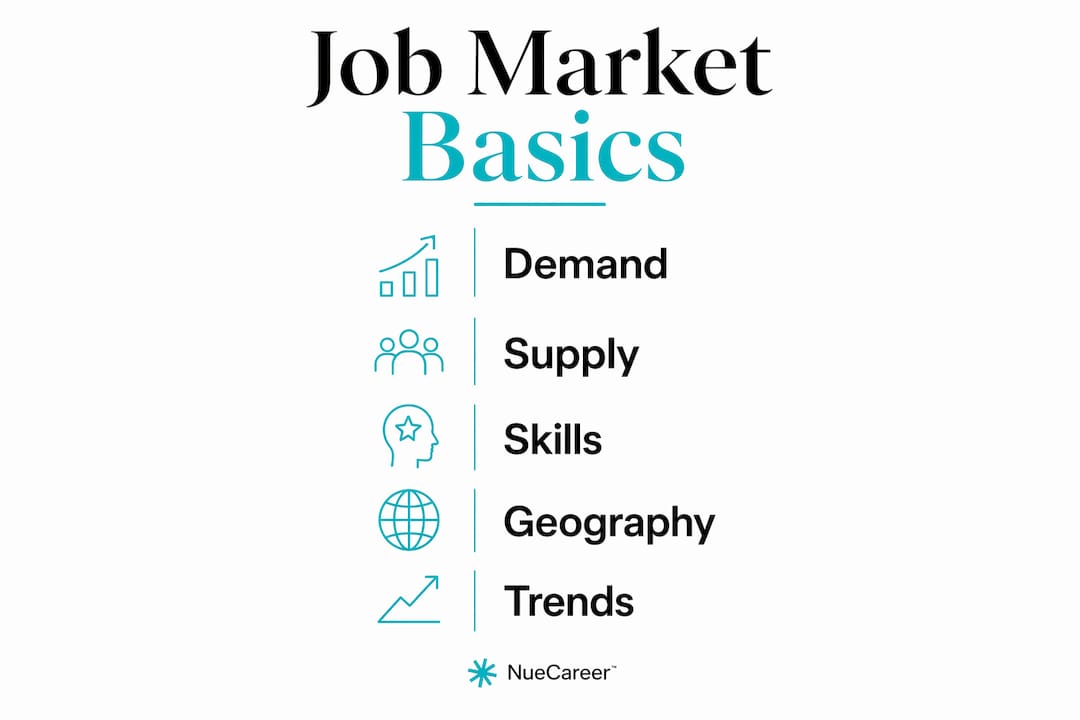
The U.S. labor market today looks different from what it did several years ago. Automation and AI have accelerated the pace of change, and demographic shifts are creating both shortages and surpluses depending on the sector. The key insight here is that the job market functions like a consumer market: your skills are the product, and employers' open positions represent the demand. When you frame it that way, career strategy becomes clearer.

The job market is segmented by geography, industry, and skill set. A software engineer in Austin faces a very different market than a nurse in rural Ohio. Treating them as the same is a mistake most job seekers make. Researching your specific micro-market, not just the national picture, is where real clarity comes from. Nuecareer's platform is built around exactly this kind of personalized approach, matching you to career paths and roles based on your actual strengths and the real demand in your target market.

Pro Tip: Track industry-specific job postings weekly for 30 days before you apply anywhere. You will start to see which skills appear repeatedly, which signals where employer demand is concentrating. Aligning your resume skills to those patterns before you apply puts you ahead of most candidates.
Job seekers who track industry trends before changes become mainstream consistently improve their positioning. Pair that habit with tools that help you identify your strengths and you have a real strategy, not just hope. Nuecareer's free career tools give you a structured way to do both, from identifying your strengths to building a resume that speaks directly to what employers in your field are looking for. Understanding educational credentials also plays a role, since certifications and degrees signal to employers that your skills meet a recognized standard.

Key Takeaways
The job market is the interaction between employer demand and worker supply, and understanding it gives you a measurable edge in every career decision you make.
| Point | Details |
|---|---|
| Job market defined | It is the economic space where employer demand and worker supply interact, not a physical location. |
| Supply and demand drive conditions | A tight market favors candidates; a loose market increases competition among applicants. |
| Micro-markets matter most | Local and industry-specific conditions often differ sharply from national averages. |
| Skills are your product | Treating your abilities as marketable assets helps you align with what employers actually need. |
| Track trends early | Monitoring industry shifts before they peak gives you a positioning advantage over other candidates. |
FAQ
What do you mean by job market?
The job market refers to the economic space where employers seeking workers and people looking for jobs interact. It reflects the overall supply of labor and demand for workers at any given time.
Is the job market bad right now?
Conditions vary widely by industry and location. A tight market in one sector can coexist with high competition in another, so your specific micro-market matters far more than national headlines.
Why is finding a job so hard in 2026?
Skill mismatches between what employers need and what candidates offer are a primary driver of difficulty, especially as automation reshapes demand. Targeting roles that align with your actual strengths and current employer needs makes the search more focused and effective.
What is a simple sentence using "job market"?
"Being laid off pushed me back into the job market" is a clear, everyday example of how the term is used in context.