
How Career Coaches Help Job Seekers Land Roles Faster

Discover how career coaches help job seekers land roles faster. Get structured guidance to clarify your goals and sharpen your search.
TL;DR:
- Career coaching helps job seekers clarify goals, tailor application materials, and build skills for targeted roles.
- It focuses on measurable results and structured stages, reducing wasted effort and increasing success.
Career coaching is a structured, goal-oriented process that helps job seekers clarify their direction, sharpen their materials, and build the skills needed to compete for the right roles. Unlike therapy or mentorship, coaching focuses on measurable outcomes at every stage of the job search. If you feel stuck, scattered, or unsure where your search is breaking down, understanding how career coaches help job seekers is the clearest first step you can take.
How do career coaches help job seekers find the right roles?
The most common mistake job seekers make is applying broadly and hoping something sticks. Career coaches fix this by structuring the job search into four stages: clarity, positioning, execution, and review. Each stage produces measurable outcomes instead of random activity.
Role targeting is where most searches break down first. A coach uses assessments, labor market data, and direct conversation to align your experience with realistic opportunities. This is not about lowering your ambitions. It is about matching your actual story to what hiring managers are actively looking for.
Coaches also analyze patterns across your applications. If you are getting interviews but no offers, the problem is likely interview performance, not your resume. If you are not getting interviews at all, the issue is probably role targeting or positioning. Proper role targeting and alignment of your story to market fit are often more critical than resume polish alone.
Here is what effective role targeting looks like in practice:
- Skills audit: Mapping your transferable skills against job descriptions in your target field
- Market analysis: Identifying which industries and company sizes are actively hiring for your background
- Title research: Understanding how different companies label the same role so you apply to the right postings
- Gap identification: Spotting credential or experience gaps early so you can address them before applying
Pro Tip: If you have sent more than 30 applications with fewer than five callbacks, the problem is almost never your resume. Ask your coach to audit your role targeting first.
In what ways do career coaches improve your application materials?
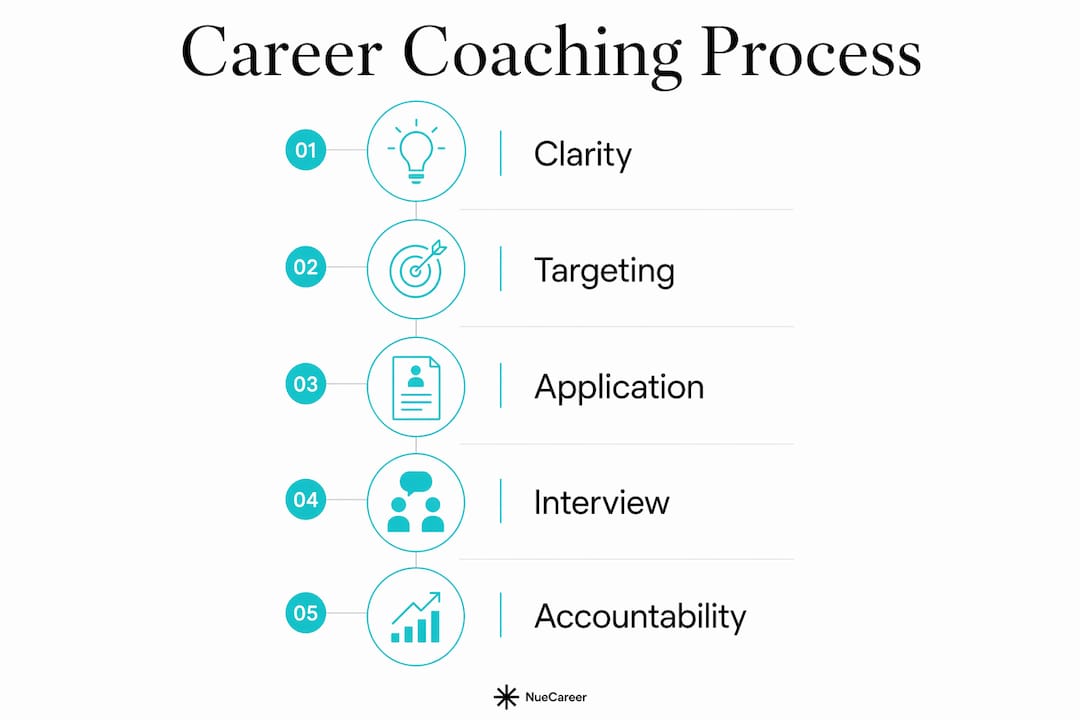
A coached resume is not just cleaner. It is built around evidence. Career coaches help improve resumes, cover letters, and portfolios by identifying the specific competencies each target role requires and then rewriting your materials to reflect them directly. Generic resumes describe what you did. Coached resumes prove what you delivered.

The difference shows up immediately in how recruiters respond. A generic resume lists job duties. A coached resume leads with quantified results, uses language pulled directly from job postings, and positions your career story as a logical progression toward the role you want.
Coaches also work on LinkedIn profiles and professional branding. Your LinkedIn headline, summary, and skills section all signal relevance to recruiters running keyword searches. A coach helps you write these sections with the same precision as your resume.
AI tools like resume formatters can clean up layout and flag weak language. But only a coach provides the nuanced, strategic judgment that turns a formatted document into a compelling career narrative. That distinction matters more than most job seekers realize.
| Element | Generic approach | Coached approach |
|---|---|---|
| Resume summary | Vague objective statement | Role-specific value proposition with keywords |
| Work experience | Duty-based bullet points | Achievement-based bullets with metrics |
| Cover letter | Template with minor edits | Tailored narrative matching job competencies |
| LinkedIn profile | Basic job history | Keyword-rich, recruiter-facing personal brand |
| Skills section | Random list | Prioritized by target role requirements |
For job seekers making a career change, the gap between generic and coached materials is even wider. Read the career change resume tips that coaches consistently recommend for making that pivot credible on paper.
How do career coaches improve interview performance?
Mock interviews are the single most underused tool in most job seekers' preparation. Coaches provide practical interview coaching through simulated interviews, recorded feedback, and targeted practice on the question types most likely to appear for your specific target roles. This is not generic preparation. It is calibrated to the actual hiring process you will face.
The feedback loop is what separates coached preparation from self-study. You may not notice that you hedge your answers, avoid eye contact on video calls, or undersell your leadership experience. A coach catches these patterns and corrects them before they cost you an offer.
Coaches also prepare you for the conversations most candidates dread:
- Salary negotiation: How to anchor your number, respond to lowball offers, and hold your position without damaging the relationship
- Career gap explanations: How to frame periods of unemployment, caregiving, or career exploration as deliberate choices rather than red flags
- Behavioral questions: How to use the STAR method (Situation, Task, Action, Result) to give structured, memorable answers
- Closing the interview: How to ask questions that signal genuine interest and leave a strong final impression
Research on why practice interviews improve performance confirms that repetition under realistic conditions builds the kind of confidence that shows up in the room, not just in preparation notes.
What role does accountability play in career coaching?
Accountability is the mechanism that keeps job searches from stalling. Coaching effectiveness depends on a repeatable cadence of sessions, between-session homework, and structured follow-up. Without that structure, most job seekers lose momentum after two or three weeks of rejection.
A coach tracks your activity and outcomes across the full search cycle. How many applications went out? How many led to phone screens? How many phone screens converted to interviews? These numbers tell a story, and a good coach reads that story to adjust your approach in real time.
Rejection is the part of job searching that most people handle worst. Resilience coaching teaches you to interpret rejection as a system signal rather than a personal verdict. A rejection after a first-round interview means something different than a rejection after a final-round interview. Coaches help you extract that signal and use it.
Pro Tip: Set a weekly application target with your coach and review outcomes every session. Tracking the ratio of applications to phone screens to interviews gives you data to act on, not just feelings to manage.
How do career coaches go beyond what AI and self-help tools offer?
AI tools can format a resume in seconds and generate a cover letter in minutes. What they cannot do is listen to your story, identify the gap between how you see yourself and how the market sees you, and then help you close it. AI can refine a resume, but the human judgment a coach brings is what actually shifts outcomes.
A World Bank study of 212,277 participants found that digital coaching alone without actionable recommendations produced no measurable improvement in employment outcomes. That finding is significant. It means encouragement and information are not enough. Coaching works when it drives specific behavior changes at specific stages of the search.
Coaches also handle career transitions in ways no algorithm can replicate. Changing industries, returning after a long gap, or moving from individual contributor to manager all require a reframing of your professional identity. That reframing is a deeply human process. A skills assessment can surface your strengths, but a coach helps you translate those strengths into a story the market will pay for.
| Capability | AI tools | Career coach |
|---|---|---|
| Resume formatting | Yes | Yes |
| Emotional support | No | Yes |
| Nuanced career narrative | Limited | Yes |
| Real-time feedback | No | Yes |
| Skill gap identification | Partial | Yes |
| Accountability structure | No | Yes |
The benefits of career coaching are most visible in the later stages of the search, specifically at the interview and offer stages, where human judgment and preparation matter most.
Key Takeaways
Career coaches deliver the most value when they combine structured process, targeted role alignment, and consistent accountability across every stage of the job search.
| Point | Details |
|---|---|
| Role targeting comes first | Most search failures trace back to poor targeting, not weak resumes. |
| Coached materials outperform generic ones | Evidence-based resumes and tailored cover letters get more callbacks. |
| Mock interviews build real confidence | Repeated practice under realistic conditions improves interview outcomes. |
| Accountability prevents burnout | Structured follow-up and outcome tracking keep momentum alive through rejection. |
| Human coaching outperforms AI alone | Empathy, nuance, and real-time feedback are skills no algorithm currently replicates. |
What I have learned watching job seekers work with coaches
Most job seekers come to coaching with the same misconception: they think their resume is the problem. After watching hundreds of searches play out, I can tell you that the resume is rarely the bottleneck. The real issue is almost always one of three things: targeting the wrong roles, telling an unclear story about why they are the right fit, or losing momentum after a string of rejections.
The coaches who produce the best results are not the ones who hand you a polished resume and send you on your way. They are the ones who build a repeatable system with you, review what is and is not working, and push you to make specific adjustments based on real data from your search. That process takes discipline from both sides.
The other thing I have noticed is that job seekers who treat coaching as an investment rather than a rescue tend to get more out of it. They show up prepared, complete their homework, and track their numbers. Coaching is not a shortcut. It is a structure that makes your effort count. If you are willing to do the work inside that structure, the results tend to follow.
— Shane
Nuecareer's free tools to put coaching into practice
Coaching gives you the strategy. The right tools help you execute it. Nuecareer offers a suite of free resources built specifically for job seekers who want to apply with confidence, not guesswork.
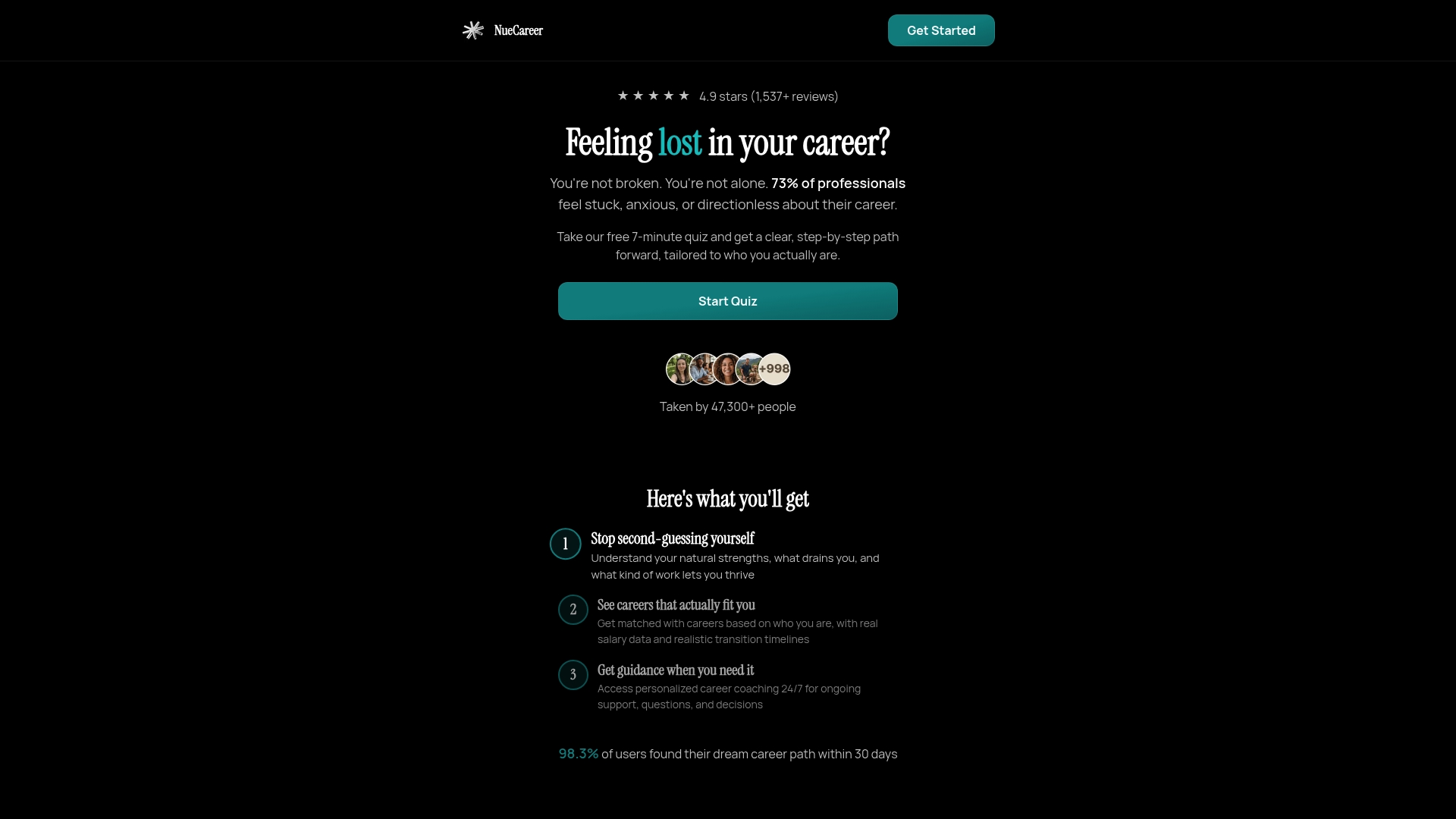
Use the free job application skills tool to identify exactly which skills to highlight for any role. The free cover letter generator produces tailored letters in minutes, and the job description analyzer breaks down what a hiring manager actually wants before you apply. These tools work best when paired with a clear coaching strategy, giving you the speed of AI and the precision of a targeted approach.
FAQ
What does a career coach actually do?
A career coach helps you clarify your goals, improve your application materials, prepare for interviews, and maintain momentum through a structured, accountable process. Coaching focuses on measurable outcomes, not general motivation.
How is career coaching different from mentorship?
Mentorship is typically informal and relationship-based. Career coaching is a structured, goal-oriented engagement with defined stages, homework, and outcome tracking built in.
When should I hire a career coach?
Hire a coach when your search has stalled, when you are changing industries or roles, or when you are getting interviews but not offers. These are the moments where structured guidance produces the clearest results.
Can AI tools replace a career coach?
AI tools handle formatting and content generation well. A World Bank study of 212,277 participants confirmed that digital coaching without actionable guidance does not improve employment outcomes on its own. Human coaches provide the judgment, empathy, and real-time feedback that AI cannot.
How do I choose a career coach?
Look for a coach who tracks measurable outcomes, not just confidence. Ask how they diagnose where your search is breaking down and what their process looks like between sessions. A coach who cannot answer those questions clearly is not the right fit.