

TL;DR:
- Hiring systems prioritize immediate role fit over potential, causing career changers to be overlooked. Tailoring resumes with exact keywords and focusing on relevant experiences improve chances of passing ATS filters and attracting recruiter attention. Networking and confident presentation help overcome subconscious biases and structural barriers, increasing the likelihood of success.
Career changers get overlooked because hiring systems are built to reduce risk, not reward potential. Applicant Tracking Systems filter out resumes that lack exact keyword matches, and recruiters spend an average of 7.4 seconds scanning each application before moving on. The result: a nontraditional background rarely survives long enough for a human to evaluate it. Understanding these structural barriers is the first step toward doing something about them.
Why career changers get overlooked: the hiring system's design
Hiring is designed to eliminate candidates quickly, not to find hidden potential. Recruiters and hiring managers face pressure to fill roles fast and avoid costly mistakes. That pressure pushes them toward candidates who already look like the job description.

75% of recruiters say they prioritize skills-based hiring, yet experience still commands a premium in roles with safety requirements, compliance demands, or stakeholder pressure. That gap between stated preference and actual behavior explains a lot. A recruiter may genuinely value transferable skills but still choose the candidate who has done the exact job before.
Career changers are seen as a hiring "bet." Experienced candidates are a known quantity. When a company invests in onboarding, training, and ramp-up time, they want confidence that the person will perform quickly. A candidate from a different industry introduces uncertainty, and uncertainty feels expensive.
This dynamic is especially strong in roles requiring specialized judgment, such as healthcare, legal, finance, or engineering. In those fields, experience is not just a preference. It is a proxy for the contextual knowledge that prevents costly errors.
How ATS filters create structural barriers for career changers
Over 98% of Fortune 500 companies use Applicant Tracking Systems to screen resumes before a human ever reads them. That single fact changes everything about how career changers need to approach applications.
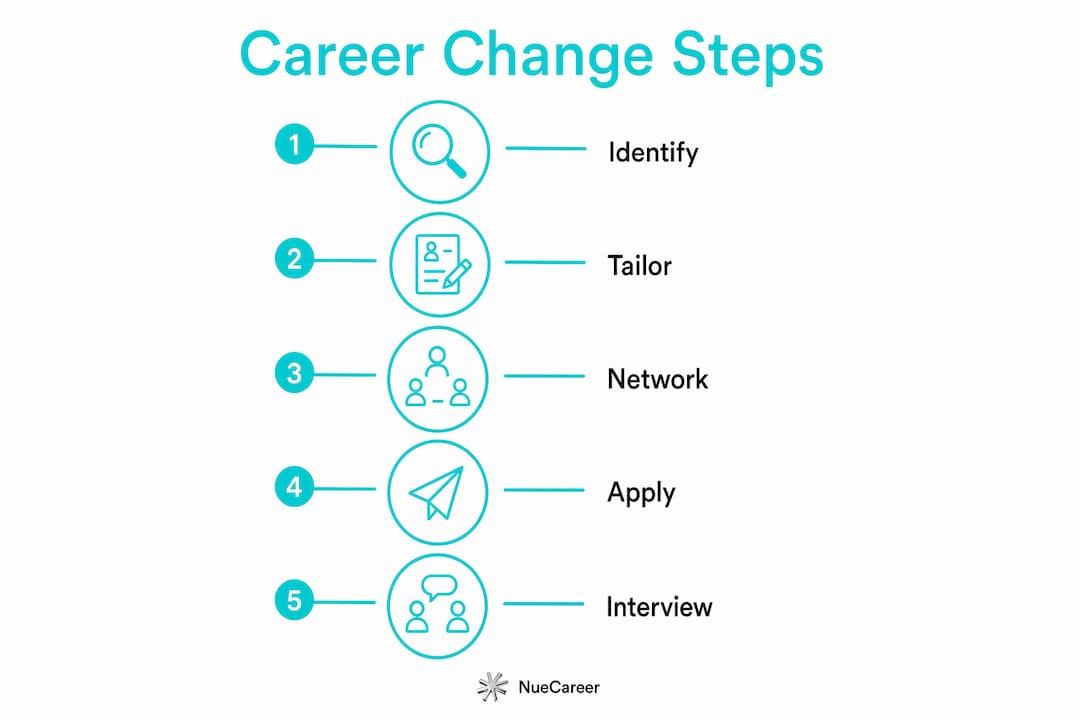
ATS software scans resumes for exact keyword matches from the job description. A career changer who uses different terminology for the same skill gets filtered out automatically. For example, a teacher who managed classroom budgets and calls it "resource allocation" may be rejected for a project coordinator role that lists "budget management" as a requirement. The skill is identical. The language is not.
Common ATS rejection triggers for career changers include:
- Unfamiliar job titles that do not match the target role's standard terminology
- Inconsistent formatting such as tables, columns, or graphics that ATS tools cannot parse
- Generic objective statements that fail to signal role-specific intent
- Missing keywords from the job posting that the system treats as disqualifying gaps
Pro Tip: Copy the exact phrases from a job description into your resume where they accurately describe your experience. ATS tools match strings of text, not meaning.
Tailoring each resume to each job is not optional for career changers. It is the minimum requirement to reach a human reviewer. Generic resumes, no matter how impressive, get rejected before anyone reads them. Nuecareer's free job description analyzer extracts the exact language hiring managers use, so you can mirror it precisely.
Why a broad background without a clear story hurts your chances
Recruiters are not trying to understand your full career. They are trying to answer one question: "Can this person solve the specific problem this role exists to fix?" A broad resume that lists every skill equally makes that question harder to answer.
Career changers who present a collection of capabilities rather than a focused narrative create ambiguity. Ambiguity reads as risk. A recruiter who cannot quickly identify your fit for the role will move to the next candidate rather than spend time decoding your background.
The fix is not to hide your diverse experience. It is to lead with the most relevant parts and frame everything else in support of that narrative. Here is how to build that focused story:
- Identify the core problem the role solves. Read the job description carefully and write one sentence describing what success looks like in that role.
- Select your three most relevant experiences. These go at the top of your resume and in your summary statement. Everything else is secondary.
- Reframe past roles in the target role's language. A sales background becomes "client relationship management" for an account management role. A teaching background becomes "curriculum design and stakeholder communication" for an instructional design role.
- Cut anything that dilutes your focus. Generalist experience presented as equal importance across diverse skills hurts hiring chances by creating confusion about what you actually do.
Your resume pre-qualifies you for the interview. The interview is where you explain the full scope of your background. The resume's only job is to get you through the door.
Hidden biases that compound the challenges for career changers
Beyond ATS filters and recruiter preferences, career changers face a set of subtler barriers that rarely get discussed openly.
35% of career changers report employer bias against nontraditional backgrounds as a top obstacle. That bias often operates below the surface of conscious decision-making. Hiring managers may favor candidates whose career paths mirror their own, a pattern called affinity bias. A manager who moved up through a single industry may unconsciously distrust someone who has moved across several.
Geographic and visa restrictions add another layer. Many companies list roles as remote but restrict applications to specific states or countries. Candidates requiring visa sponsorship face outright exclusion from a large share of job postings, regardless of their qualifications. These filters are structural, not personal, but they disproportionately affect career changers who are already navigating a more complex job search.
Imposter syndrome also plays a measurable role. Career changers often internalize the message that their background is not good enough, which affects how they present themselves in applications and interviews. Hiring managers evaluate confidence alongside skill, and a candidate who undersells their experience reinforces the recruiter's hesitation. The perception of fit matters as much as actual fit in the early stages of screening.
Practical strategies for overcoming career change obstacles
The challenges for career changers are real, but each one has a direct countermeasure. The key is to stop applying broadly and start applying precisely.
Mirror the job description. Pull exact phrases from the posting and use them in your resume and cover letter where they accurately reflect your experience. This is not keyword stuffing. It is speaking the employer's language. Applying within 72 hours of a job posting going live also significantly increases your chances of recruiter review before the volume of applications buries your submission.
Use networking to bypass filters. A referral from an internal employee moves your resume past ATS screening and into human hands. LinkedIn connections, industry meetups, and alumni networks are all valid paths to a warm introduction. Networking does not replace a strong application, but it dramatically improves the odds that someone actually reads it.
Craft a targeted cover letter. A generic cover letter signals a generic application. A letter that names the specific role, references the company's recent work, and connects your background to their exact need tells the recruiter you did your homework. Nuecareer's cover letter generator builds role-specific letters that align with the language of each job posting.
Pro Tip: Apply to fewer roles with more tailoring rather than mass-applying with one resume. Ten targeted applications outperform one hundred generic ones every time.
For a full breakdown of how to build a resume that works for career changers, the career change resume guide at Nuecareer covers formatting, keyword strategy, and narrative structure in detail.
Key Takeaways
Career changers get overlooked primarily because hiring systems filter for immediate role fit, not potential, making tailored resumes and focused narratives the most effective tools for getting noticed.
| Point | Details |
|---|---|
| ATS is the first barrier | Over 98% of Fortune 500 companies use ATS, so exact keyword matching is non-negotiable for career changers. |
| Experience signals low risk | Employers favor candidates with direct experience because it reduces onboarding uncertainty and costly errors. |
| Broad resumes create ambiguity | Presenting all skills equally confuses recruiters. Lead with the three most relevant experiences for each role. |
| Apply early and precisely | Applying within 72 hours of posting and tailoring each application significantly improves review rates. |
| Bias is real but beatable | 35% of career changers face employer bias, but networking, confidence, and targeted language counter it effectively. |
The part no one tells you about switching careers
I have watched hundreds of career changers go through the same cycle. They apply broadly, get no response, and conclude that their background is the problem. It is not. The background is fine. The presentation is the problem.
Hiring has become structurally hostile to anyone who does not fit a narrow template. ATS tools were built to handle volume, not to find talent. Recruiters are managing dozens of open roles at once. Neither system was designed with the career changer in mind. Knowing that is not just reassuring. It is the foundation of a better strategy.
The career changers I have seen succeed share one trait: they stopped trying to explain their whole story and started telling the story the employer needed to hear. They pruned. They focused. They used the employer's language, not their own. That shift, from "here is everything I have done" to "here is exactly how I solve your problem," is where the results change.
Confidence is the other piece that gets underestimated. Interview success for career changers often comes down to how clearly and calmly you own your transition. Hesitation reads as doubt. Clarity reads as competence. You do not need to apologize for your path. You need to explain why it makes you the right person for this specific role.
The structural barriers are real. They are also navigable. Treat your career change as a narrative construction challenge, not a skill deficiency, and the entire job search looks different.
— Shane
Nuecareer's free tools for career changers who want to get noticed
Getting past ATS filters and recruiter bias requires the right tools, not just the right intentions. Nuecareer builds free tools specifically for career changers who are tired of applying and hearing nothing back.
The AI-powered skills tool identifies the exact keywords from any job posting and maps them to your background, so your resume speaks the language ATS systems and recruiters are scanning for. The cover letter generator creates personalized, role-specific letters in minutes. The job description analyzer breaks down what employers actually want, so you stop guessing and start applying with precision. All of these tools are free and available at Nuecareer.
FAQ
Why do career changers get rejected so often?
Career changers get rejected because ATS systems filter resumes for exact keyword matches, and their nontraditional backgrounds rarely mirror the job description language. Recruiters also favor candidates with direct experience to reduce hiring risk.
Does a career gap hurt a career changer's application?
A career gap adds scrutiny but does not disqualify a candidate. Framing the gap with relevant activities, such as courses, freelance work, or volunteer roles, reduces the perceived risk for hiring managers.
How important is networking for career changers?
Networking is critical. A referral bypasses ATS screening entirely and puts your resume directly in front of a human reviewer, which is the single biggest structural advantage available to career changers.
What is the biggest mistake career changers make on resumes?
The biggest mistake is presenting all experience with equal weight. Generalist resumes create ambiguity about role fit. Career changers must lead with the three most relevant experiences and frame everything else in support of the target role.
How can career changers improve their ATS pass rate?
Mirror the exact language from each job posting in your resume, avoid complex formatting, and tailor every application individually. Generic resumes are rejected by ATS before a human ever reads them.