
What Job Title Inflation Really Means for Your Paycheck

Discover what job title inflation means for your paycheck and career growth. Learn how inflated titles can create false promotions without pay increases.
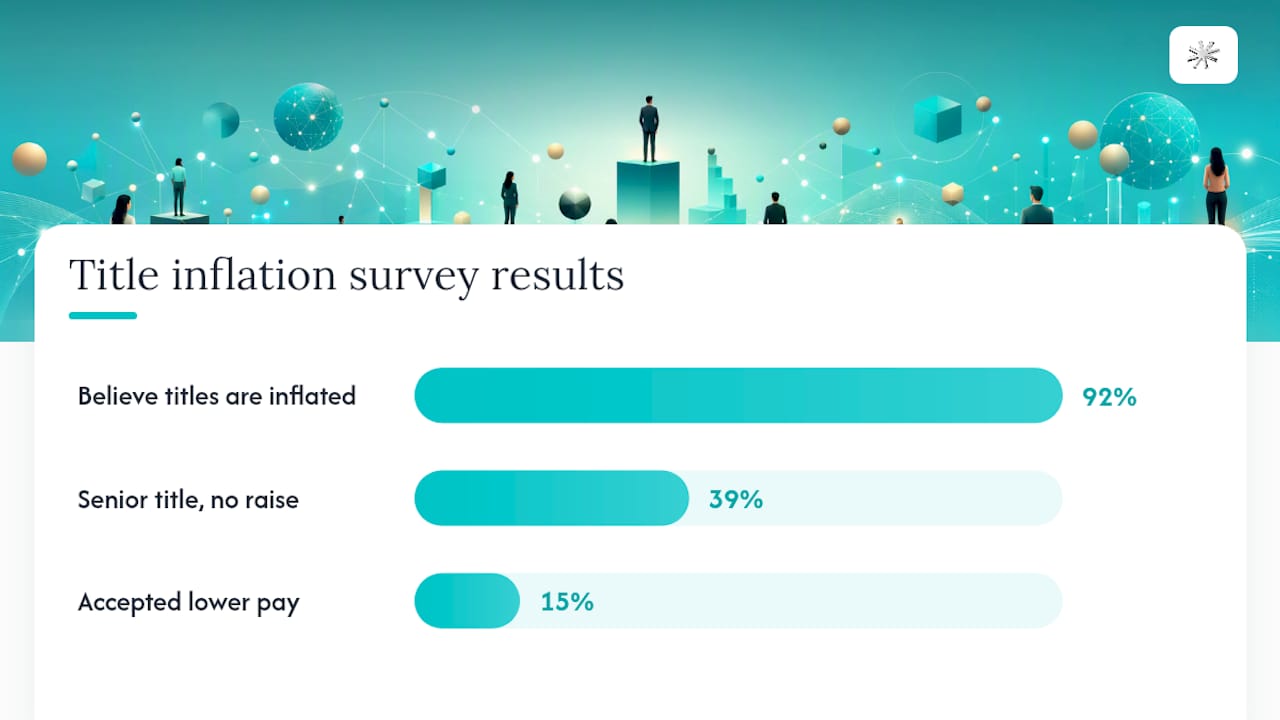
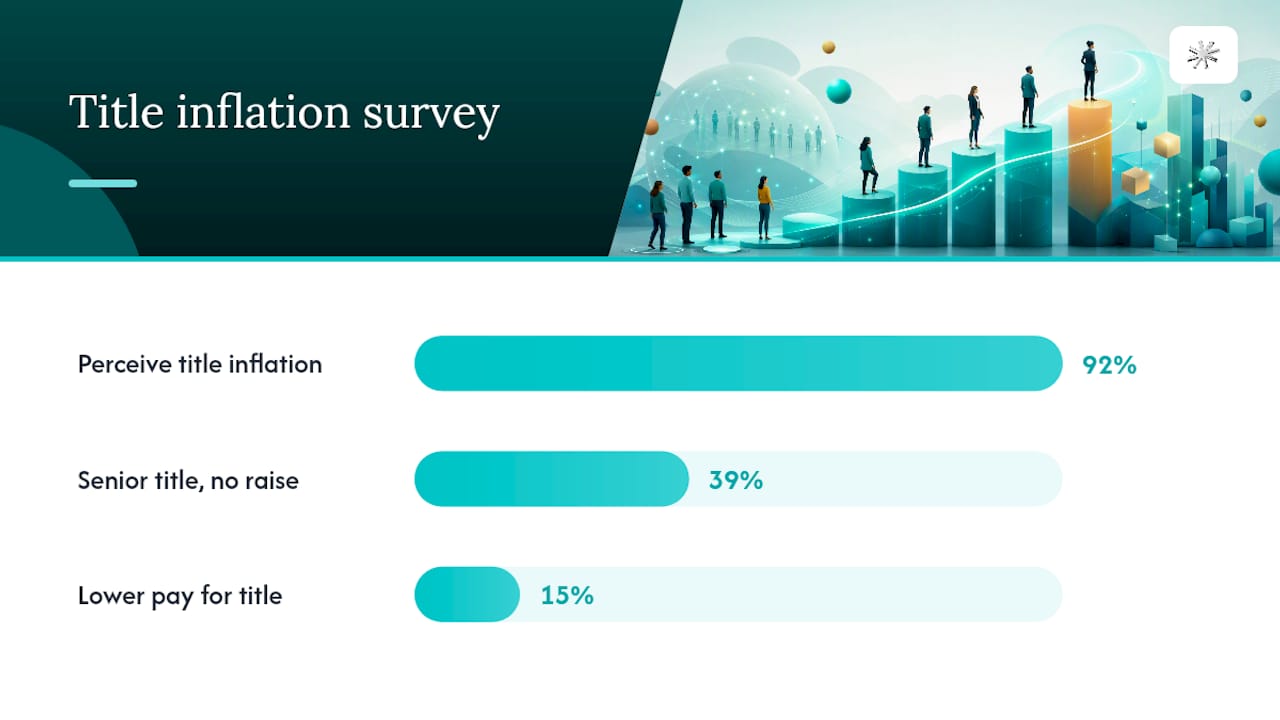
Job title inflation means an employer gives you a title that sounds more senior than your actual duties, scope, or reports, usually without raising your pay to match. The bottom line: it creates the illusion of a promotion while your compensation and skill growth stay flat. Nearly all workers have noticed it. A survey of 1,000 U.S. workers found 92% believe employers use inflated titles to fake career growth, and Nuecareer's own coaching conversations echo that suspicion daily. If your business card says "Director" but your job description hasn't budged since your last title, you're likely looking at this exact pattern.
Key Takeaways
Job title inflation decouples your title from your actual pay, scope, and skill growth, and closing that gap requires documentation, market data, and a direct conversation with your employer.
| Point | Details |
|---|---|
| Definition matters | Job title inflation means a senior-sounding title without matching pay, scope, or reports. |
| It's widespread | 92% of workers believe employers use inflated titles to fake career growth, per surveyed data. |
| Pay often stays flat | 39% of workers got a senior title with no pay increase; 15% accepted lower pay for a better title. |
| Document everything | Request a written role scope and track duties, reports, and peer pay before negotiating. |
| Diagnose before you negotiate | Use Nuecareer's free skills assessment to benchmark your real market value against your current title. |
Table of Contents
- Why Employers Inflate Job Titles
- How to Tell a Real Promotion From an Inflated Title
- The Real Cost to Your Career and Salary
- What to Do If You Suspect Your Title Is Inflated
- How to Present an Inflated Title on Your Resume
- Why Skill Growth Should Matter More Than Your Title
- Get a Clear Picture of Your Actual Market Value
- Sources
- FAQ
Why Employers Inflate Job Titles
Companies rarely inflate titles out of generosity. It's usually a low-cost lever pulled under real budget pressure. When cash for raises is tight, a fancier title becomes the substitute currency, cheap to hand out and easy to justify in a performance review.
A few motivations show up again and again:
- Talent attraction: grander titles make job postings more competitive without raising the salary line.
- Retention on a budget: a promotion in name softens the sting of a flat raise.
- Employer branding: senior-sounding titles make a company's roster look more impressive externally.
- Flat organizational structures: startups and lean teams hand out "head of" and "lead" titles because there's no traditional ladder to climb.
The numbers back up how widespread this has become. Beyond the 92% who believe it's happening, 66% of workers say impressive-sounding titles are being handed out more often than in past years, and separate research found 54% of organizations now use titles specifically to attract talent, a sharp jump from 2018 levels. HR researchers point to a structural cause behind all of it: when a company has no clearly defined job levels or objective criteria for advancement, titles become negotiable currency instead of a reliable signal of scope. That ambiguity is exactly what lets inflation take root.
How to Tell a Real Promotion From an Inflated Title
The difference between a legitimate promotion and a cosmetic title bump usually comes down to whether anything measurable actually changed. A new title with the same job description attached is a red flag, not an upgrade.
Run your own title through this checklist:
- Responsibilities: Did your day-to-day duties actually expand, or does your job description read identically to before?
- Direct reports: Do you now manage people, or is "Manager" purely honorary?
- Measurable KPIs: Were new performance metrics or goals attached to the new title?
- Budget authority: Can you approve spending you couldn't before?
- Hiring input: Do you now have a say in who joins your team?
- Compensation: Did your pay move to match market rate for the new title, or stay flat?
Watch for inconsistent reporting lines and peer pay disparities too. If a colleague with the same title earns meaningfully more, or reports to someone different than you do for an identical role, the title itself has stopped meaning anything consistent inside your organization. Salary makes the point plainly: an upgrade without added responsibility or requirements isn't real progression, no matter how good it looks on LinkedIn.
Pro Tip: Ask your manager or HR for a written role scope or documented job level, not just a verbal confirmation of your new title. A one-paragraph email describing your responsibilities, reports, and KPIs becomes hard evidence later, whether you're negotiating a raise or explaining the role in an interview.
The Real Cost to Your Career and Salary
An inflated title doesn't just feel hollow. It can actively work against you later, especially if you ever leave the company that gave it to you.
Career experts describe this as "title trapping": your résumé claims a level of seniority your actual skills and accomplishments don't support, which narrows your realistic options in the next job search and complicates how you explain your background in interviews. A hiring manager who takes your title at face value may set expectations you can't meet; one who probes further may wonder why the title and substance don't line up.
The pay data is even more direct. In the same worker survey, a sizable portion said they were given a more senior title without any accompanying pay increase, and some said they accepted a lower salary specifically because the title sounded better than the compensation justified. That's a meaningful share of the workforce trading real dollars for a label.
Internal equity takes a hit too. When titles get handed out unevenly, you end up with the same title paying wildly different amounts across a team, stagnant pay bands that never catch up to market rate, and promotion decisions that start to look arbitrary rather than merit based. There's also a compliance dimension worth knowing about: research tied to inflated managerial titles has linked the practice to misclassifying non-exempt employees as exempt from overtime, contributing to billions of dollars in unpaid overtime annually. If your "manager" title came with no direct reports and no real decision authority, it may be worth checking whether you're even classified correctly under federal wage rules.
What to Do If You Suspect Your Title Is Inflated
Suspecting your title is inflated is one thing. Proving it, and acting on it, is what actually moves your career and paycheck forward.
- Gather evidence. Document your actual duties, weekly hours, deliverables, and where you sit on the org chart. If you know a peer's pay for a similar title, note the gap, even informally.
- Request a written role scope. Ask your manager or HR for a formal job description and specific, measurable criteria tied to your next promotion or compensation review. A verbal "you're basically a director now" means nothing in a salary negotiation.
- Market-test your role. Benchmark your title against real salary data, talk to recruiters in your field, and read job ads for the same title elsewhere. This tells you what your title actually maps to in dollars outside your current company.
- Negotiate, or plan your exit. If your documented scope and market data show a real gap, bring both to your manager and ask directly for a compensation adjustment. If the company won't close the gap, start building your exit plan rather than waiting for a fix that may never come.
Executive search experts describe title inflation as a short-term "Band-Aid," one that often papers over a deeper pay or culture problem rather than solving it. Treat that as your signal to act rather than wait it out.
Pro Tip: When you raise this with your manager, frame it around scope and impact rather than the title itself: "I'd like to align my compensation with the responsibilities I've taken on over the past year." That framing is harder to dismiss than "I think my title should pay more," and it puts the conversation on evidence instead of feelings.
How to Present an Inflated Title on Your Resume
Your official title doesn't have to be the last word on your résumé. Pairing it with a brief, honest descriptor of actual scope protects you from both underselling your work and overselling a title that won't hold up under interview questions.
A few ways to handle the mismatch:
- Add scope in parentheses after the title: "Senior Product Manager (individual contributor, no direct reports)."
- Lead bullet points with quantified outcomes rather than the title itself: "Managed a $200,000 marketing budget and led three campaign launches" says more than "Director of Marketing" ever will.
- In interviews, state your scope plainly before anyone else defines it for you: "My title is Director, but I don't have direct reports, my focus has been on campaign strategy and execution."
- Emphasize transferable skills over the label. A hiring manager cares far more about what you actually did than what your last company chose to call it.
Career coaches and resume experts consistently advise foregrounding measurable impact over the vanity title, precisely because interviewers increasingly know to probe past the label. Nuecareer's resume and cover letter tools are built around that same principle: translating your real duties into language that survives scrutiny.
Why Skill Growth Should Matter More Than Your Title
I've seen enough résumés cross my desk to say this plainly: a title is a label your employer controls, but your skill growth is yours to keep no matter where you work next. Companies use inflated titles as short-term retention tools, and that's a rational move for them. It's a much riskier bet for you if you're not also tracking what you can actually do.
Weigh the short-term ego boost against the long-term marketability question. Ask yourself honestly whether you could walk into a new company tomorrow and perform at the level your title claims. If the answer is no, that's the gap worth closing first.
Get a Clear Picture of Your Actual Market Value
If you're staring at a title that sounds impressive but hasn't moved your paycheck, the fastest way forward is getting an honest read on what your actual skills and experience are worth, separate from whatever your employer decided to call you. Nuecareer's free career skills assessment takes about seven minutes and maps your real strengths against roles and pay bands you may not have considered, giving you concrete language to use in a negotiation or a job search rather than guesswork about what you "should" be earning.

Once you know where you actually stand, Nuecareer's suite goes further: personalized roadmaps, 24/7 coaching chat, and resume tools that turn your documented scope of work into résumé bullets a hiring manager will trust on sight. If your title and your paycheck have drifted apart, start with the free skills assessment today and use what it reveals as your opening line in the next conversation about your role.
Sources
These sources cover the survey data, expert commentary, and legal angles referenced throughout this guide:
- Survey: 92% of Workers Say Companies Use Inflated Job Titles to Fake Career Growth - CPA Practice Advisor
- Inflated job titles and overtime pay impact (UT Dallas research summary)
- Salary
FAQ
What does job title inflation mean in simple terms?
It means your title sounds more senior than your actual duties, reports, or pay reflect, often used by employers to simulate career growth without a raise.
How common is job title inflation?
Very common: 92% of surveyed workers believe companies use inflated titles to fake advancement, and 66% say it's happened more in recent years.
Does an inflated title hurt my salary?
Yes, often directly. Roughly 39% of workers surveyed received a senior title with no pay increase, and 15% accepted lower pay in exchange for a better-sounding title.
How do I know if my promotion is real or just a title change?
Check whether your responsibilities, direct reports, budget authority, and pay actually changed. If your job description reads the same as before, the promotion is likely cosmetic.
Should I list an inflated title differently on my resume?
Yes. Pair the official title with a brief scope note or lead with quantified accomplishments instead, and use a tool like Nuecareer's resume tools to translate real duties into hiring-manager-friendly language.